When Should You Renew Rhodium Plating: Signs, Care and a Calm Decision
When should you renew rhodium plating? This question often comes up for people who wear white gold jewellery. At first, a ring looks cool white, smooth and mirror-bright, but over time it may develop a warmer tone, small traces of wear and less intense shine.
This does not mean that something is wrong with the jewellery. Rhodium plating is a thin outer layer that helps white gold look brighter and cleaner, but with everyday wear it gradually changes. The key is to notice the signs of wear in time and renew the plating carefully.
What rhodium plating means in simple words
Rhodium plating is a thin layer of rhodium applied to the surface of a piece of jewellery. Rhodium belongs to the platinum group metals and is valued for its cool white colour, refined shine and resistance to tarnishing.

Rhodium plating is most often used for white gold jewellery. White gold itself is not always perfectly “icy” in colour: its natural tone can be slightly warmer. Rhodium makes the surface look visually lighter, smoother and more luminous.
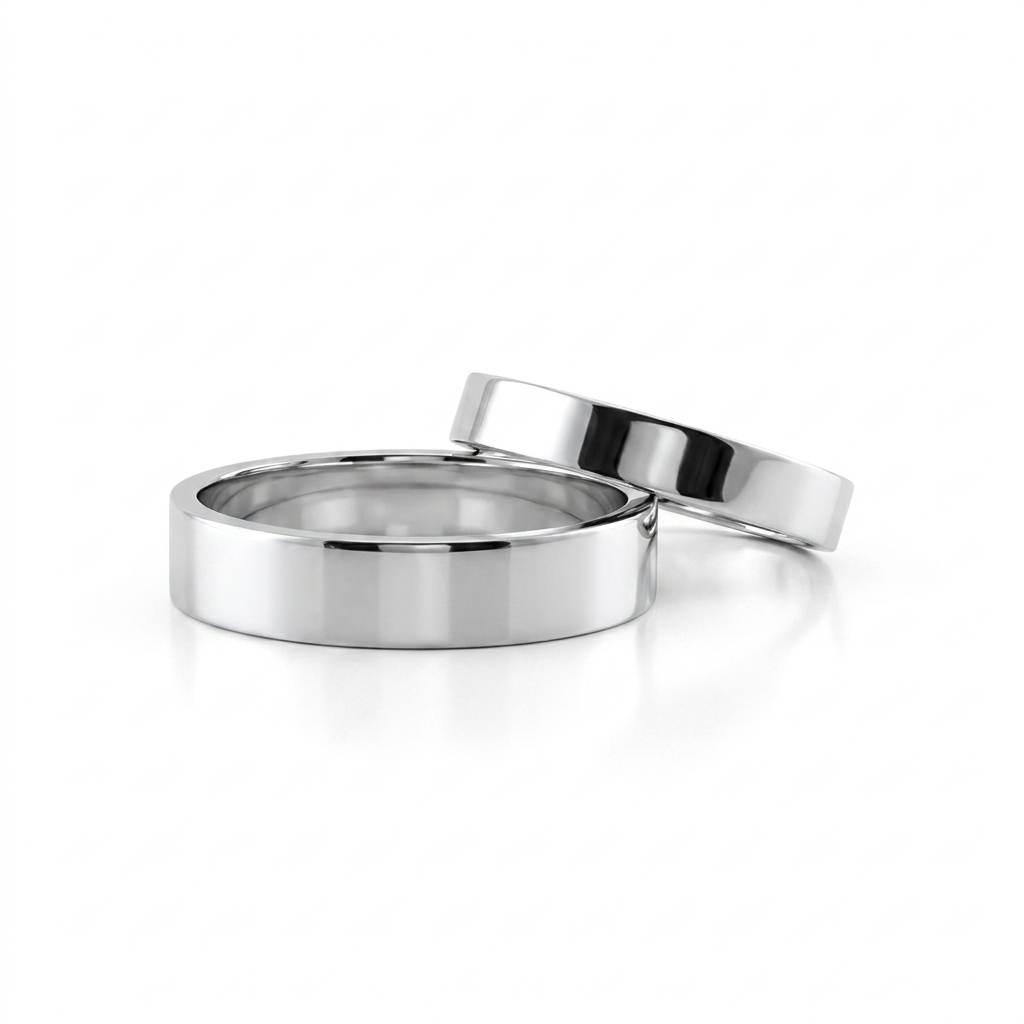
For the buyer, this is especially important in rings worn every day: wedding rings, engagement rings and diamond rings. The plating helps emphasise clean lines, the brilliance of the stone and the precision of the design.
When should you renew rhodium plating
When should you renew rhodium plating? It is better to judge by the condition of the jewellery rather than by a fixed calendar date. Rings wear differently from person to person: some people wear them every day, some take them off at home, and some often expose them to water, cosmetics or household products.
You may want to consider renewing the rhodium plating if you notice several signs:
- white gold looks warmer or slightly yellowish;
- the shine is less mirror-like;
- visible signs of wear have appeared on the surface;
- the colour of the ring looks uneven;
- the area near the base of the finger or along the edges of the band looks different;
- the jewellery has lost its “fresh” look, although the shape and stones are still fine.
The main guide is the visual impression. If the ring no longer looks as clean and cool white as it used to, rhodium replating can restore a neat, well-cared-for appearance.
Why plating wears faster on rings
Rings wear more actively than earrings or pendants. They are constantly in contact with skin, clothing, bags, phones, tabletops and other surfaces. Even very careful everyday wear gradually affects the outer layer of metal.
This is especially noticeable on wedding rings. They are often worn for years without being removed, so the plating naturally becomes thinner in areas of constant contact. Visually, this may look like a soft change in shade: not sudden damage, but a gradual loss of cool whiteness.
Daily habits also influence how quickly plating wears. If you wear your ring while cleaning, exercising, working with your hands or applying cosmetics, the rhodium plating may need renewal earlier. If you remove the jewellery before active tasks and store it separately, its appearance usually stays fresh for longer.
How to tell if it is rhodium wear and not ring damage
For someone new to jewellery, it can be difficult to tell the difference between normal plating wear and a more serious problem. If the ring has become slightly warmer in colour, but its shape has not changed, the stones are securely set, and there are no deep scratches or deformation, it is most likely the rhodium layer.
If, however, you notice that a stone moves, the setting catches on fabric, the band has changed shape or a deep scratch has appeared, it is better not to rely on rhodium replating alone. The jewellery should first be examined by a jeweller. Sometimes professional cleaning, polishing or a check of the stone setting is needed before the plating is renewed.
At KiANIT, we recommend a calm approach: jewellery worn every day lives together with its owner. Signs of wear are natural. The goal is not to make a ring look brand new at any cost, but to maintain its beauty and safety at the right moment.
Rhodium plating and polishing: what is the difference
Rhodium plating and polishing are not the same thing. Polishing works with the surface of the metal: it helps reduce the visibility of small signs of wear and restore smoothness. Rhodium plating creates a new outer layer of rhodium, giving white gold its cool tone and bright shine.
Sometimes these procedures are done together: first the jewellery is cleaned and prepared, then the plating is renewed. The decision depends on the condition of the ring, its design, the presence of stones and the character of the surface.
For example, a plain wedding band and a more complex diamond engagement ring require different approaches. With jewellery that has stones, delicate handling is especially important: not every area should be treated in the same way, and the setting must remain secure.
How to extend the life of rhodium plating
Rhodium plating does not require complicated care, but careful habits help preserve its appearance for longer. The most important thing is to reduce unnecessary contact with harsh environments and hard surfaces.
Remove your ring before cleaning, exercising, gardening, renovation work and any activity where the jewellery may rub or be hit. Apply cream, perfume and cosmetics before putting the jewellery on. Store rings separately so they do not scratch each other.
For home care, a soft dry cloth is enough. Avoid abrasive pastes, hard brushes and unverified products: they may affect the plating and the overall look of the jewellery. If the ring is visibly dirty, professional cleaning is the safer choice.
Should you renew rhodium plating before a wedding or important event
f the jewellery will be in focus - before a wedding, anniversary, photo shoot or important meeting - it is worth checking the rhodium plating in advance. This is especially relevant for white gold and diamond rings: a clean cool metal tone beautifully emphasises the sparkle of the stones.
At the same time, there is no need to do the procedure “just in case” if the ring already looks good. It is better to show the jewellery to a specialist: they can assess the plating, the surface and the setting. Sometimes professional cleaning is enough, while in other cases rhodium replating can noticeably improve the appearance.
This approach is especially important for wedding rings. They have not only aesthetic value, but also personal meaning, so care should be delicate and thoughtful.
When to visit a jewellery workshop
It is worth visiting a jeweller when you notice a change in colour, loss of shine or uneven plating. A check is also helpful if the ring is worn every day and has not been professionally inspected for a long time.
A specialist can determine whether renewing the rhodium plating is enough or whether cleaning, polishing, checking the stones and assessing the overall shape should come first. This helps not only restore a fresh look, but also make sure the jewellery can be worn safely.
At KiANIT, you can discuss jewellery care, check the condition of your ring and understand which restoration option suits your piece. We explain the process clearly, so the owner understands what is happening to the jewellery and why each step is needed.
When should you renew rhodium plating
When should you renew rhodium plating? The jewellery itself usually gives the answer. If white gold has become warmer, the shine softer and the surface less even, the plating can be restored. This is a normal part of ring care, not a sign of poor quality.
Rhodium plating is especially important for white gold jewellery worn every day: wedding rings, engagement rings and minimal diamond designs. Proper care helps preserve their cool tone, clean line and refined premium feel.
If you are unsure whether the plating needs to be renewed now, you can come for a consultation at the KiANIT showroom in Browary Warszawskie at Grzybowska 43A in Warsaw. We will calmly inspect the jewellery, explain the condition of the metal and suggest care that is gentle and appropriate.