Ring Casting: How Metal Becomes Jewellery
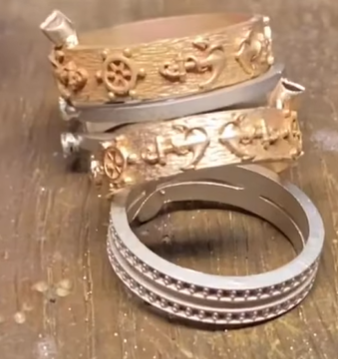
Ring casting: how metal becomes jewellery is one of the clearest ways to understand that a fine piece does not begin with sparkle, but with precision. First comes the idea and the model, then the mould, molten metal, finishing, polishing and the final check of the fit.
For someone choosing wedding rings or a custom piece for the first time, the process can feel almost magical. In reality, it is craftsmanship: careful calculation, precise work with metal and many stages that influence the look, comfort and durability of the ring.
What ring casting means in simple words
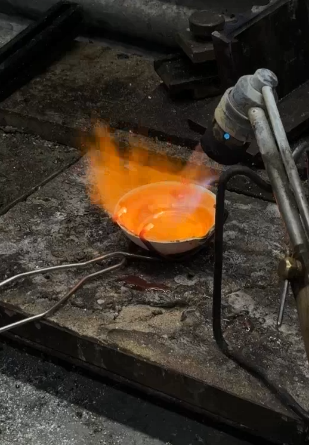
Casting is a jewellery-making technique in which metal is heated until it becomes liquid and then poured into a prepared mould. When the metal cools, it becomes the raw form of the future ring: not yet perfect, without its final shine, but already with its main volume, profile and outline.
It is important to understand that a cast ring does not come out of the mould as a finished jewel. After casting, it is worked by hand and with tools: excess metal is removed, the surface is evened out, the shape is refined, and the piece is prepared for polishing, stone setting or engraving if the design includes them.
Casting is especially useful when you want to design a ring with individual details: an unusual width, a soft profile, texture, more complex geometry or decorative elements. Yet even a classic smooth model requires precision -simple forms reveal the quality of finishing most clearly.
Where a ring begins: model and calculation
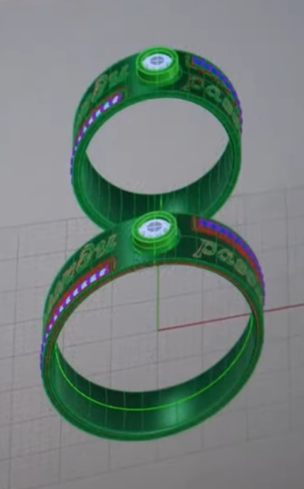
Before the metal stage, there is always a project. First, the details of the ring are defined: width, profile, thickness, size, fit on the finger, metal and fineness. For wedding rings, this is especially important because the piece is made for everyday wear.
A first-time buyer should pay attention to several parameters:
• ring width -affects both appearance and comfort;
• profile -defines whether the ring feels flatter or more rounded;
• inner fit -important for daily comfort;
• metal and fineness -influence colour, density and care;
• future engraving -best considered at the design stage.
At this point, the jeweller is not thinking only about beauty. The ring should withstand daily wear, not feel too heavy or too delicate for its shape, and suit the hand and style of the couple.
The casting mould: why precision matters more than speed
Once the design is approved, the model of the future ring is created. Based on this model, the mould is prepared, and later the molten metal will flow into it. The more precise the model, the cleaner the casting will be.
The mould has to capture more than the outer contour. It takes into account volume, curves, possible decorative elements and areas that will later be refined. If the ring is meant to be minimal, that does not make the work easier: a smooth surface requires especially clean geometry because every inaccuracy is visible.
This is why ring casting is not simply “pouring metal into a mould”. It is a process in which every millimetre is considered in advance. A mistake at an early stage can affect symmetry, fit or the thickness of the piece.
How metal becomes the raw form of a ring
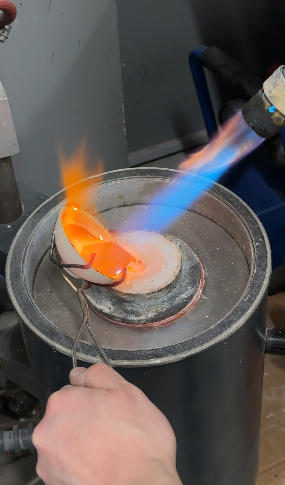
After the mould is prepared, the metal is heated to a high temperature until it becomes liquid. It is then directed into the mould, filling the space of the future piece. Once cooled, the casting is formed -the base of the ring.
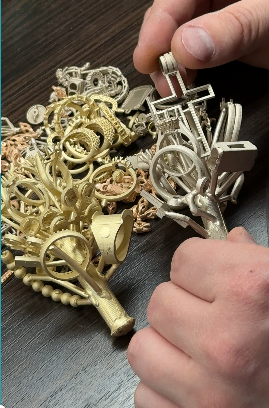
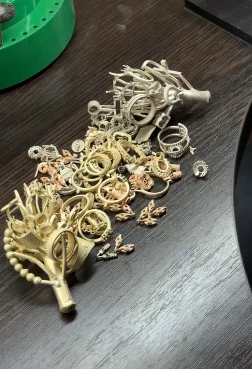
At this stage, the metal has already taken shape, but it is not yet the jewel you would want to wear. The raw casting may have technical marks, a casting channel, roughness or small irregularities that appear during production. This is a normal part of jewellery making.
Then begins a stage that is often underestimated: hand and tool finishing. This is what turns the cast form into a refined ring with clean lines and a pleasant feel on the finger.
Finishing after casting: where quality is born
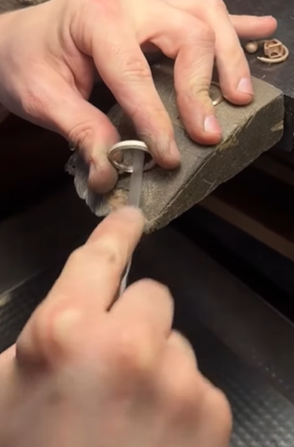
After casting, the jeweller removes unnecessary elements, evens out the surface and refines the shape of the ring. The piece is sanded, its geometry is checked, and both the inside and outside are carefully finished. If the ring has texture, decorative details or spaces for stones, these also need precise refinement.
For a wedding ring, the inner part is especially important. The piece should not only look beautiful in a photo or display case, but also feel comfortable every day. An edge that is too sharp, an unsuitable thickness or a poorly considered fit can be distracting, even if the ring looks perfect from the outside.
At KiANIT Jewelry, we see a ring as a personal piece, not simply an object made of metal. That is why fitting, discussing how the ring feels and paying attention to details -from width to final shine -are all important parts of the process.
Polishing, matte finish and texture
The final surface of a ring can vary. Classic polishing gives a mirror-like shine. A matte finish makes the piece calmer and more contemporary. Texture adds depth and individuality.
The choice of finish changes the character of the ring:
• a polished ring looks brighter and more ceremonial;
• a matte ring feels calm, soft and modern;
• a combined finish brings together shine and a quieter texture;
• a textured ring highlights handcraft and individuality.
A first-time buyer should know that every surface changes over time with wear. Polished finishes may develop fine marks, while matte surfaces can gradually soften in areas of contact. This is the natural life of jewellery, not a defect. If needed, the surface can be refreshed during professional care.
Which metals are used for ring casting
For wedding rings and individual designs, gold in different colours and finenesses is most often chosen, as well as platinum. Fineness shows the amount of precious metal in the alloy. In simple terms, it is not about “better or worse”, but about different properties, colours and feelings in wear.
Gold 585 is often chosen for its balance of durability and practicality. Gold 750 contains a higher proportion of gold and is perceived as a more premium option, but the right choice depends on the design, thickness and purpose of the piece. Platinum is valued for its density, noble tone and distinctive feel as a material.
Metal is not chosen by colour alone. Lifestyle, desired ring width, sensitivity to tone, planned engraving and whether the piece should pair with an engagement ring all matter.
Ring casting: how metal becomes jewellery step by step
In a simplified form, the ring’s journey looks like this:
- Discussing the design, size, width, profile and metal.
- Creating the model of the future piece.
- Preparing the casting mould.
- Heating the metal and pouring it into the mould.
- Cooling and receiving the raw casting.
- Finishing, sanding and refining the geometry.
- Polishing, matte finishing, engraving or other final details.
- Checking quality and fit.
Each stage influences the next. Good polishing cannot save an incorrect shape, and beautiful metal cannot compensate for an uncomfortable fit. That is why custom jewellery requires not only a good idea, but also careful guidance throughout the process.
How casting differs from a ready-made ring
A ready-made ring is convenient because you can see and try it on immediately. But custom making through casting gives more freedom: the width can be chosen more precisely, the profile can be adjusted, the metal can be selected, engraving can be added, or a pair of rings can be created in one aesthetic with different individual details.
This is especially valuable for couples who do not want to choose an “almost right” option. One person may feel better in a narrower ring, the other in a slightly wider one. One may prefer polish, the other a matte finish. In a custom approach, these differences do not prevent the pair from looking harmonious.
At the same time, casting does not mean the ring has to be complex or unusual. Often the most beautiful pieces are minimal. Their value lies in proportion, comfort and the quiet confidence of the form.
What to consider before ordering
Before choosing ring casting, it is worth discussing several questions with the jeweller. They help avoid random decisions and make a piece that will be comfortable to wear for a long time.
Size and fit
The size should be checked more than once. The feel can change depending on temperature, time of day and the width of the future ring. Wider models may feel tighter than thinner ones, even in the same size.
Width and profile
A narrow ring looks delicate, while a wide one feels more expressive. A rounded profile is often perceived as softer, while a flat profile looks more modern and graphic. The best option is the one that suits your hand.
Metal and colour
Yellow, white and red gold create different moods. Platinum looks restrained and noble. It is best to choose not only from photos, but also in person: metal colours can look different against the skin.
Engraving
If engraving is planned, it is better to consider it in advance. The ring width, inner surface and length of the text all matter. The inscription should be personal, but also technically suitable for the chosen model.
Why casting requires trust in the workshop
Ring casting: how metal becomes jewellery is not only a technology, but also a chain of decisions. At every stage, someone is responsible for precision: whether the model is calculated correctly, whether the mould is cleanly made, whether the surface is carefully finished, and whether the ring sits comfortably on the finger.
That is why it is important to choose not just an abstract piece of jewellery, but a place where everything is explained in clear language. A good consultation helps you understand fineness, width, profiles and care without pressure or unnecessary technical terms.
At KiANIT Jewelry in Warsaw, you can discuss your future rings in the Browary Warszawskie showroom at Grzybowska 43a: try on different forms, compare the fit, see metal colours in person and understand which option feels closest to you.
How to care for a ring after it is made
Even a carefully made ring lives together with its owner. It comes into contact with hands, water, cosmetics, surfaces and other jewellery. Over time, signs of wear may appear on the metal.
The basic rules are simple: take the ring off before active work with your hands, store it separately from other jewellery and avoid aggressive chemicals for cleaning at home. To refresh the shine, renew a matte finish or check the condition of the piece, it is better to visit a jewellery workshop.
This helps the ring keep its neat appearance for longer, while the surface remains pleasant and well cared for.
Casting is the journey from an idea to a personal piece
Ring casting is the moment when metal receives its shape, but the true piece of jewellery is born later: in finishing, fit, polishing and attention to detail. For a couple, it is a way to create not just rings, but objects with personal meaning that are comfortable for everyday life.
If you are choosing wedding rings for the first time, start with a consultation. At KiANIT Jewelry, you can calmly compare metals, widths, profiles and surface finishes, and then receive an individual calculation based on the form, fineness, weight and selected details.