Natural vs Lab-Grown Diamond: Which Is Better for an Engagement Ring
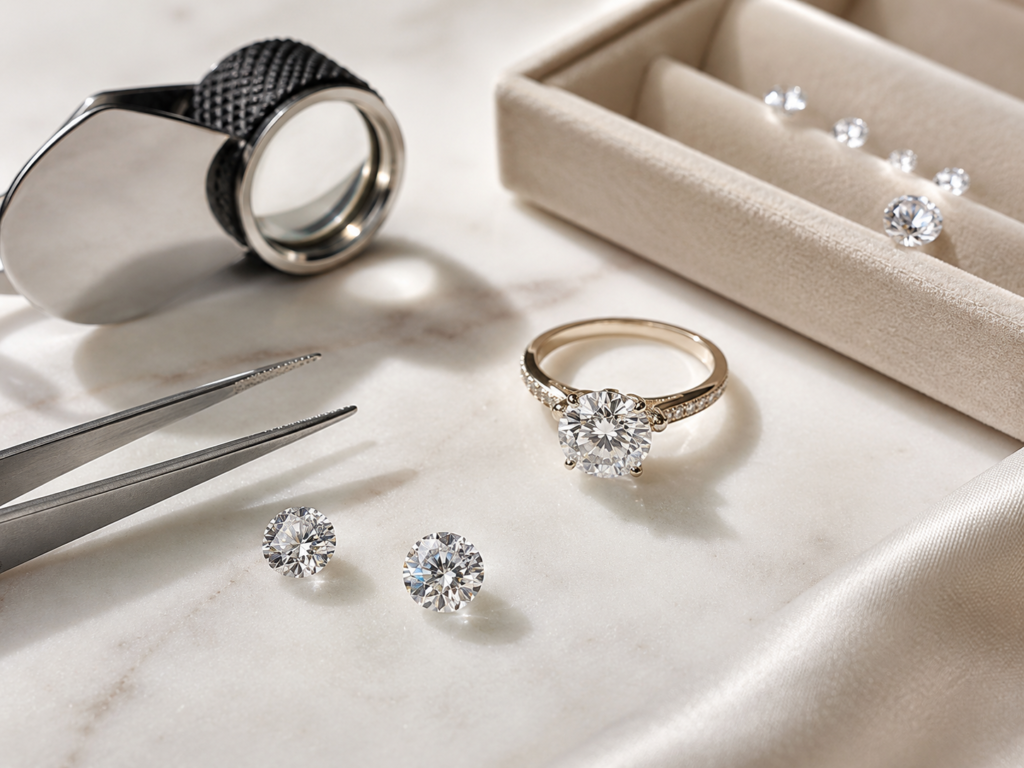
Natural vs lab-grown diamond is one of the most common questions when choosing an engagement ring. Visually, both stones can look very similar: they can sparkle beautifully, have a refined cut and show strong characteristics. Yet their origin, perception and long-term meaning are different.
The key is not to choose by the name alone. It is better to understand what matters most to you: natural origin, diamond size, 4C characteristics, symbolism or the possibility of choosing a more expressive diamond with similar initial expectations. At KiANIT, we help compare options by certificate, proportions, cut quality and the way the stone looks in a specific ring.
How a Natural Diamond Differs from a Lab-Grown Diamond
A natural diamond forms in nature. Its origin is part of its value: each stone was created naturally and exists as a rare mineral with its own history.
A lab-grown diamond is created in laboratory conditions. It is not an imitation and not glass: it is also a diamond, but its origin is not natural. That is why, when choosing a stone, it is important to look not only at its appearance but also at the document that states whether the diamond is natural or laboratory-grown.
For a first-time buyer, the simplest way to think about it is this: a natural diamond is valued for its natural origin and rarity, while a lab-grown diamond is valued for the possibility of choosing a more visible stone with strong characteristics within an individually calculated budget.
What You Can See by Eye and What Only a Certificate Shows
БWithout professional verification, it is almost impossible to visually distinguish a natural diamond from a lab-grown diamond, especially when the stone is well cut and already set in a ring. Most buyers see not the origin, but the brilliance, shape, size and clarity.
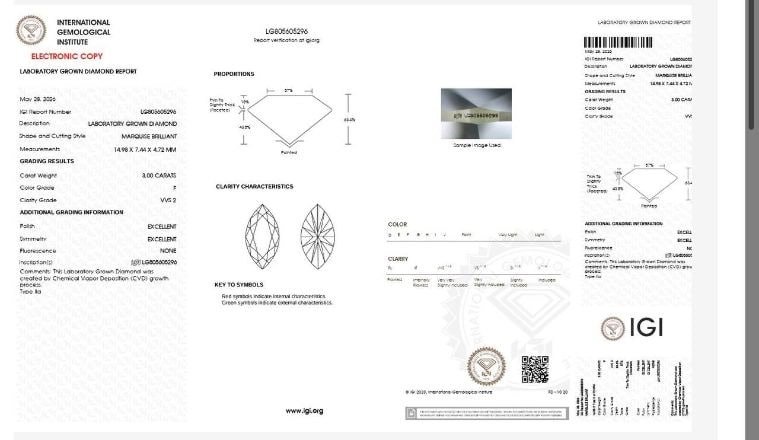
A certificate shows what cannot be assessed “by eye”. It includes the stone’s origin, carat weight, colour, clarity, cut quality and other parameters. This is especially important for an engagement ring: a diamond is not chosen for one season, so its characteristics should be clear and confirmed.
We recommend paying attention to certificates from recognised gemmological laboratories. They help compare diamonds objectively, rather than only by emotion in front of the display case.
4C: How to Compare a Natural and a Lab-Grown Diamond
Both types of diamonds are assessed using the 4C system. These are the four main diamond characteristics: carat weight, colour, clarity and cut.
Carat Weight
Carat indicates the weight of a diamond, but it does not always equal visual size. Two stones of the same carat weight can look different because of their shape and proportions. For example, an oval or elongated cut often appears larger than a round diamond of similar weight.
For an engagement ring it is important not to focus only on carats. Sometimes a slightly smaller diamond with a better cut looks livelier, brighter and more elegant.
Colour
Colour shows how close the diamond is to being colourless. The less visible the tint, the “cleaner” the diamond appears. But on the hand, perception also depends on the metal: in yellow gold, a slight warmth in the stone can look soft and harmonious, while in white gold or platinum the tint may be more noticeable.
That is why colour is best chosen together with the setting, not separately.
Clarity
Clarity describes the internal characteristics of the stone. Many diamonds have natural or technological inclusions, but not all of them are visible without magnification. For the buyer, the more important question is whether these characteristics are visible to the naked eye and whether they affect the beauty of the stone.
A good choice does not always mean “perfect” clarity on paper. It means a diamond that looks clean and beautiful in its actual setting.
Cut
Cut has the strongest influence on brilliance. It determines how the diamond returns light. Even a diamond with good colour and clarity can look dull if its proportions are not well balanced.
That is why, when comparing a natural and a lab-grown diamond, we always advise starting not with origin, but with cut quality. Beautiful light inside the stone is what you will see every day.
Natural vs Lab-Grown Diamond: Comparison
| Criterion | Natural Diamond | Lab-Grown Diamond |
| Origin | Forms in nature | Created in laboratory conditions |
| Appearance | Can look equally impressive with a good cut | Can also show strong brilliance and beautiful light performance |
| Rarity | Valued for natural origin | Rarity is linked not to nature, but to the characteristics of a specific stone |
| Certificate | Should confirm parameters and natural origin | Should clearly state laboratory origin |
| Symbolism | Often chosen for uniqueness and natural history | Often chosen for rationality and expressive appearance |
| Best for | Those who value tradition, natural origin and long-term perception | Those who want to focus on size, characteristics and a modern approach |
When It Is Better to Choose a Natural Diamond
A natural diamond is a good choice if classic symbolism matters to you. It is for those who see an engagement ring not only as jewellery, but also as a future family value.
This type of stone is often chosen when you want to emphasise the uniqueness of the moment. Natural origin adds an emotional layer: the diamond existed long before it became part of the ring.
A natural diamond is also suitable if you want the most traditional solution. A round cut, refined setting, white gold or platinum - these combinations look timeless and do not depend on trends.
When to Consider a Lab-Grown Diamond
A lab-grown diamond can be a good choice if you want a more visible stone or specific characteristics without making the selection process too complex. It is especially interesting for those who look at a diamond rationally: comparing the 4C, shape, visual size and overall look of the ring.
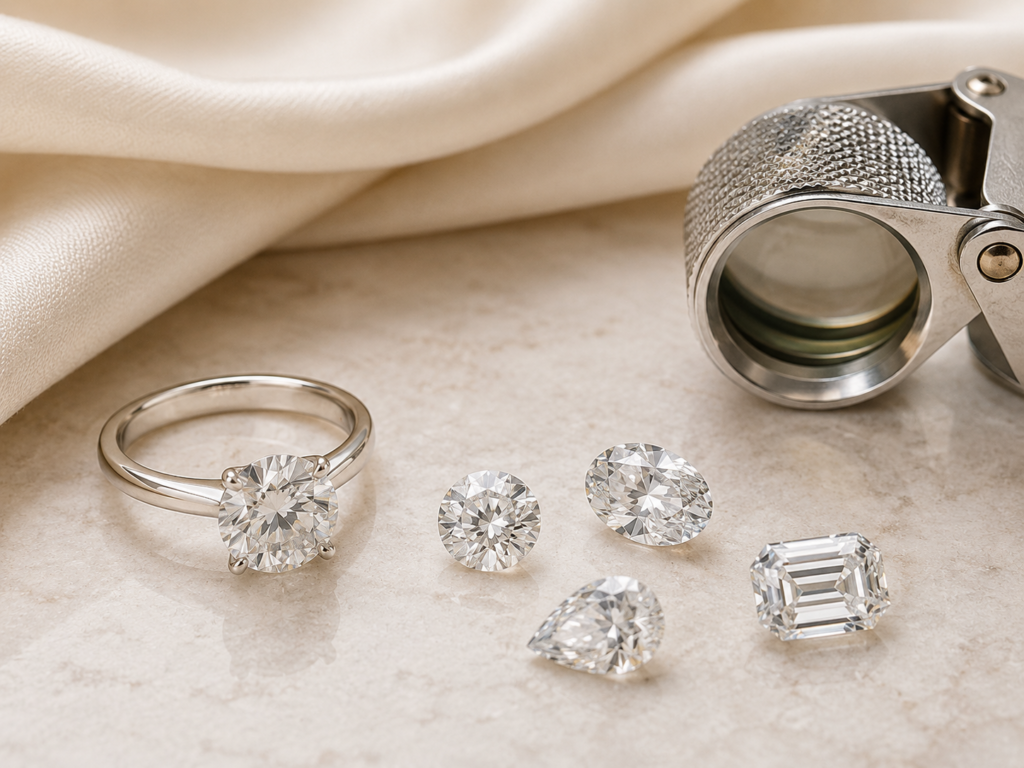
This option suits couples who appreciate a modern approach. For example, if you like an oval, emerald or pear-shaped cut with a distinctive silhouette, a lab-grown diamond can give more design flexibility.
However, it is especially important not to choose only “by size”. Laboratory origin does not remove the need to assess cut, clarity, colour and certificate. The stone should still be beautiful, balanced and properly matched to the setting.
How to Choose a Stone for an Engagement Ring
Start with the impression the ring should create. Some couples prefer delicate classics with a small central stone. Others want a more noticeable diamond , one that immediately becomes the main accent.
Then define your priorities:
- the stone’s origin;
- cut shape;
- visual size;
- metal colour;
- setting style;
- certificate availability;
- comfort for everyday wear.
After that, it is better to compare specific diamonds. Not an abstract “natural versus lab-grown”, but two or three real stones side by side: how they sparkle, how they look in the chosen setting and how harmonious they appear on the hand.
At KiANIT we often begin a consultation with exactly this: showing the difference not in theory, but through examples. The choice becomes calmer because the person sees not just a table of characteristics, but the future ring.
Which Setting to Choose for a Natural or Lab-Grown Diamond
For a natural diamond, people often choose a refined setting that highlights the stone itself. It can be a classic solitaire, a slim band or a delicate setting with small additional stones.
Clean, balanced forms also work well for lab-grown diamonds. If the central stone appears visually larger, it is important not to overload the design. The setting should maintain balance: not compete with the diamond, but enhance its shape.
White gold and platinum emphasise cool brilliance. Yellow gold makes the look warmer and softer. Red gold adds a romantic note, but it is best assessed together with the specific skin tone and stone colour.
The Most Common Mistakes When Choosing
The first mistake is choosing only by carat weight. A larger stone does not always look more beautiful if it has a weaker cut or unbalanced proportions.
The second mistake is not reading the certificate. It is important to understand exactly what you are buying: a natural or lab-grown diamond, what characteristics it has and who confirmed them.
The third mistake is comparing stones without considering the setting. The same diamond can look different in a slim solitaire, a higher setting or a ring with additional stones.
The fourth mistake is choosing under the influence of the moment. An engagement ring should be loved not only today. It should be comfortable, durable and visually close to the person who will wear it every day.
What to Choose: Natural or Lab-Grown Diamond
There is no universal answer. A natural diamond is a choice about tradition, natural rarity and emotional depth. A lab-grown diamond is a choice about a modern approach, expressiveness and flexibility in characteristics.
When in doubt, do not start with the question “which one is more correct”. Start with another question: which ring speaks more accurately about your couple? For some, it will be a classic natural diamond in a restrained setting. For others, it will be a beautifully shaped lab-grown stone that looks bright and modern.
At KiANIT Jewelry in Warsaw, you can compare options during a consultation, view stones side by side, discuss certificates, metal, setting shape and stone placement. We will help you choose an engagement ring so that the decision feels clear, calm and truly yours.