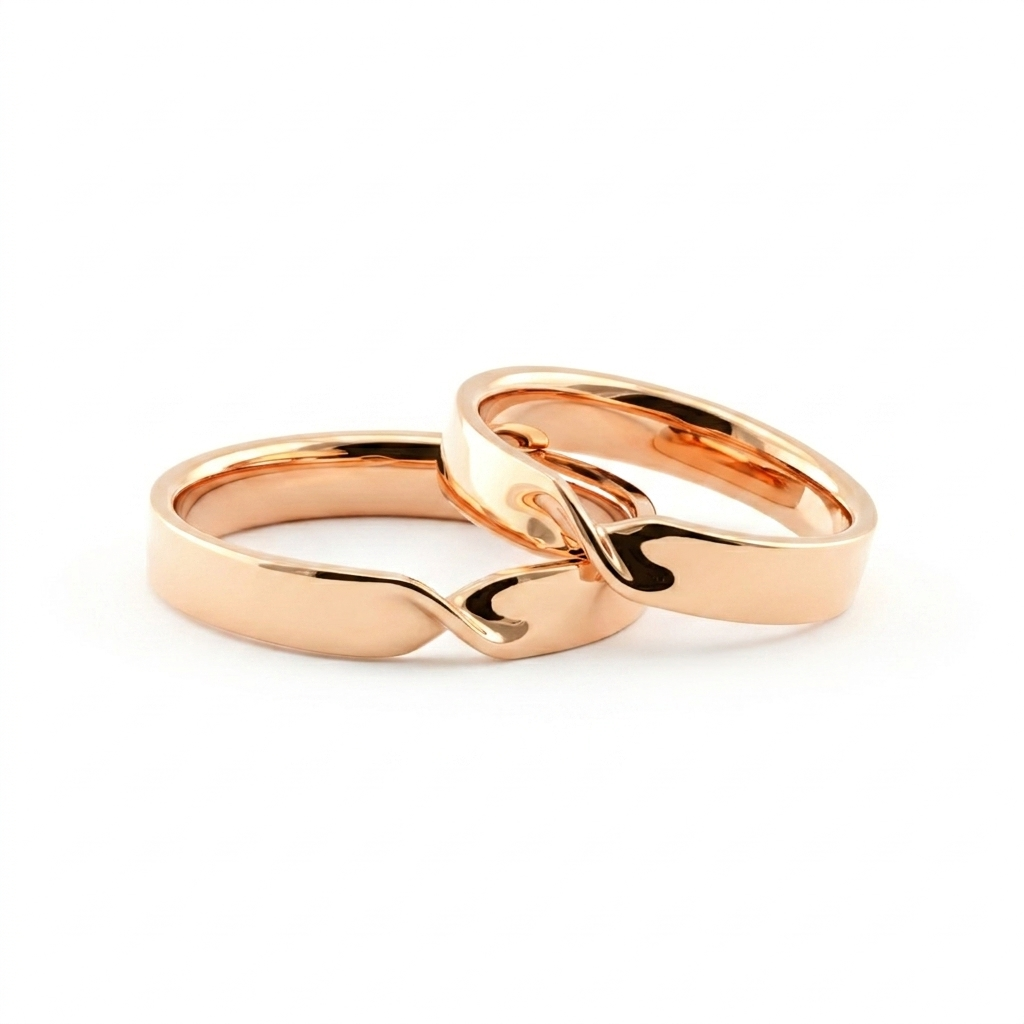
What to Do If Your Ring Is Too Small or Too Big: A Calm KiANIT Guide
What to do if your ring is too small or too big is a common question, especially when the piece is worn every day. Finger size can change because of the season, temperature, weight changes, pregnancy, sport, or simply the natural characteristics of the body. It does not always mean the ring was chosen incorrectly: in many cases, the situation can be assessed and solved carefully with a jeweller.
The most important thing is not to stretch, squeeze, or adjust the ring at home. A wedding band or engagement ring may look simple at first glance, but the result depends on the metal, fineness, width, profile, engraving, stones, and the overall construction of the piece.
Why a ring can suddenly become too small or too big
A finger does not keep the same size throughout life. Even during one day, a ring may fit differently: tighter in the morning, looser in the evening, snugger in summer, and calmer in winter. Fit is affected by temperature, fluid retention, physical activity, and how actively you use your hands.
If a ring has become too small, it may leave a mark, be difficult to remove, or press uncomfortably against the joint. If a ring has become too big, it may spin, slide toward the knuckle, or feel unsafe when washing hands or walking outside.
It is important to distinguish temporary discomfort from an actual change in size. Sometimes it is enough to observe the ring for several days at different times. But if the ring regularly feels tight or, on the contrary, slips off, it is better to visit a jewellery workshop and have the fit checked professionally.
What to do if your ring is too small
If your ring is too small, do not force it off. First, try cooling your hand, lifting it for a few minutes, and gently removing the ring without sudden movements. If the ring will not come off and the finger becomes swollen, numb, or changes colour, this is no longer a jewellery service issue but a situation that requires urgent help.
Once you manage to remove the ring, do not put it back on “just to check”. Even if it passes over the joint today, swelling may increase tomorrow. It is better to bring the ring for inspection: a jeweller will assess whether the ring size can be changed and which method will be safe for the design.
When increasing a ring size, it is usually important to consider:
- the metal and gold fineness of the ring;
- the width and thickness of the band;
- the presence of diamonds or a decorative stone line;
- inner engraving;
- the profile shape;
- how much the size needs to be increased.
The simpler the ring, the easier it is to consider resizing. Complex models with stones around the entire band, texture, unusual geometry, or deep engraving require especially careful assessment.
What to do if your ring is too big
If your ring is too big, the main risk is losing it. A loose ring can slip off unnoticed while washing hands, putting on gloves, exercising, or in cold weather when fingers become slimmer.
The first step is to temporarily stop wearing the ring in situations where it may slip off. It is not worth trying to “tighten” the fit with thread, glue, or random inserts: such solutions can damage the metal, spoil the appearance, and create discomfort.

In the workshop, a jeweller will check how much too large the ring is and whether reducing the size is possible. If it is a classic wedding band without stones, the task is usually simpler. If the ring has diamonds, a complex relief, or personal engraving, the solution is chosen individually.
Can every ring be resized
Not always. This is an important point to know in advance. The possibility of resizing a ring depends not only on whether it has become too small or too big, but also on its construction.

For example, a smooth ring without stones usually offers more room for correction. A ring with stones around the entire circumference, a complex pattern, or a non-standard shape may have technical limitations. In such cases, the jeweller assesses whether the symmetry, stone setting, metal strength, and appearance of the piece will remain intact.
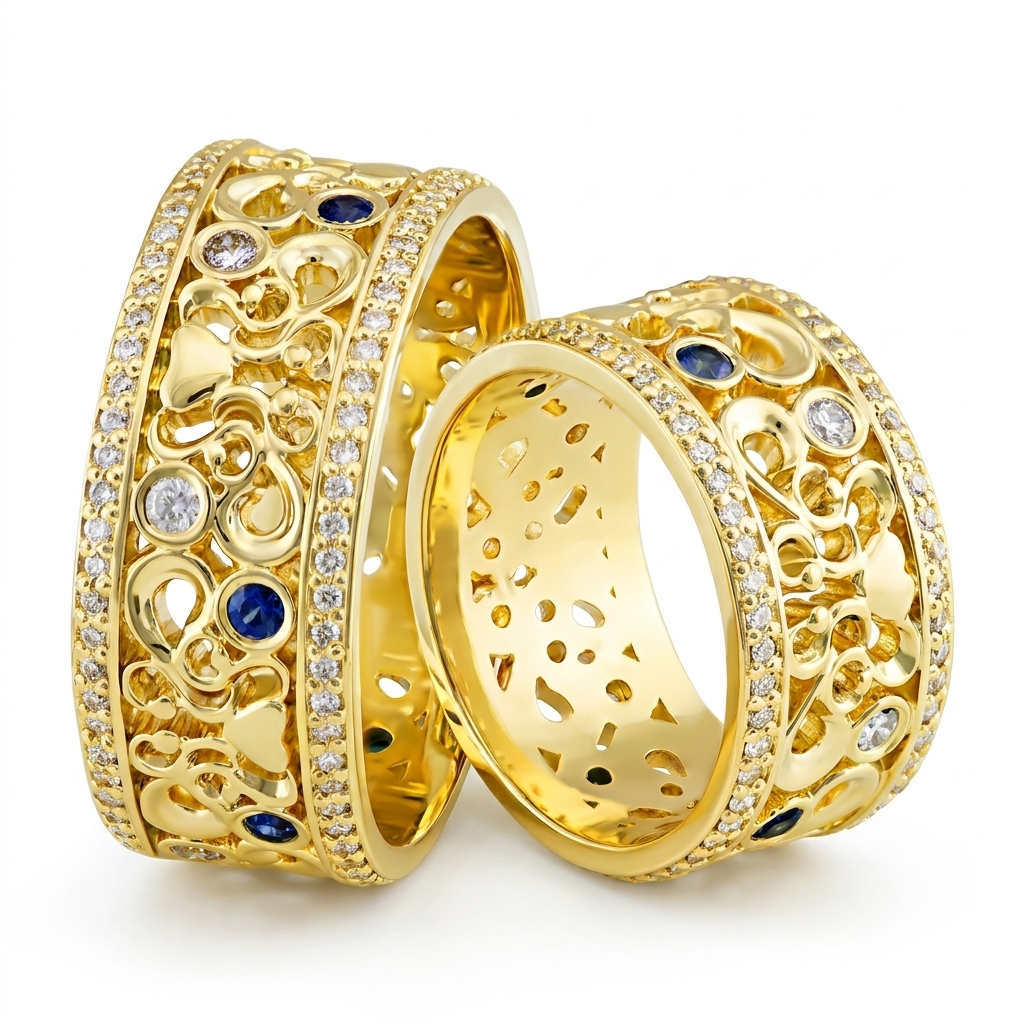
Engraving also requires separate attention. If the inscription is located in the area where the metal needs to be worked on, it may need to be restored or moved. That is why, before changing the size, it is important not only to say “the ring is tight”, but also to show the piece to a specialist.

How to know if the ring size is right
A good fit is a balance between comfort and safety. A ring should not press, but it should not slip off freely either. Ideally, it passes over the joint with slight resistance and sits comfortably at the base of the finger.
Pay attention to a few signs:
- the ring does not leave a painful mark;
- the finger does not swell around the ring;
- the ring does not slide off by itself when the hand moves;
- it can be removed without pain, but not too easily;
- the fit feels comfortable in the morning, during the day, and in the evening.

With wide wedding bands, the size may feel different than with thin rings. The wider the band, the tighter the ring may feel on the finger. That is why, when choosing or adjusting a ring, it is important to consider not only the size number, but also the width, profile, and daily habits.
Why you should not resize a ring without diagnosis
Sometimes the task seems simple: if the ring is too small, make it bigger; if it is too big, make it smaller. In practice, a jeweller first looks at the ring as a whole. It is important to understand how the metal will behave during work, whether there is tension in the construction, whether the stones are securely set, and whether the shape may be affected.
Particular care is needed with diamond engagement rings. The centre stone, setting height, side stones, and fine band require careful checking. Even a small size adjustment should preserve the balance of the piece, so the ring remains not only beautiful but also comfortable for everyday wear.
At KiANIT, we look at a ring not simply as a “size”, but as a complete piece: metal, fit, profile, design, and how it feels on the hand. This approach helps avoid random decisions and choose the correct way to work with the ring.
If the ring fits differently in different seasons
Sometimes a ring feels tight in summer and loose in winter. This is normal: fingers respond to temperature and humidity. In such a situation, it is not always necessary to change the size immediately. Sometimes it is better to observe how often the issue appears and when it happens.
If the ring feels slightly tighter in hot weather but does not press and can be removed easily, you may wait and observe. If it regularly gets stuck, causes discomfort, or moves around the finger in an unsafe way, it is worth coming in for a consultation. A jeweller will help determine whether this is a temporary seasonal change or a size that truly needs correction.
What to consider before resizing a ring
Before visiting a showroom or workshop, it is helpful to remember a few details. This will make it easier to understand the situation and choose the right solution.
Ask yourself:
- when the ring became uncomfortable - suddenly or gradually;
- at what time of day it fits worst;
- whether your weight, lifestyle, or hand activity has changed;
- whether the ring presses at the base of the finger or does not pass over the joint;
- whether there is an inner engraving;
- whether the stones go all the way around or are only in the upper part;
- how often you wear the piece.
These observations do not replace a jeweller’s assessment, but they help describe the issue more accurately. For someone new to jewellery, this is especially important: you do not need to know professional terms, only to explain honestly how the ring behaves in daily life.
Can you avoid size problems in advance
Not completely, because the body changes. But you can reduce the risk of choosing the wrong size. It is better not to measure your size when your hands are cold, immediately after sport, or during intense heat. It is also important to try rings of a similar width: a thin sizing ring and a wide wedding band can feel very different.
When ordering an individual piece, it is worth discussing not only the size but also the ring profile. Some shapes feel softer, while others sit more firmly. For a wedding band worn every day, comfort is especially important: it should look beautiful and not interfere with ordinary life.
At KiANIT, you can calmly discuss the fit, try ring sizers, and compare the feel of different shapes. This helps choose the size consciously, without hurry or pressure.
When to contact KiANIT
It is worth contacting us if the ring regularly presses, is difficult to remove, spins, slips off, or you simply feel that the fit has changed. It is especially important to show the piece to a specialist if it has diamonds, engraving, complex texture, or a non-standard design.
At the KiANIT showroom in Browary Warszawskie at Grzybowska 43a in Warsaw, you can check the fit, discuss possible adjustment, and understand which solution will be safe for your ring. If resizing is possible, it is assessed with the construction in mind. If not, an alternative path will be suggested to preserve the beauty and meaning of the piece.
What to do if your ring is too small or too big: the key takeaway
What to do if your ring is too small or too big? First, do not panic and do not try to adjust the size yourself. Then observe how often the issue repeats and show the ring to a jeweller.
A ring - especially a wedding band or engagement ring - is connected with a personal story. That is why resizing should not be a quick formality, but careful work with respect for the design, metal, and your comfort. KiANIT will help check the size, explain the possible options in simple words, and suggest how to restore a comfortable fit to your ring.