What Is 4C - How a Diamond Is Evaluated in Simple Words
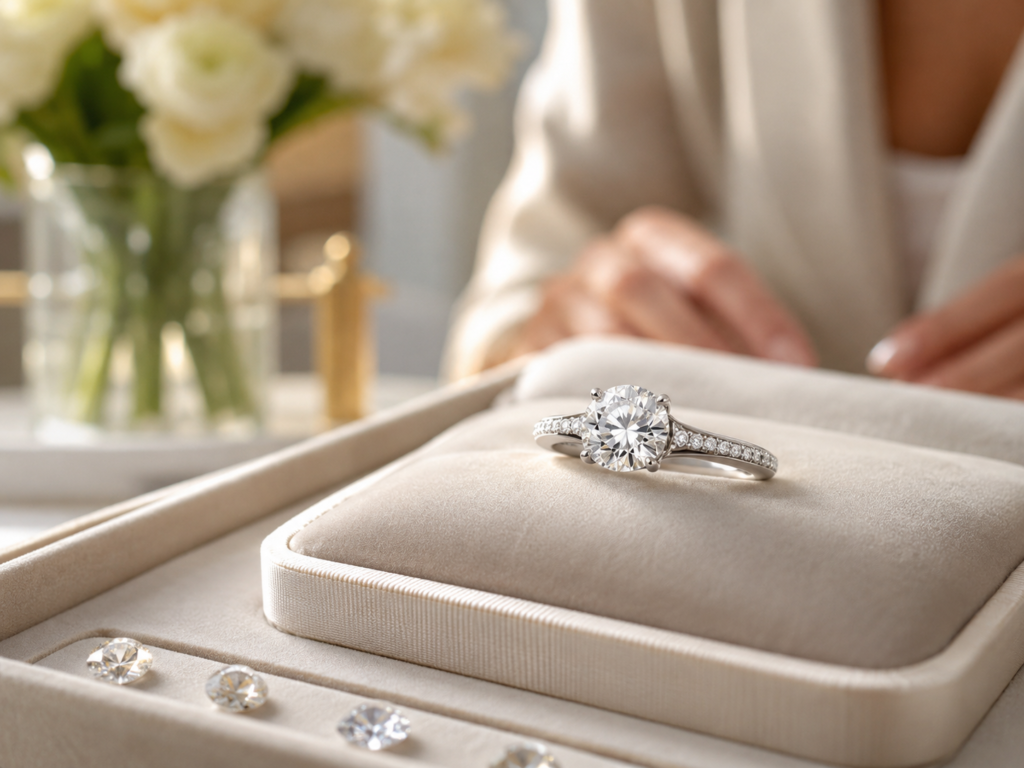
What is 4C? It is an international system that helps assess a diamond’s quality through four main characteristics: carat, color, clarity and cut. With 4C, you can compare different stones and understand why diamonds that look similar at first glance may differ in brilliance, rarity and overall impression in a ring.
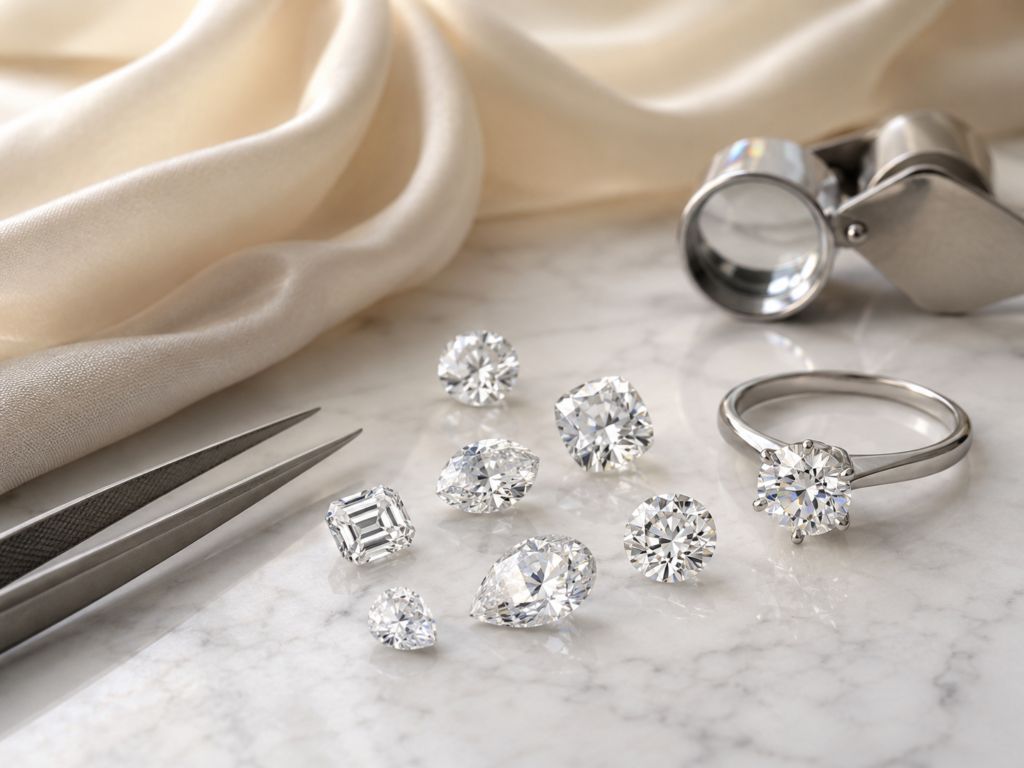
For someone choosing an engagement ring for the first time, 4C may sound like a complicated evaluation system. In practice, it is much easier to understand: these are four questions about a diamond. How much does it weigh? How colorless is it? Does it have natural inclusions? And how well is it cut to reflect light beautifully?
What 4C Means in a Diamond
4C refers to four diamond characteristics whose names begin with the letter C:
- Carat - the diamond’s weight in carats;
- Color - the degree of colorlessness of the stone;
- Clarity - the presence or absence of natural inclusions;
- Cut - the quality of the cut, which affects brilliance.
These parameters are listed in a diamond certificate and help evaluate the stone beyond a photo or first impression. Still, it is important to understand that 4C is not a simple formula where “the higher everything is, the better.” In jewelry, a diamond is perceived as a whole - through its size, sparkle, shade, shape, setting and the way it looks on the hand.
A thoughtful choice is not about chasing the highest grade in every line. It is about finding the right balance between beauty, quality and the purpose of a specific ring.
Carat: carat is weight, not size
Carat shows the weight of a diamond. It is one of the best-known parameters, but it is also the one that often causes confusion. Many people think carat means the size of the stone, although it actually refers to weight.
Two diamonds with the same carat weight can look different. One may appear larger because of its shape and proportions, while another may look smaller if part of its weight is carried in the depth of the stone. That is why, when choosing a diamond, it is important to look not only at the carat number but also at how the diamond appears from above, in the setting and on the hand.
Shape also influences perception. A round diamond gives a classic sparkle, an oval visually elongates the finger, a pear shape looks more expressive, and an emerald cut creates a calm, architectural effect. The same weight in different shapes can create a completely different mood.
When choosing an engagement ring, it is better not to begin only with the question “which carat is best?” First, it is worth understanding what the ring should feel like: delicate, noticeable, classic or more individual. After that, the diamond’s weight can be chosen much more precisely.
Color: diamond color in simple words
Diamond color is not about a bright shade, but about the degree of colorlessness. The less visible warmth there is in the stone, the higher it is evaluated for color. The most colorless diamonds appear transparent, cool and visually very clean.

In real jewelry, however, color is not perceived separately from the metal. In white gold or platinum, the shade of a diamond may be more noticeable because the cool metal emphasizes the stone’s transparency. In yellow or rose gold, a slight warmth in the diamond often looks soft and natural.
For a first-time buyer, it is important to know that choosing the highest color grade is not always necessary. Sometimes the difference between neighboring categories is visible only during a professional side-by-side comparison. In a finished ring, especially on the hand and in everyday lighting, that difference may be almost unnoticeable.
That is why color is best evaluated in the context of the future piece of jewelry. The same diamond can look different in different metals and designs.
Clarity: diamond clarity without complicated terms
Clarity shows whether a diamond has natural internal features. These may include small inclusions, points, cloudiness or other traces of the stone’s formation. They occur naturally because a diamond is a natural mineral, not a perfectly uniform material.
The main question is not whether inclusions exist at all. What matters is whether they are visible to the naked eye and whether they affect the beauty of the stone. Many inclusions can only be seen under magnification, while in everyday life the diamond appears clean, transparent and bright.
For an engagement ring, it is often enough to choose a diamond that looks eye-clean. This means that with a normal glance, a person does not see the stone’s internal features, and they do not interfere with the overall impression of the jewelry.
The position of inclusions also matters. If they are closer to the edge, they may be partially hidden by the setting. If they are located in the center or affect the passage of light, they become more important in the evaluation.
Cut: the cut is responsible for diamond brilliance
Cut is one of the key 4C parameters because it determines how a diamond reflects light. A good cut makes the stone feel alive: it sparkles, flashes with movement and plays beautifully even in soft lighting.
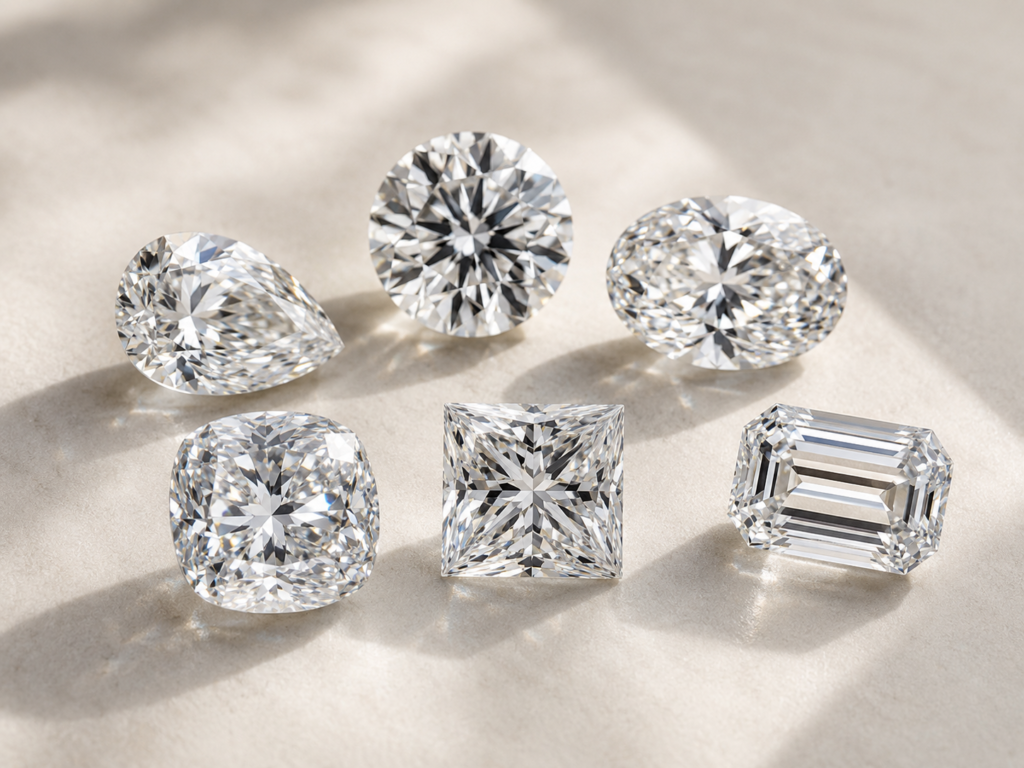
It is important not to confuse shape with cut quality. Shape is the outline of the stone: round cut, oval, pear, marquise, cushion, princess or emerald cut. Cut quality refers to proportions, symmetry, polish and how precisely the facets work with light.
Even a diamond with good carat weight, color and clarity may look less expressive if the cut is weak. And the opposite is also true: a well-cut stone can appear brighter and more visually attractive, even if the other characteristics are not the highest possible.
That is why cut deserves special attention when choosing a diamond. For many clients, brilliance becomes the main emotional argument: the stone may not be the largest, but if it plays beautifully with light, the ring looks alive and precious.
Why 4C Should Be Evaluated Together
What is 4C - and how is a diamond evaluated in simple words? It is not four separate grades, but a system that helps you see the full picture. Carat, color, clarity and cut are connected, and the beauty of the stone depends on how they work together.
For example, if you want a diamond to look more noticeable visually, you can pay attention not only to carat weight but also to shape. An oval or pear shape may look larger on the finger than some other shapes of the same weight.
If the ring is planned in yellow or rose gold, you can approach the diamond’s color more softly. If the diamond looks clean to the eye, it is not always necessary to choose the highest clarity grade in the certificate. Cut, however, often deserves more attention because it directly affects brilliance.
That is why two diamonds with similar value on paper can create different impressions in real life. One may feel calm and restrained, another brighter and more radiant. The goal is to find the one that suits the person and the future piece of jewelry.
Diamond certificate: why it matters
A diamond certificate is a document that lists the stone’s main characteristics. It records carat weight, color, clarity, cut and other parameters. For the buyer, the certificate matters because it makes the choice more transparent.
A certificate helps compare diamonds with one another. You see not just a beautiful description, but specific characteristics. This is especially important when choosing an engagement ring, where you want to feel confident about the stone and understand exactly what you are choosing.
At the same time, a certificate does not replace live perception. It shows the parameters, but it does not always communicate the character of the stone. A diamond should be viewed in motion, in different lighting and next to the setting. Sometimes two stones with close characteristics look different because of proportions, shape or the nature of their inclusions.
A good approach is to combine the document with visual comparison. Then the choice becomes both emotional and conscious.
How to choose a diamond by 4C
If you are choosing a diamond for the first time, you do not need to dive into every professional detail immediately. Start with simple questions: what ring style do you like, which metal are you considering, should the stone look delicate or noticeable, and which shape feels the most beautiful?
After that, you can move on to 4C. First, look at the overall impression: whether you like the stone, how it sparkles, whether the shape suits the hand and the design. Then check the characteristics: carat, color, clarity, cut and certificate.
A comfortable order of choice can look like this:
- define the desired ring style;
- choose the diamond shape;
- evaluate the visual size of the stone;
- see how it sparkles in different lighting;
- check the color in the chosen metal;
- clarify the clarity and position of inclusions;
- compare the characteristics in the certificate;
- choose a setting that reveals the stone.
This approach helps you avoid getting lost in numbers. 4C becomes not a complicated table, but a clear tool for a calm choice.
Common mistakes when choosing a diamond
The first mistake is choosing only by carat. A large stone does not always look better if it has unsuccessful proportions or weak light performance. Sometimes a diamond of slightly lower weight but with a good cut makes a stronger impression.
The second mistake is thinking that only maximum characteristics are needed. In everyday life, many differences between neighboring color or clarity categories are almost invisible without magnification and professional comparison.
The third mistake is not considering the metal and the setting. A diamond does not exist separately from the ring. White gold, yellow gold, rose gold, setting height and setting type all change the way the stone is perceived.
The fourth mistake is choosing only by the certificate. The document is important, but the beauty of a diamond is revealed by the eye: in light, movement and on the hand.
What matters most in 4C for an engagement ring
For an engagement ring, balance is especially important. This piece of jewelry will be connected with a personal moment, so it should be not only high-quality but also emotionally precise.
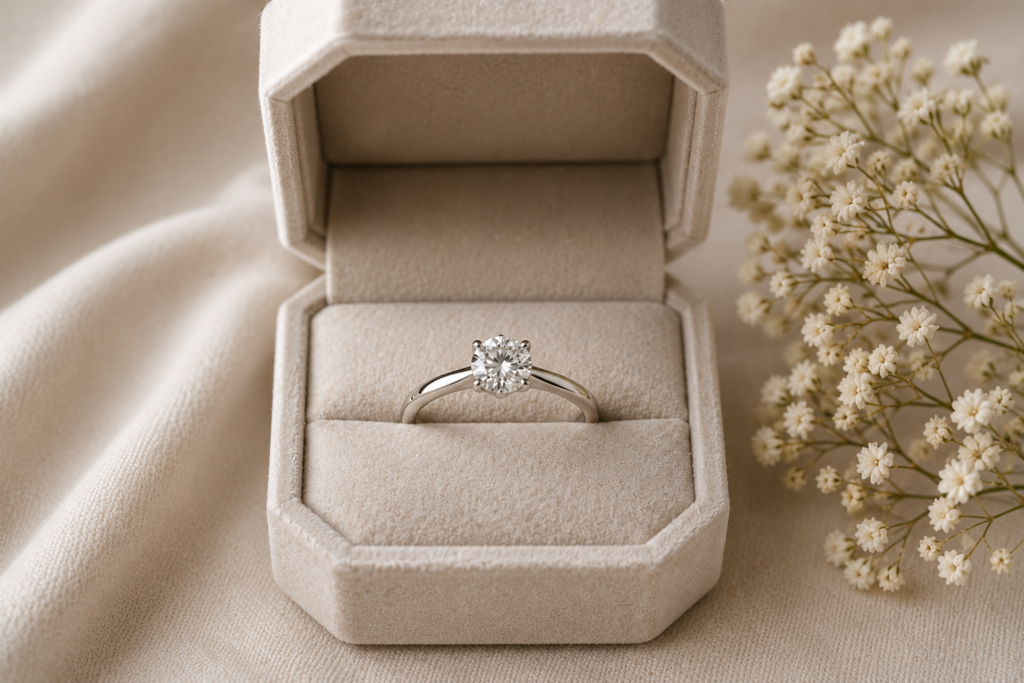
If you want maximum brilliance, pay close attention to cut. If visual presence on the hand matters, consider carat weight, shape and proportions. If the ring will be made in a white metal, color may play a more noticeable role. If the stone looks clean to the eye, clarity can be reasonable rather than the highest possible.
The best diamond for an engagement ring is not necessarily the largest or the rarest in every characteristic. The best one is the diamond that looks beautiful in the chosen design and gives a sense of confidence: this is the ring you want to give.
How KiANIT helps you understand 4C
At KiANIT Jewelry, we explain diamond characteristics clearly. During a consultation, you can compare different options, see how 4C parameters appear in real life and understand which characteristics truly matter for the future ring.
We consider not only the certificate but also the design of the jewelry: the shape of the stone, the metal, the type of setting, the height, proportions and the overall look. This approach helps choose a diamond not in the abstract, but for a specific ring and a specific person.
An engagement ring can be created individually - with the chosen diamond, hand shape, jewelry style and personal details in mind. This makes the choice more conscious and calm: you understand why this particular stone was selected and how it will look in the finished piece.
What to remember about 4C
4C is a system for evaluating a diamond by four parameters: carat, color, clarity and cut. Carat shows weight, but not always visual size. Color describes the degree of colorlessness, but its perception depends on the metal. Clarity describes the internal features of the stone, but not all of them are visible to the eye. Cut is responsible for brilliance and often becomes the main parameter of beauty.
A diamond is best evaluated not by one parameter, but by the combination of characteristics. Balance is what makes the stone beautiful in a ring.If you want to understand what 4C is and how a diamond is evaluated, come for a consultation at the KiANIT Jewelry showroom in Browary Warszawskie, Grzybowska 43a. We will show how the characteristics look in real life, help you compare diamonds and choose a stone for an engagement ring that will look natural, refined and deeply personal.