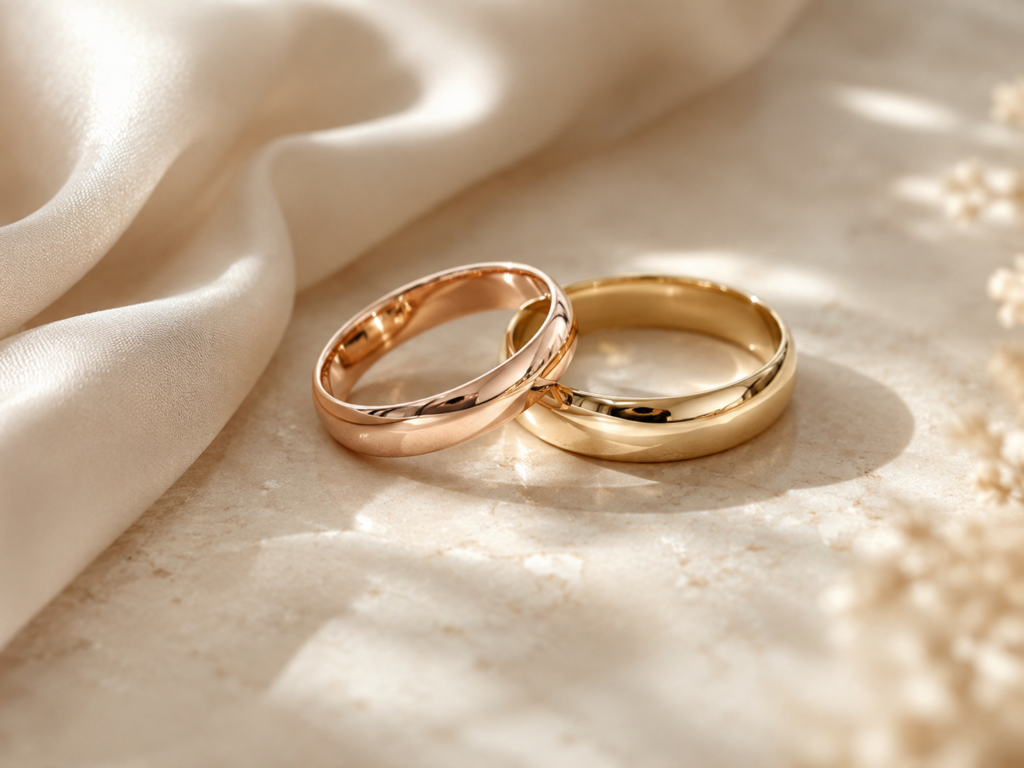
How Wedding Rings Are Made: 7 Stages from Idea to Finished Pair
How wedding rings are made is a question many couples ask when they want to choose not just a beautiful model, but a piece of jewellery with meaning. Behind the calm, minimal shape of a ring there is a consultation, precise measurements, metal selection, the jeweller’s work, surface finishing and a final fitting.
A wedding ring lives with a person every day, so design and shine are not the only things that matter. It should sit comfortably, suit the couple’s style, pair well with an engagement ring and keep the feeling of “this is ours” for years.
Why a wedding ring does not begin with metal
At first glance, it may seem that the first decision is choosing gold: yellow, white or red. In reality, the process begins earlier - with understanding the couple, their habits and how the ring should feel in everyday life.
Some couples want thin minimalist rings that are almost unnoticeable on the hand. Others prefer expressive classics with a more visible width. For some, it is important that the rings are identical; for others, it is enough that they are connected by one idea while differing in details.
At KiANIT Jewelry, a wedding ring is treated as a personal piece of jewellery. It is created not only for the wedding day, but for daily wear: work, travel, meetings, celebrations and ordinary weekdays. That is why shape, fit, thickness, profile, surface and the way the ring reflects the couple’s character all matter.
Stage 1. Consultation and finding the idea
The first stage is a conversation. A couple may come with wishes, references or simply a feeling: “we want something calm and modern”, “we need something classic”, “without extra details”, “so it matches the engagement ring”.
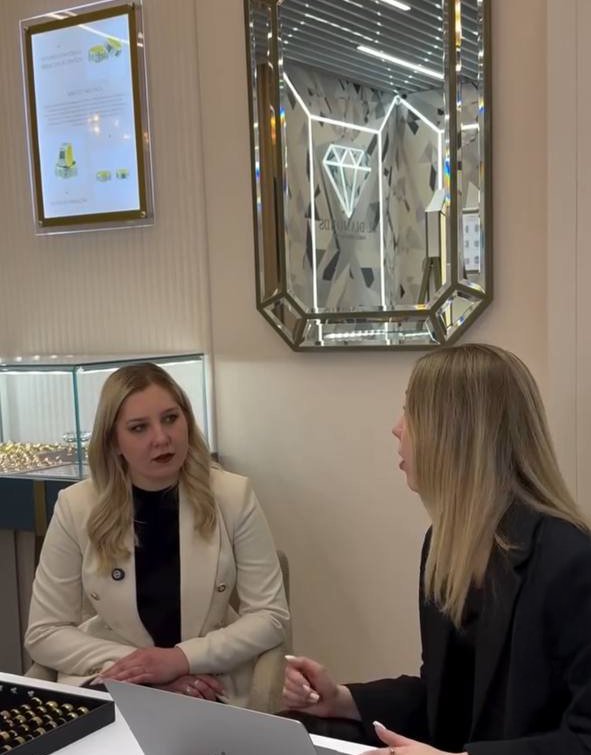
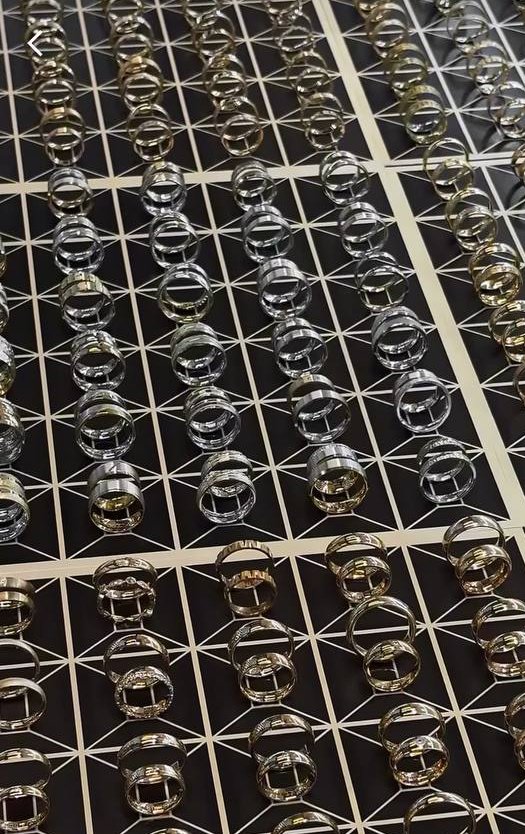
During the consultation, these wishes gradually turn into specific parameters. Metal, colour, width, profile, surface finish, engraving and possible stones are discussed. If the couple does not yet know what suits them, it is best to start by trying on different shapes - this makes it easier to understand what feels comfortable on the hand, not only what looks good in a photo.
Usually, the first stage helps define the direction:
- classic plain wedding rings;
- matte or satin finishes;
- rings with a soft rounded profile;
- stricter flat shapes;
- matching rings with different widths;
- rings with engraving;
- models with small stones.
The goal of the consultation is not to rush the choice, but to make it conscious. A good wedding ring should be visually pleasing and comfortable for long-term wear.
Stage 2. Choosing metal, fineness and colour
Once the style is clear, the choice of metal begins. For wedding rings, gold or platinum are most often considered. Gold can be yellow, white or red, while the fineness shows the amount of pure gold in the alloy.
14K gold is often chosen for everyday wear: it is practical, holds its shape well and works for different designs. 18K gold is perceived as especially noble because of its higher content of pure gold, but it requires more mindful wear. Platinum suits those who appreciate a restrained cool tone, density and a sense of solidity.
The colour of the metal affects the character of the ring. Yellow gold looks warm and classic. White gold feels modern and calm. Red gold adds softness and delicacy. When choosing, it is worth considering not only trends, but also how the metal works with skin tone, the engagement ring and other jewellery already worn.
Stage 3. Size, width and profile
Size is one of the most important stages. A wedding ring should pass over the knuckle, but it should not be too loose. At the same time, the feeling depends not only on size, but also on the width of the ring, the shape of the finger and the inner profile.
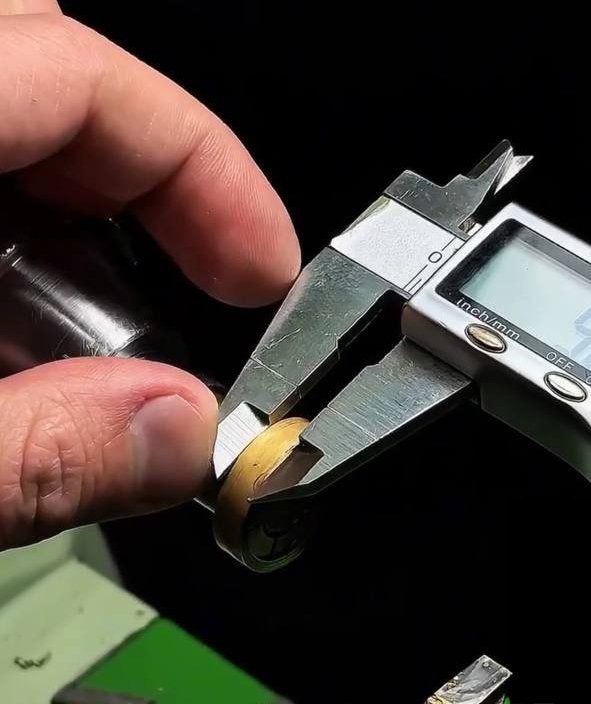
A narrow ring usually feels lighter. A wider ring looks more expressive, but may require a different fit. That is why two rings in the same size but with different widths can feel different on the hand.
The profile is the shape of the ring on the outside and inside. On the outside, a ring can be rounded, flat or slightly domed. On the inside, it can have a more comfortable fit, allowing it to move more softly over the finger and feel better every day.
At this stage, it is especially important not to choose with the eyes only. A ring may look beautiful in a display case, but only trying it on helps you understand whether it truly feels right.
Stage 4. Design and personal details
After choosing the metal, size and basic shape, the design is refined. This is the moment when the future pair of rings gains individuality.
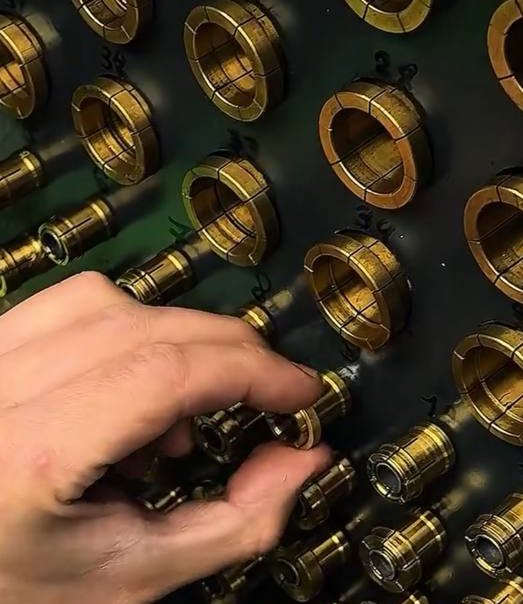
The rings can be completely identical or only subtly connected. For example, one ring can be thinner and the other wider. One may have a stone, the other may remain plain. One may have a softer profile, while the other has a clean straight line. Together, they will still look like part of one story.
Engraving is also discussed at this stage. It can be a date, initials, a short phrase, coordinates, a personal symbol or a word understood only by two people. Engraving does not have to be visible - sometimes the most precious detail is hidden inside the ring.
If the couple is considering stones, their placement and setting are planned in advance. For a wedding ring, practicality is especially important: stones should not interfere with daily wear or catch on clothing.
Stage 5. Stages of making a ring in the workshop
When the design is approved, the jewellery work begins. The stages of making a ring require precision, because even a simple plain shape must be accurate in size, width, thickness and symmetry.
First, the base of the future piece is created. The necessary volume is formed, the profile is shaped and the geometry is checked. At this stage, the ring does not yet look finished, but it is already recognisable: its shape, fit and character begin to appear.
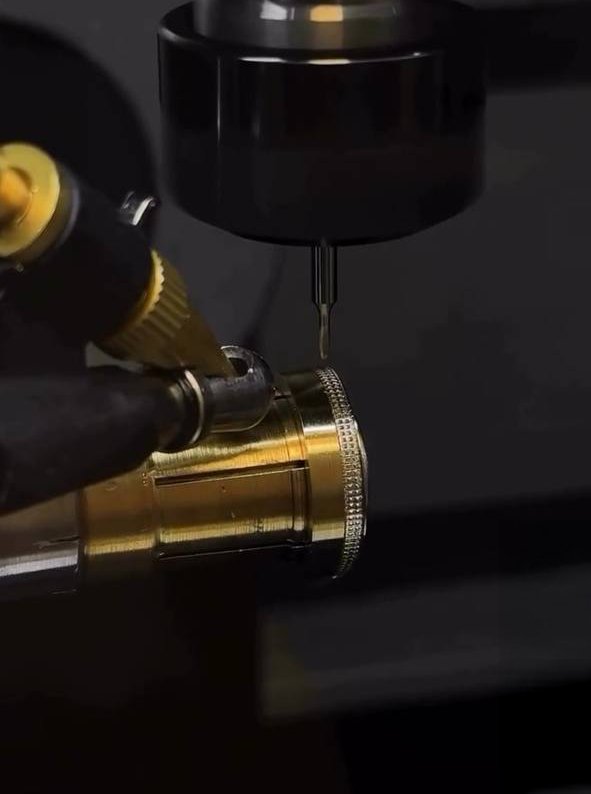
If a pair is being created, the jeweller considers the features of each ring separately. A men’s and women’s ring may differ in width or details, but keep a shared visual language. This is especially important when a couple wants not a copy, but a harmonious set.
At this point, it becomes clear that a wedding ring is not just a circle of metal. It has a structure: the right thickness, balanced form, comfortable inner part and a surface prepared for further finishing.
Stage 6. Surface, engraving and final finishing
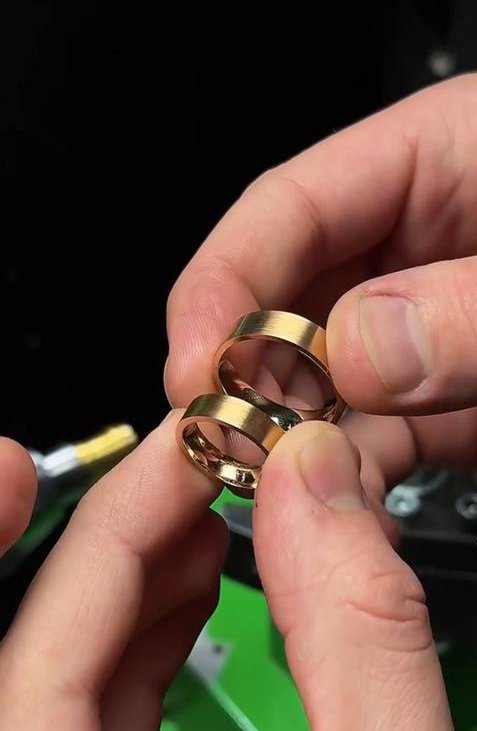
After the base is created, the ring goes through detailed finishing. The surface is brought to the chosen effect: mirror shine, soft matte, satin or a combined texture. A polished surface looks ceremonial and reflects light more brightly. A matte surface feels calmer, more modern and more restrained. A combined finish can add depth even to a minimalist design.
If engraving is planned, it is applied after the text and placement have been approved. It is important that the inscription is appropriate in length, readable and does not affect the comfort of the ring. Sometimes a short phrase or symbol is better than overloading the piece with a long text.
At this stage, additional work is also carried out if required by the design: stone setting, refining the edges, soft finishing of the inner part and preparing the surface for final polishing.
Stage 7. Quality control, fitting and the finished pair
The final stage is checking the finished ring. The shape, surface, fit, quality of finishing, engraving and correspondence with the approved design are evaluated.
If a pair of rings was created, they are viewed together. They should be harmonious, even if they are not completely identical. Sometimes small differences are exactly what make the set feel alive and personal.
Then comes the fitting. The couple sees how the rings sit on the hand, how they look in movement and how comfortable they feel. This is the most emotional moment: the jewellery stops being a project and becomes a symbol of a future family.
How custom wedding rings are made
The process of creating a custom ring is different because every decision is made for a specific couple. There is no need to adjust to a ready-made model if another width, colour, profile or engraving feels more suitable.
A custom ring can be adapted to an engagement ring, made with a more comfortable fit, created as part of a pair with individual differences or finished with a hidden detail inside. This approach is especially valuable when a couple wants jewellery that looks calm, but carries personal meaning.
It is important to understand that “custom-made” does not always mean a complex design. Sometimes the most accurate choice is a classic plain ring with the perfect width, the right profile and engraving that matters only to you.
How wedding rings are made: why this question matters for Ukrainian couples
The question “how wedding rings are made” is often asked by couples who want to understand not only the final result, but also the journey of creating the piece. It is a natural desire: wedding rings are chosen for many years, so it matters to know what quality is made of.
The answer remains similar in any language: a good ring is born from a precise consultation, the right metal, a well-considered size, careful work by the jeweller and final quality control. The more attentively each stage is completed, the calmer the couple feels before the wedding.
For clients in Warsaw, a showroom consultation helps them see metals in person, try on different shapes and understand which ring truly feels right.
What to consider before ordering
Before making wedding rings, it is worth calmly answering a few questions. This helps make the choice precise rather than impulsive.
Which metal suits your style?
Yellow gold gives a warm classic feeling. White gold looks cleaner and more modern. Rose gold adds softness. Platinum creates a more restrained and solid impression.
Which width is comfortable every day?
Thin rings look delicate, while wider ones feel more expressive. But comfort depends on the hand, habits and inner profile, so it is better to try several options.
Do you need engraving?
Engraving makes a ring personal, but it should be thought through. A short text, date or symbol often looks more elegant than a long phrase.
Should the rings be identical?
Not necessarily. Matching wedding rings can differ while keeping one shared idea. This is a good solution when a couple has different tastes but still wants visual unity.
How wedding rings are made to be worn for years
Now that you know how wedding rings are made, it is easier to understand why the process is not limited to choosing a beautiful model. Behind a finished ring are consultation, metal, size, profile, design, the jeweller’s work, engraving, polishing and final quality control.
A good wedding ring does not conflict with your lifestyle. It sits comfortably, ages beautifully, pairs well with other jewellery and reminds you every day of the decision you made together.
At KiANIT Jewelry, you can discuss your future wedding rings during a consultation, try on different shapes, choose metal and create a pair of jewellery with personal meaning. The KiANIT showroom is located in Warsaw, Browary Warszawskie, Grzybowska 43a.