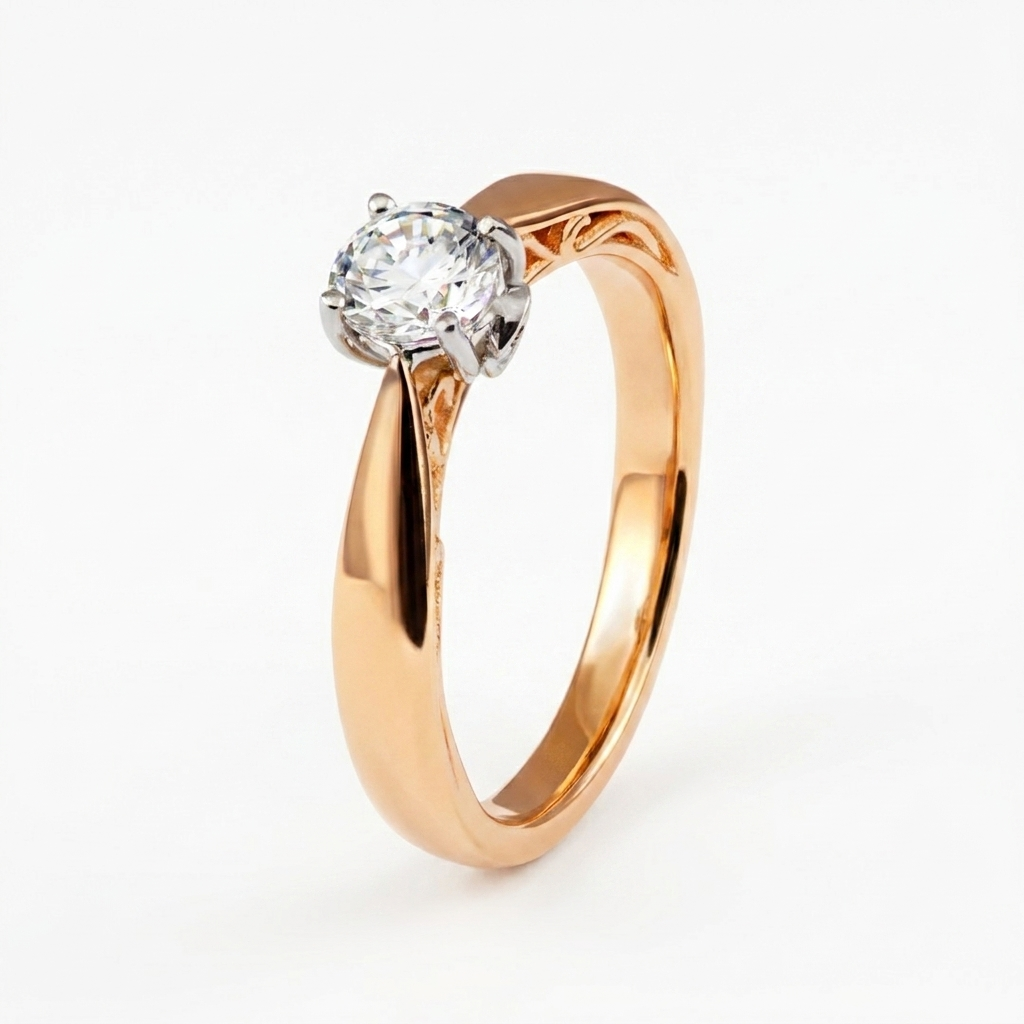
What is diamond fluorescence and should you worry about it?
What is diamond fluorescence and should you worry about it? This question often appears after looking at a diamond certificate. A buyer sees an unfamiliar term, next to a note such as Faint, Medium or Strong, and starts wondering: is there a hidden flaw in the stone?
In reality, fluorescence is not a reason to automatically reject a diamond. It is a characteristic of how the stone reacts to ultraviolet light. In some cases it is barely noticeable; in others it can influence the visual impression. That is why it should not be feared, but assessed correctly.
What diamond fluorescence means in simple words
Diamond fluorescence is a glow that may appear under ultraviolet light. For example, under a special lamp, in certain types of artificial lighting or in bright sunlight. Most often the glow is bluish, although the shade may vary.
It is important to understand that in everyday life a diamond does not “glow by itself”. Fluorescence appears only under specific lighting conditions. If you look at a ring at home, in a restaurant, in an office or outdoors without strong UV light, this characteristic may be almost invisible.
In simple terms, fluorescence is not a crack, not an inclusion and not a cutting mistake. It is a separate diamond characteristic, listed in the certificate alongside other parameters: carat weight, colour, clarity and cut.
How fluorescence is shown in a diamond certificate
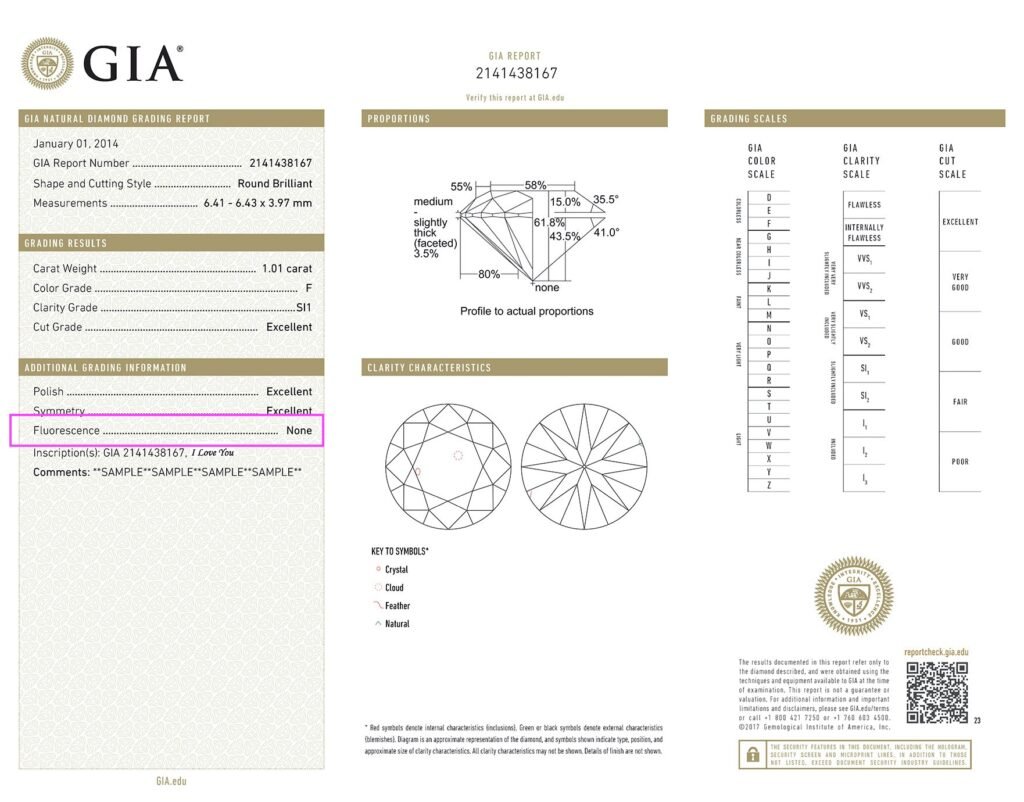
In a diamond certificate fluorescence is usually described by its intensity. A buyer may see the following terms:
- None - no fluorescence;
- Faint - weak fluorescence;
- Medium - medium fluorescence;
- Strong - strong fluorescence;
- Very Strong - very strong fluorescence.
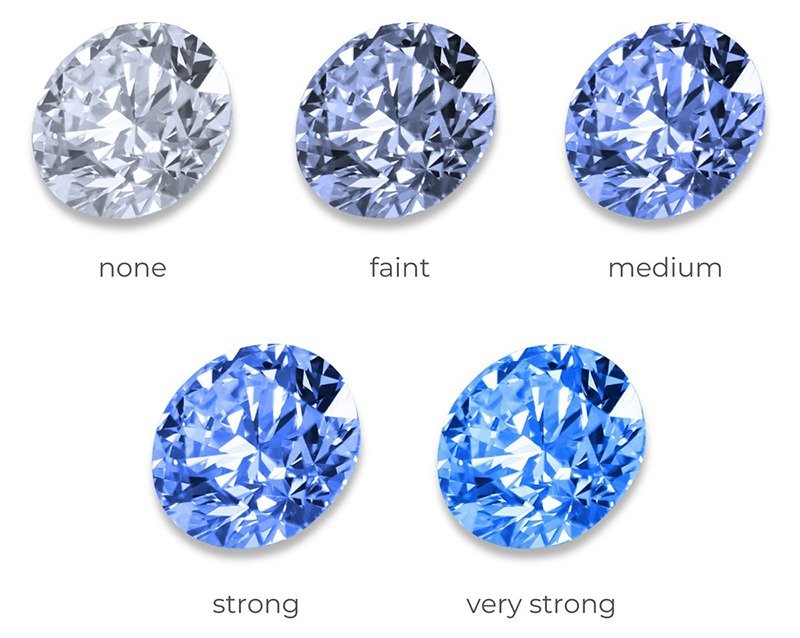
These words do not mean “good” or “bad” by themselves. They only show how actively the stone reacts to ultraviolet light. That is why it is better to read the certificate with a specialist and always look at the diamond in person.
For a first-time buyer, the main risk is judging a diamond by one word in the document. At KiANIT, we recommend looking at the full balance: colour, clarity, cut, transparency, visual sparkle and how the diamond will look in its future setting.
Is diamond fluorescence something to be afraid of?
Diamond fluorescence is not a problem if the stone looks clean, transparent and beautiful. Faint or moderate fluorescence often does not disturb the way a diamond looks in a ring. Sometimes a buyer will not notice it at all without a specific explanation.
The question becomes more important when fluorescence is strong and has a visible effect on the stone. In some cases, a diamond may appear slightly hazy, milky or less transparent. This is the effect that usually worries buyers, although it does not occur in every diamond marked Strong.
So the right question is not: “Does this diamond have fluorescence?” A better question is: “How does this particular diamond look in different lighting?”
When fluorescence can be an advantage
Sometimes fluorescence can visually soften a warmer tint in a diamond. For example, if a stone has a slight yellowish note, a bluish reaction under UV light may make it appear cooler in certain lighting conditions.
This does not mean that fluorescence always improves colour. It also does not mean that it automatically spoils a diamond. Everything depends on the specific stone, its colour, transparency, cut quality and how it looks to the eye.
For an engagement ring, what matters most is not an abstract “perfect” characteristic, but the real visual impression. The diamond should look beautiful on the hand, harmonise with the metal and support the mood of the piece.
When you should be more attentive
It is worth paying closer attention to diamonds with strong and very strong fluorescence. Not because they are necessarily poor stones, but because there is a higher chance that fluorescence may affect transparency.
Look at a few signs:
- whether the stone appears milky or hazy;
- whether it keeps a lively sparkle;
- whether the surface gives an “oily” impression;
- how it looks in daylight and artificial light;
- whether the feeling of clarity is preserved in the future setting.
If the diamond looks bright, transparent and expressive, the fluorescence note itself should not be alarming. If the stone appears cloudy, it is better to compare it with other options.
Fluorescence and 4C: why one parameter is not enough
When choosing a diamond, people often talk about the 4C: carat weight, colour, clarity and cut. In simple words, these are the four main groups of characteristics used to evaluate a stone. Fluorescence is not part of the classic 4C, but it can add context to the overall impression of a diamond.
It is easy for a beginner to focus on one characteristic and make a quick conclusion. For example: “Strong means bad” or “None means perfect”. In practice, it is more nuanced. A diamond with no fluorescence may look less lively because of a weaker cut, while a stone with faint fluorescence may sparkle beautifully and look very harmonious.
Cut is especially important. It determines how a diamond works with light: how it receives it, reflects it inside and returns it to the eye as brilliance. If the cut is successful, the stone looks lively and expressive even when individual parameters are not ideal.
How fluorescence affects an engagement ring
In an engagement ring, a diamond does not exist on its own - it works together with the setting. The colour of the metal, the height of the setting, the shape of the stone and the style of the ring can all change the overall impression.
In white gold or platinum, a diamond is often perceived as cooler and cleaner. In yellow or rose gold, even a stone with a slight warm tint can look soft and noble. That is why fluorescence should be assessed not only in a tray, but also in the context of the future jewel.
If the ring is planned as a minimal solitaire with a central stone, transparency and light performance will be especially visible. If the design is more decorative, with side diamonds or a halo, the perception may be different. This is why it is best to compare several stones side by side and see which one looks more convincing.
How KiANIT helps assess diamond fluorescence
At KiANIT, choosing a diamond does not start with complicated terms, but with explanation. We show what the characteristic in the certificate means, how it may appear and what truly deserves attention.
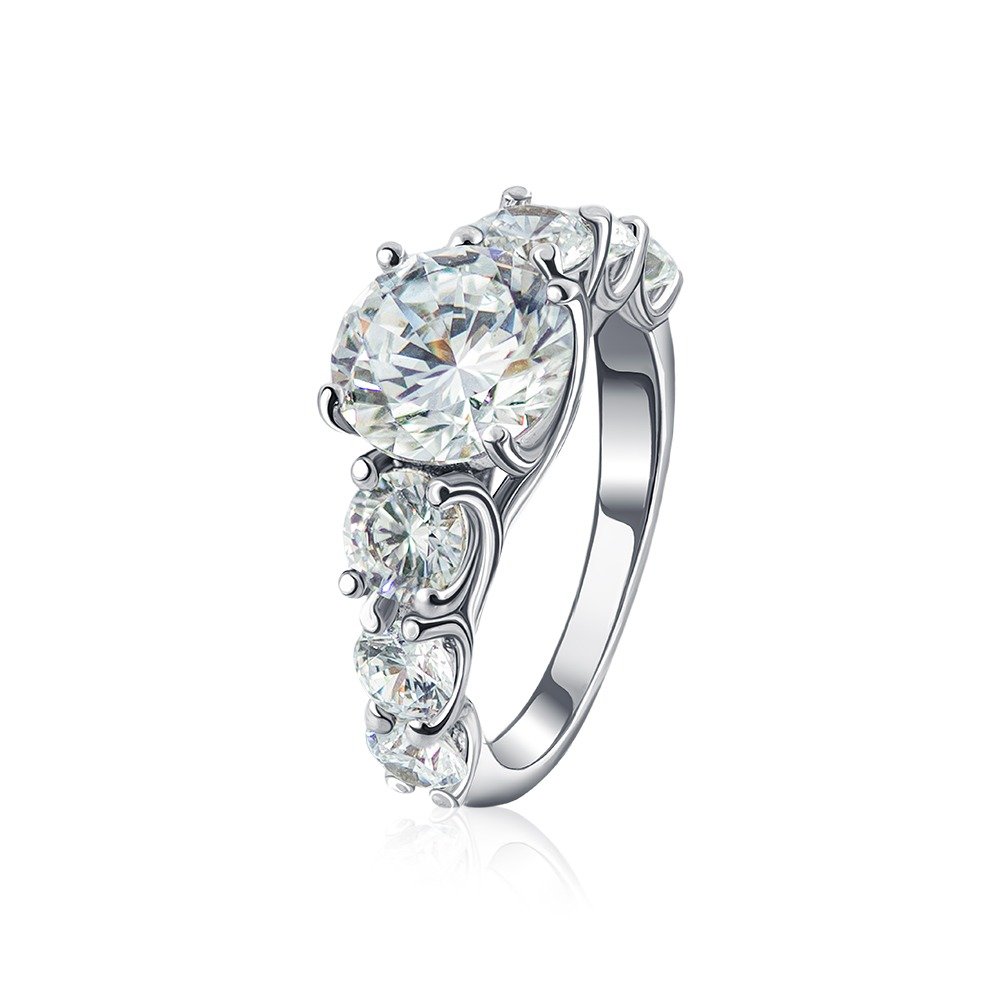
An engagement ring can be created individually: you can choose the diamond shape, setting, gold colour and design details. This approach helps evaluate the stone not separately from the jewel, but as part of the future composition - the way it will look in real life.
At the KiANIT showroom in Browary Warszawskie at Grzybowska 43a in Warsaw, you can compare diamonds, review certificates and discuss which stone best suits your request. For us, it is important that the choice feels clear: without the feeling that you need to understand gemmology in advance.
How to choose a diamond with fluorescence without making a mistake
If fluorescence is listed in the certificate, do not rush to reject the stone. Start with a visual assessment. The diamond should be transparent, lively and harmonious. If it plays beautifully with light and does not look cloudy, this characteristic may not be a problem.
It is useful to compare several options:
- a diamond with no fluorescence;
- a stone with faint fluorescence;
- a stone with medium or strong fluorescence;
- different colours and shapes in a similar ring design.
This helps you understand whether you actually see the difference with your eyes, not only in the certificate. Sometimes a buyer expects a dramatic effect, while in reality the difference is subtle. Sometimes, on the contrary, one stone immediately looks less transparent, and then it is better to consider another option.
What is diamond fluorescence and should you worry about it: a short conclusion
What is diamond fluorescence and should you worry about it? It is a reaction of the stone to ultraviolet light, not a defect in itself. It can be invisible, neutral or visually meaningful - everything depends on the specific diamond.
There is no need to be afraid of fluorescence. The stone should be assessed professionally: in the certificate, under different lighting, next to other options and in relation to the future setting. For an engagement ring, one parameter is not enough; what matters is the overall feeling - clarity, sparkle, balance and the personal meaning of the jewel.
KiANIT will help you understand diamond characteristics in simple words, compare options and choose a stone that looks beautiful not only in the document, but also on the hand. Book a consultation at the showroom in Warsaw or discuss an individual ring project online.