Ring exchange traditions in different cultures: what this gesture means
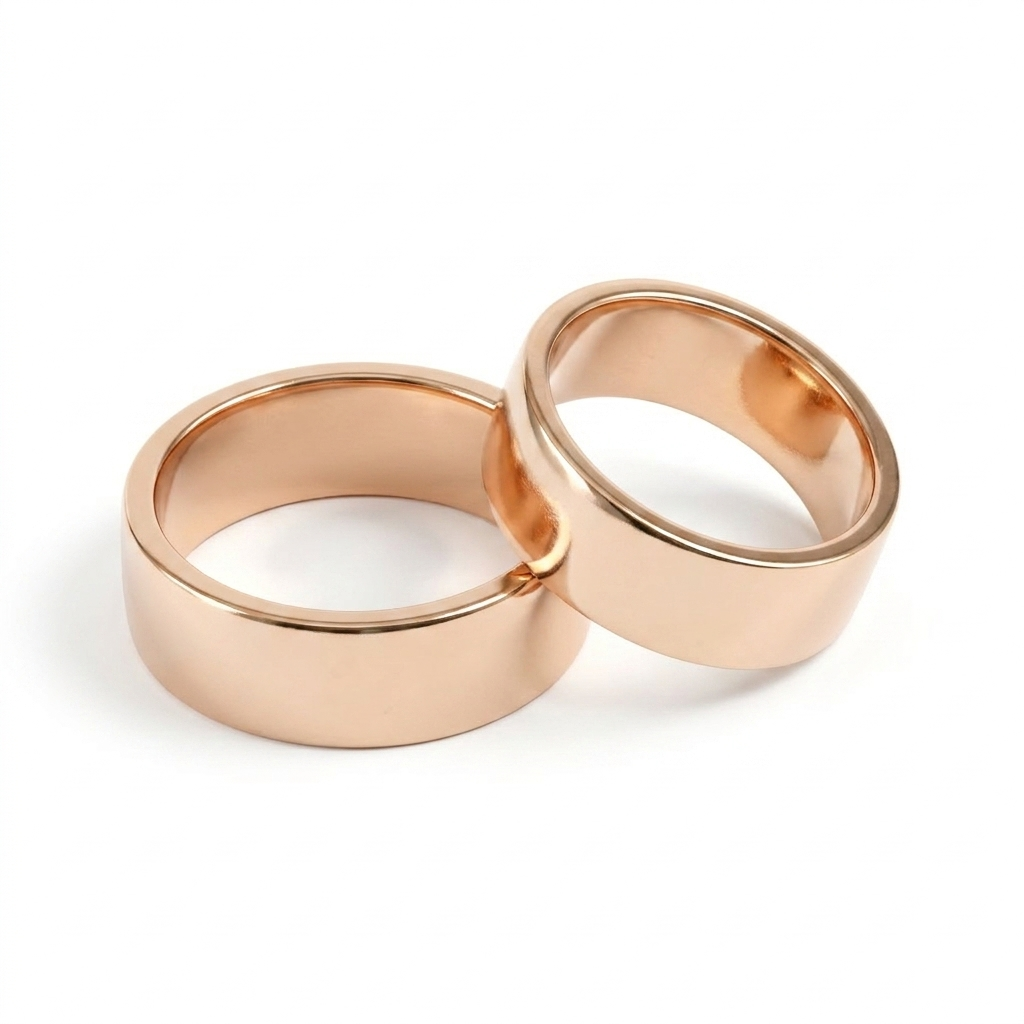
Ring exchange traditions in different cultures vary in detail, but they almost always speak about the same thing: a couple publicly confirms their bond, loyalty and readiness to continue life together. In some traditions the ring is worn on the left hand, in others - on the right. In some ceremonies, a simple smooth shape matters most; in others, the focus is on blessing, vows or a family symbol.
For a couple choosing wedding bands for the first time, this topic helps to understand one essential idea: a wedding ring is not just a decoration for the ceremony. It is a daily sign of your story, so its shape, metal, fit and engraving should not be random - they should feel personal to you.
Why the ring became a symbol of marriage
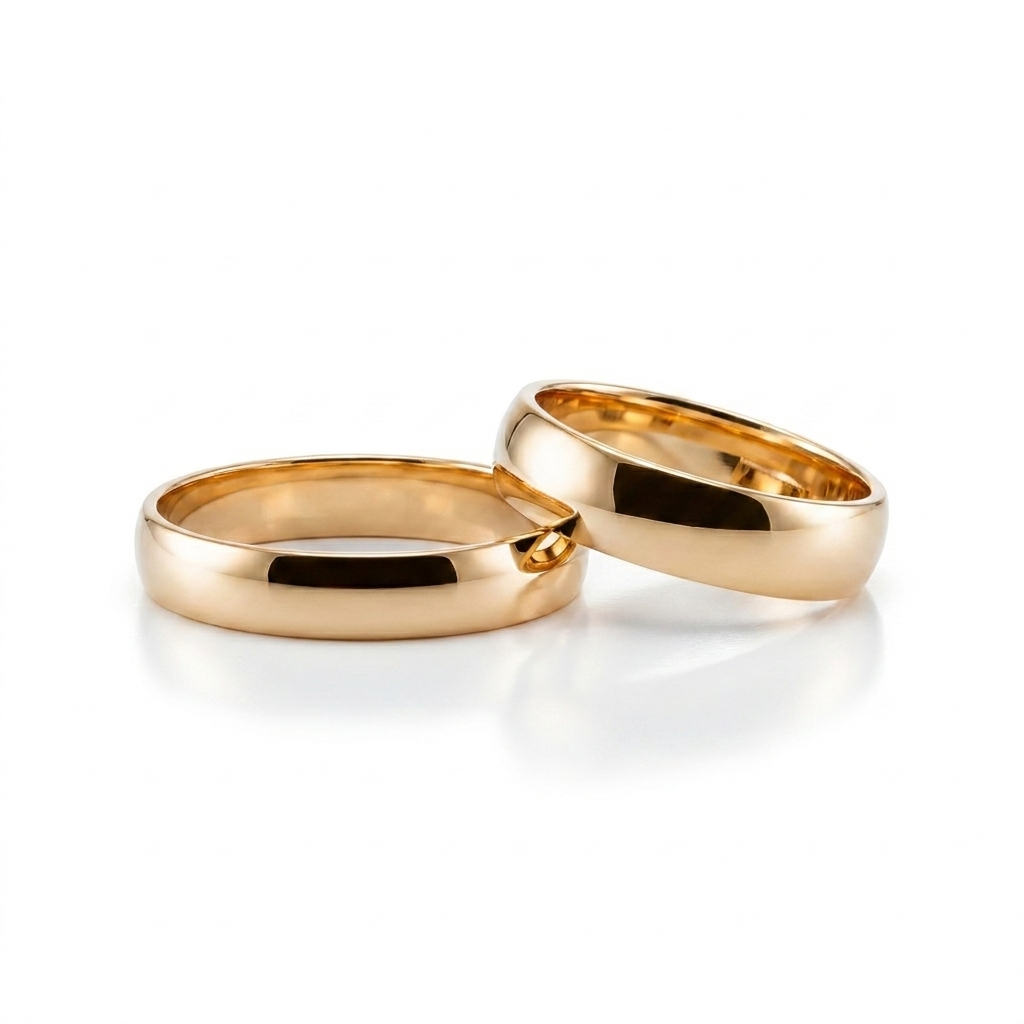
The circular shape of a ring is naturally read as a symbol of continuity: it has no beginning and no end. That is why, in wedding traditions, a ring is often seen as a sign of permanence, promise and connection between two people.
Historically, rings are associated with ancient cultures, including Egypt, Greece and Rome. According to GIA, ancient Egyptians believed in the romantic idea of the “vein of love” on the fourth finger of the left hand, and the Romans adopted this tradition. Anatomically, this idea is not confirmed, but the image itself has remained part of Western culture.
Today, the meaning has become softer and more personal. For some couples, wedding rings are a religious symbol. For others, they are a family tradition. For others still, they are a minimalist sign of union without unnecessary display.
Ring exchange traditions in different cultures: left or right hand
One of the most common questions before a wedding is which hand to wear a wedding ring on. There is no universal answer: much depends on the country, religion and family custom.
In the United States, the United Kingdom and many Western European countries, the left hand is more common. This is connected with the Western tradition of the “ring finger” and the romantic legend of its connection to the heart. In the Orthodox tradition, according to the Orthodox Church in America, wedding rings are traditionally worn on the right hand.
For a couple, this should not become a rigid rule. If you live in Poland, you may follow one family tradition; if the partners have different cultural roots, another approach may feel more natural. What matters is not “what is correct for everyone”, but which gesture feels honest and meaningful for your couple.
European tradition: restraint and everyday wear
In European wedding culture, a wedding band is often treated as jewellery for every day. That is why the focus is usually not on decoration, but on comfort, durability and harmony with the hand.
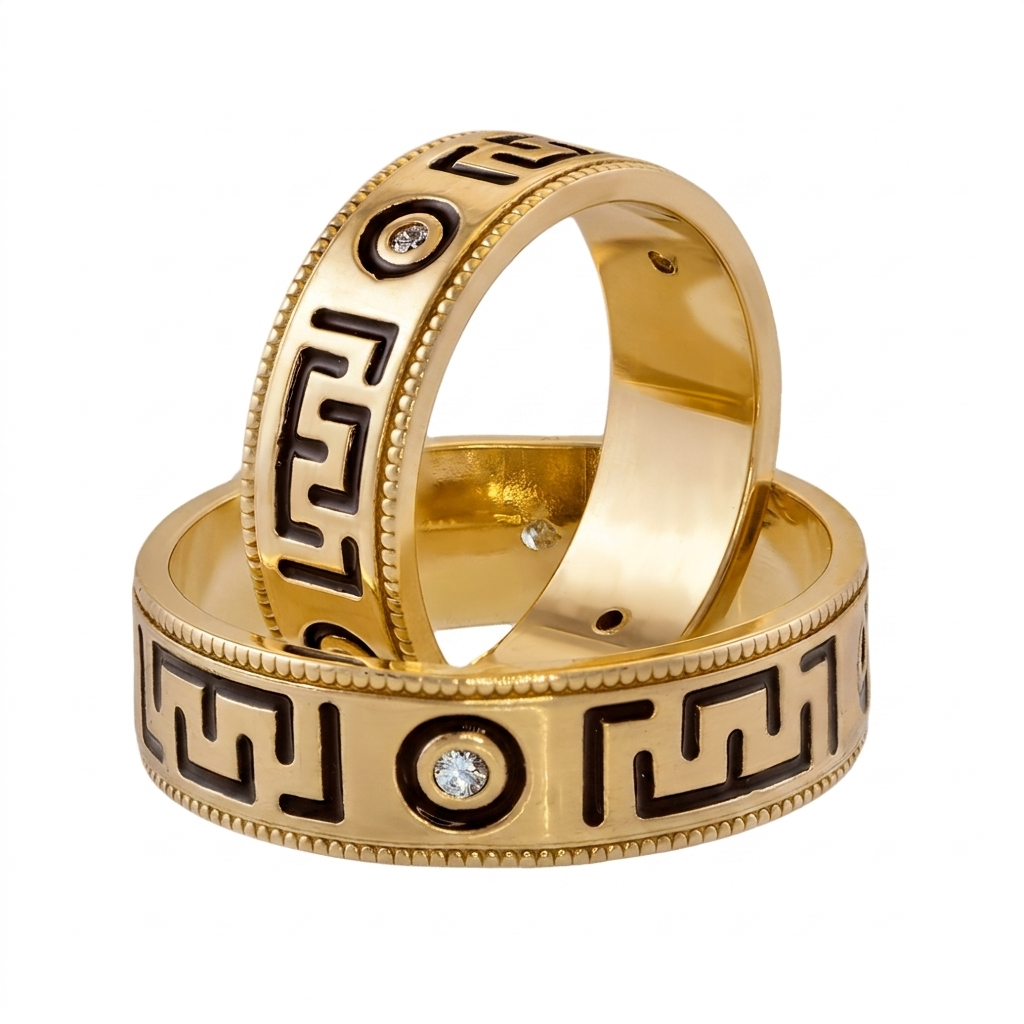
Couples most often pay attention to several details:
- the width of the ring;
- the profile - more rounded or flatter;
- the colour of gold - yellow, white or rose;
- the gold fineness;
- the comfort of the fit;
- the option of engraving inside.
For a beginner, this matters more than it may seem. A ring can look beautiful in a photo, yet feel too wide, heavy or unfamiliar in real life. That is why, before placing an order, it is better to try different profiles and widths rather than choose only from an image.
Jewish wedding tradition: simplicity and clarity of gesture
In a Jewish ceremony, the ring has special meaning as part of the marriage rite. According to Chabad, traditionally the groom places the ring not on the bride’s ring finger, but on her index finger; one reason is that witnesses can clearly see that she has received the ring.
In this tradition, the clarity of the symbol is especially important. The ring should not be overloaded with details, because the emphasis is not on visual effect, but on the action itself: giving, receiving and witnessing the union.
Even if a couple does not follow religious canon, there is a beautiful modern thought in this idea: sometimes the strongest piece of jewellery is not the most complex one. A smooth ring made of precious metal can look truly dignified.
Orthodox tradition: blessing and the right hand
In Orthodox culture, the exchange of rings is connected not only with a romantic promise, but also with the spiritual meaning of marriage. The right hand is often understood as the hand of blessing, oath and action, which is why the ring is placed on it.
For couples from Poland, Ukraine, Belarus, Georgia, Greece or other countries with Orthodox traditions, this can be an important part of family memory. Sometimes newlyweds choose rings that are meant not to look fashionable, but to feel “for life”: a smooth shape, noble metal, delicate engraving and a calm width.
This approach works beautifully with custom jewellery making. You can keep a traditional look while adapting the rings to the hand, lifestyle and feeling of the couple.
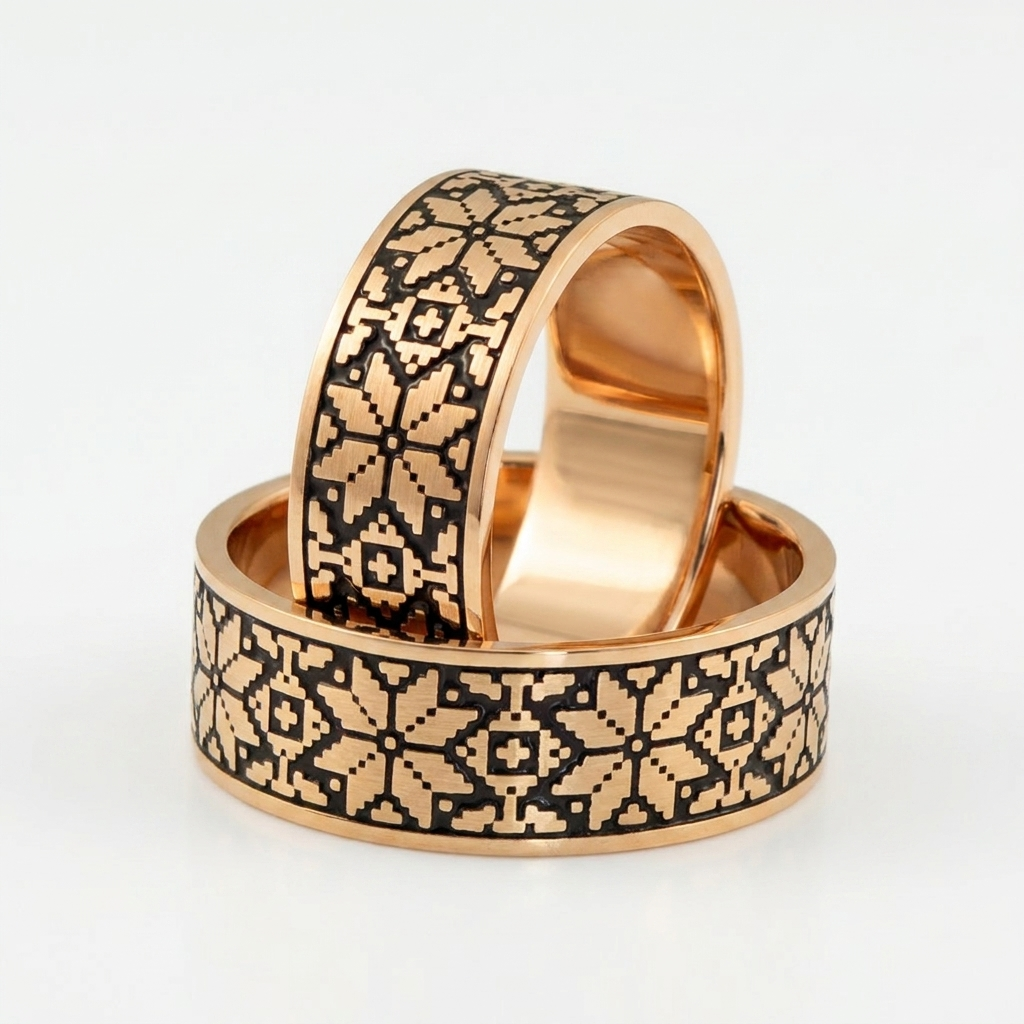
Indian and Asian traditions: the ring as part of a larger ritual
In some cultures, a ring is not always the only or main symbol of marriage. In Indian wedding ceremonies, other signs of union may have great importance: jewellery, fabrics, colour, family blessings and ritual actions. At the same time, the modern tradition of exchanging rings has also become widespread, especially among urban and international couples.
Sources on wedding customs often note that in India and in several other cultures, the ring may be worn on the right hand rather than the left.
For a couple with different cultural roots, this opens up a beautiful possibility: not to choose one tradition against another, but to bring them together. For example, you can create classic wedding bands and add a personal engraving in a native language, a date symbol or an inner sign understood only by the two of you.
Modern couples: fewer rules, more personal meaning
Today, ring exchange traditions in different cultures are increasingly becoming not a strict script, but a source of inspiration. Couples may follow a religious rite, a family custom or choose a more personal format for the ceremony.
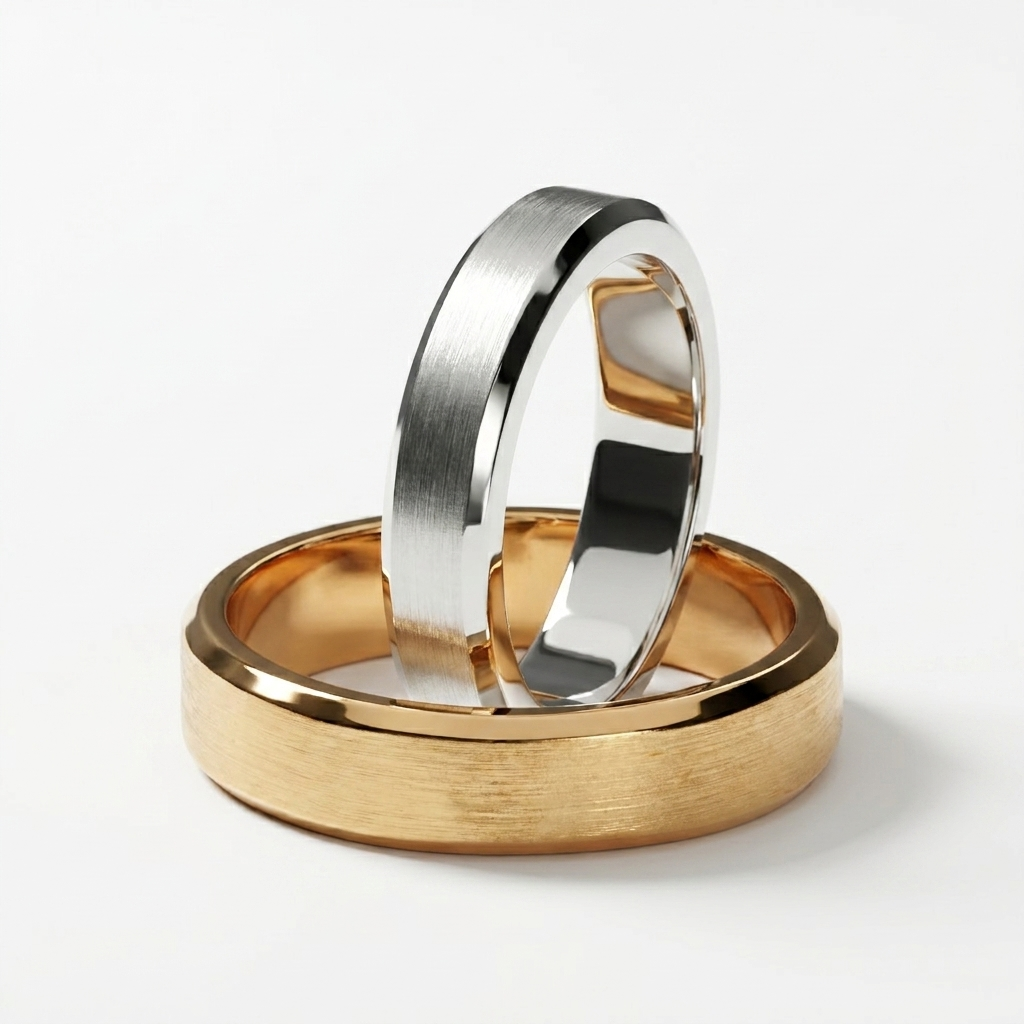
Some want completely smooth matching wedding bands. Some choose different models in the same metal. Others make the rings feel connected only through an inner engraving. This is perfectly natural: wedding bands do not have to be identical if the partners have different hands, styles and habits.
The main thing is to preserve a shared idea. For example:
- one metal, but different widths;
- the same profile, but different shades of gold;
- one shared engraving inside;
- similar minimalism, but individual fit;
- a common symbol hidden in the details.
This way, the rings remain matching in meaning, while staying comfortable for each person.
How cultural tradition affects the choice of design
If a particular tradition matters to you, start not with a catalogue, but with meaning. Ask a simple question: what should the ring say?
If it is about family continuity, calm classic shapes may be the right choice. If a religious ceremony is important, it is worth checking any ring requirements in advance. If you want a modern symbol without strict rules, you can consider an individual design.
The choice is usually influenced by:
- the hand on which the ring will be worn;
- everyday lifestyle;
- attitude toward engraving;
- preference for gold colour;
- the wish to make the rings identical or different;
- the couple’s feeling: classic, minimal, softly romantic or more expressive.
At KiANIT, we always look at a ring not in isolation, but in the context of the person. It should look beautiful, sit comfortably and feel in harmony with the wearer’s style.
Engraving as a couple’s personal tradition
Engraving is one of the most delicate ways to connect cultural and personal meaning. Inside the ring, you can place a date, initials, a short phrase, the coordinates of a meeting place or a word in a language that matters to the couple.
This is especially beautiful when partners come from different countries or family traditions. On the outside, the rings may remain laconic, while inside they hold a very personal story.
It is important to discuss the length of the text, the font and the technical possibility of engraving in advance. Not every ring width is equally suitable for a long phrase, so it is better to think about this at the design stage.
How to choose wedding bands with respect for tradition
A good choice begins with balance: tradition gives direction, while your life gives practical answers. A ring should be not only symbolic, but also comfortable for everyday wear.
Before ordering, it is worth discussing:
- whether you will wear the rings every day;
- which hand and finger are important according to tradition;
- whether the models should be identical;
- which metal feels visually closer to you;
- whether you want engraving;
- how noticeable the ring should be.
For wedding bands, couples often choose 585 or 750 gold, as well as platinum. The difference between these options affects the shade, density, feeling on the hand and the final character of the jewellery. A beginner does not need to understand all of this in advance: it is enough to try several solutions and feel the difference.
Ring exchange traditions in different cultures and your choice
Ring exchange traditions in different cultures show that one gesture can have many forms. Left hand or right hand, smooth ring or engraving, religious rite or modern ceremony - all of these are different ways of saying the same thing: “we choose each other”.
At KiANIT, you can discuss which wedding bands will suit your couple: by tradition, style, metal, width and fit. We will help you compare options, choose ring sizers and think through individual details - at the KiANIT showroom in Browary Warszawskie, Grzybowska 43a in Warsaw, or during a consultation for your project.