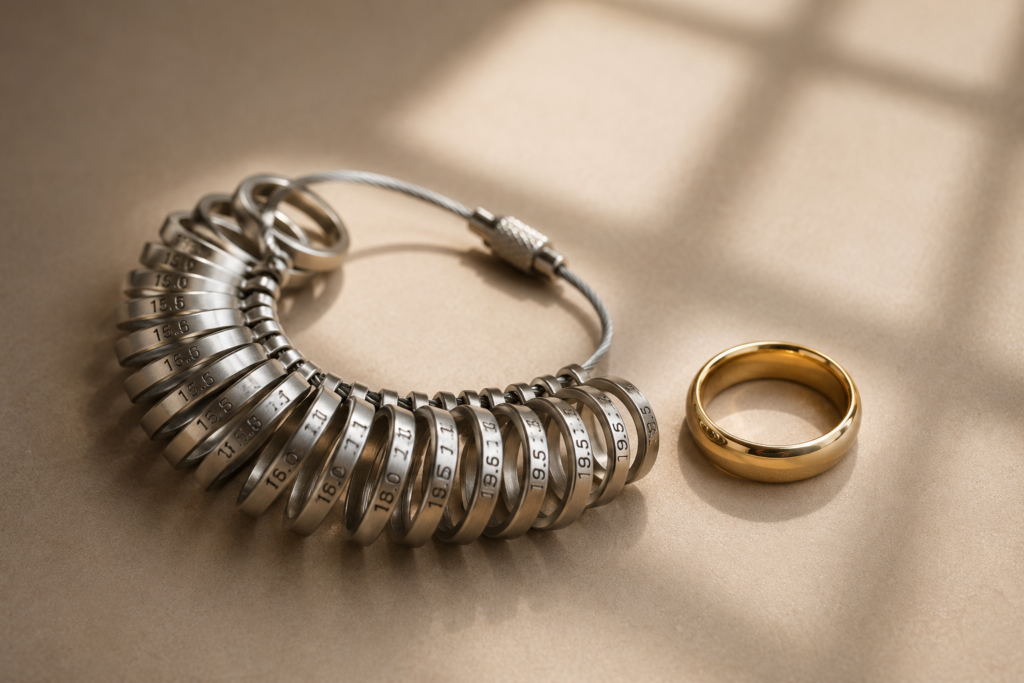
How to fit a ring to your finger: a calm guide before buying
How to fit a ring to your finger is one of the most important questions when choosing a wedding band or an engagement ring. The right ring size affects not only comfort, but also confidence: the ring should not slip off, press into the skin or get in the way during everyday wear.
For someone choosing a ring for the first time, it may seem enough to know one size number. In practice, it is more nuanced: the shape of the finger, ring width, inner profile, season, time of day and even the habit of wearing jewellery all matter. At KiANIT, we help choose a fit that makes the ring look beautiful and feel natural every day.
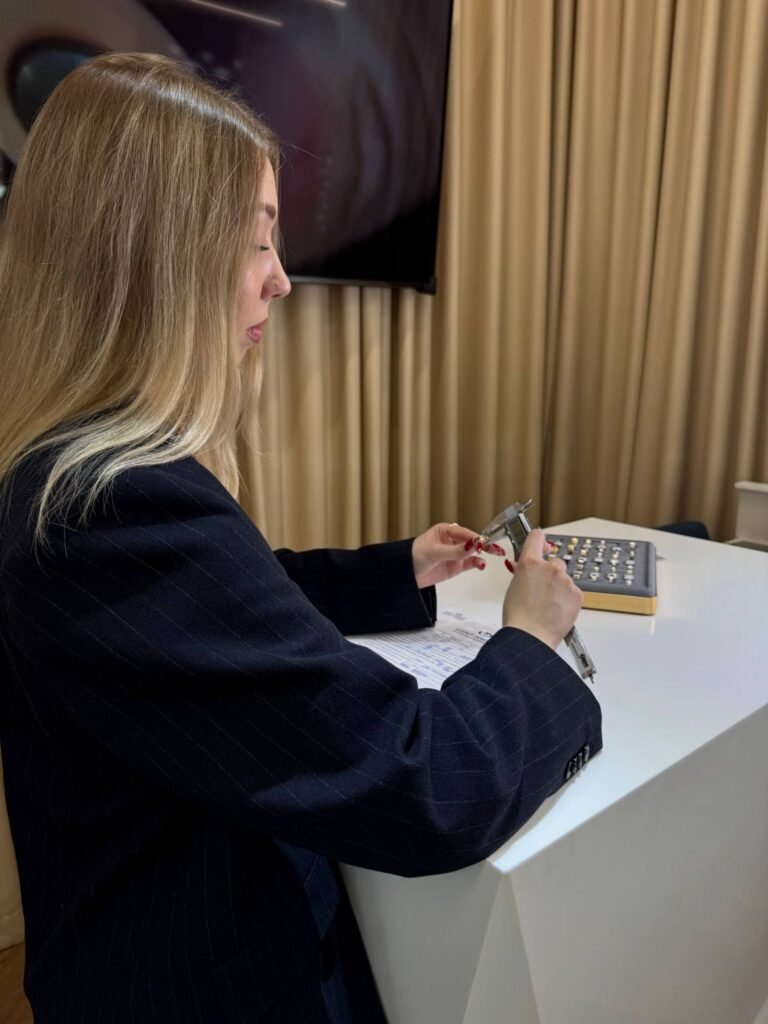
Why ring size is not just a number
Ring size shows the inner diameter or circumference, but the actual fit depends on more than the measurement. Two rings of the same size can feel different if they have different widths, thicknesses or inner profiles.
For example, a thin ring usually slides over the finger more easily. A wider wedding band can feel tighter because it touches a larger area of the skin. That is why, when choosing a ring, it is important to try not just an abstract size, but a sample close to the future ring in width and shape.
There is another detail: fingers change throughout the day. In the morning, a finger may be slightly slimmer; in the evening, it may feel fuller. In warm weather, hands often swell, while in cold weather they become narrower. A good fit takes these natural changes into account, not just the result of one quick measurement.
How to fit a ring to your finger at KiANIT
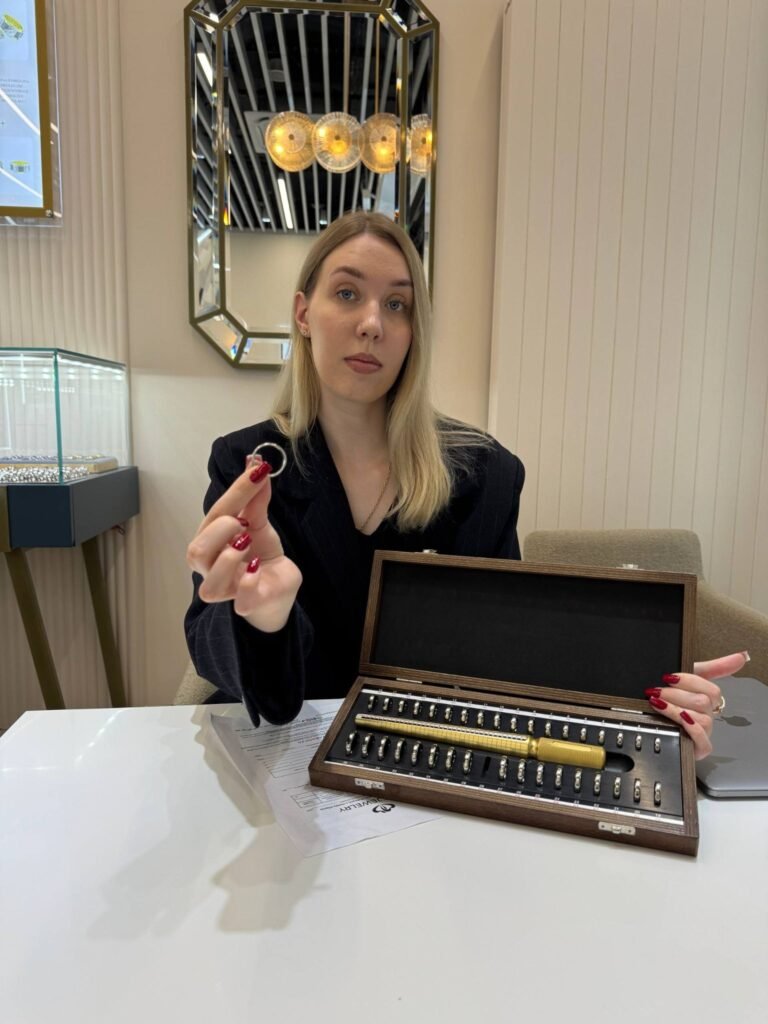
How to fit a ring to your finger: first, we clarify what type of jewellery the size is needed for - a wedding band, an engagement ring or an everyday ring. Then we look at the shape of the finger, the knuckle, the desired width of the model and the comfortable fit.
The process usually begins with trying ring sizers. Ring sizers are special rings in different sizes that help understand how the jewellery passes over the joint and how it sits at the base of the finger. It is important not only to put the sizer on, but also to take it off: the ring should pass over the knuckle with slight resistance, but without pain.

After that, the size is checked in the context of the future design. If you are choosing wide wedding bands, the fit may differ from a thin sizer. If the ring will have diamonds, engraving or a complex decorative element, it is especially important to think through the size carefully before production.
What is considered the right fit
The right fit is a balance between security and comfort. The ring should stay on the finger, not spin too freely and not slip off when the hand moves. At the same time, it should not leave a deep mark, press into the skin or create the feeling that you want to remove it.
The guideline is simple: the ring passes over the joint with slight resistance and sits calmly at the base of the finger. If the jewellery comes off too easily, there is a risk of losing it. If it comes off only with effort and causes discomfort, the size may be too small.
During the fitting, it is worth paying attention to several sensations:
- the ring does not press when the hand is relaxed;
- the jewellery can be removed without panic or sharp pain;
- the ring does not slide off by itself with a light movement;
- there is no strong compression when bending the finger;
- the fit feels comfortable not only in the first minute, but also after a short pause.
What affects the choice of size
Ring width
Width is one of the main factors. Narrow rings feel lighter and often allow for a more precise fit. Wider models sit more tightly, so their size is sometimes chosen differently.
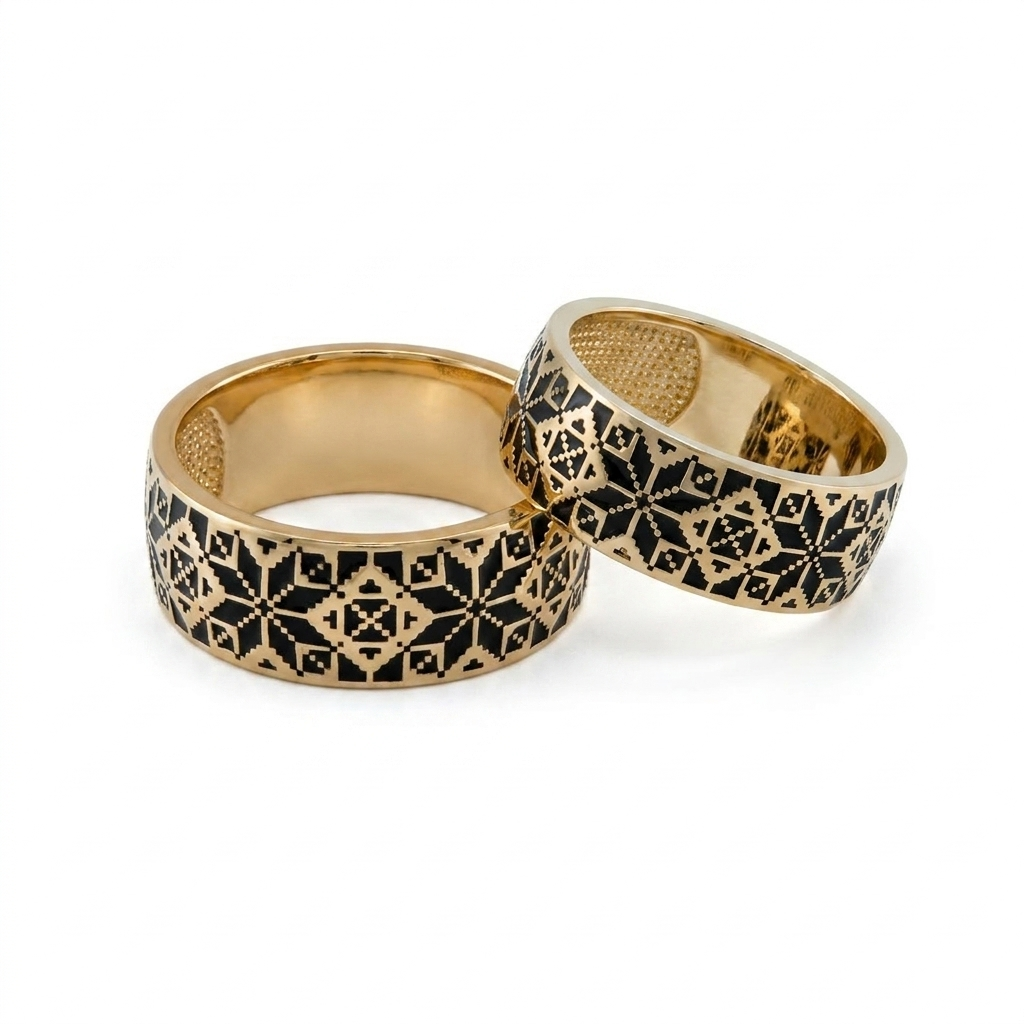
This is especially important for wedding bands, which are worn every day. If a couple chooses a clean classic design, the feeling will be one thing. If they prefer a more substantial shape or a more expressive profile, the fit should be checked on a similar width.
Inner profile of the ring
The profile is the shape of the inner side of the ring. The inner surface may be flatter or slightly rounded. A rounded inner profile often feels softer when putting the ring on and taking it off, especially if the ring is fairly wide.
For a beginner, this is an almost invisible but important detail. In the display case, two rings may look similar, yet feel different on the finger. That is why, when creating a custom ring, it is worth discussing not only the outer design but also the comfort inside the ring.
Finger shape and knuckle
For some people, the joint is almost the same width as the base of the finger. For others, the knuckle is noticeably wider, and the ring has to be chosen so it can pass over the joint but does not feel loose below it.
In this case, the size should be chosen especially carefully. A ring that is too small will be difficult to put on. A ring that is too large may spin freely at the base of the finger. Trying several close sizes and calmly comparing the sensations helps.
Temperature and time of day
It is better not to determine the size when the hands are very cold or, on the contrary, swollen after heat, exercise or a long walk. Such a measurement can give a misleading impression.
Ideally, the fitting should take place when the body is calm. If there are doubts, it is worth checking the size again at another time. For a wedding band this is especially sensible: the jewellery will be with you every day, so it should be comfortable in ordinary life, not only at the moment of purchase.
Can the size of a finished ring be changed
In many cases, the size of a finished ring can be adjusted, but not always. The possibility of resizing depends on the metal, construction, width, presence of stones, engraving and decorative elements around the band.
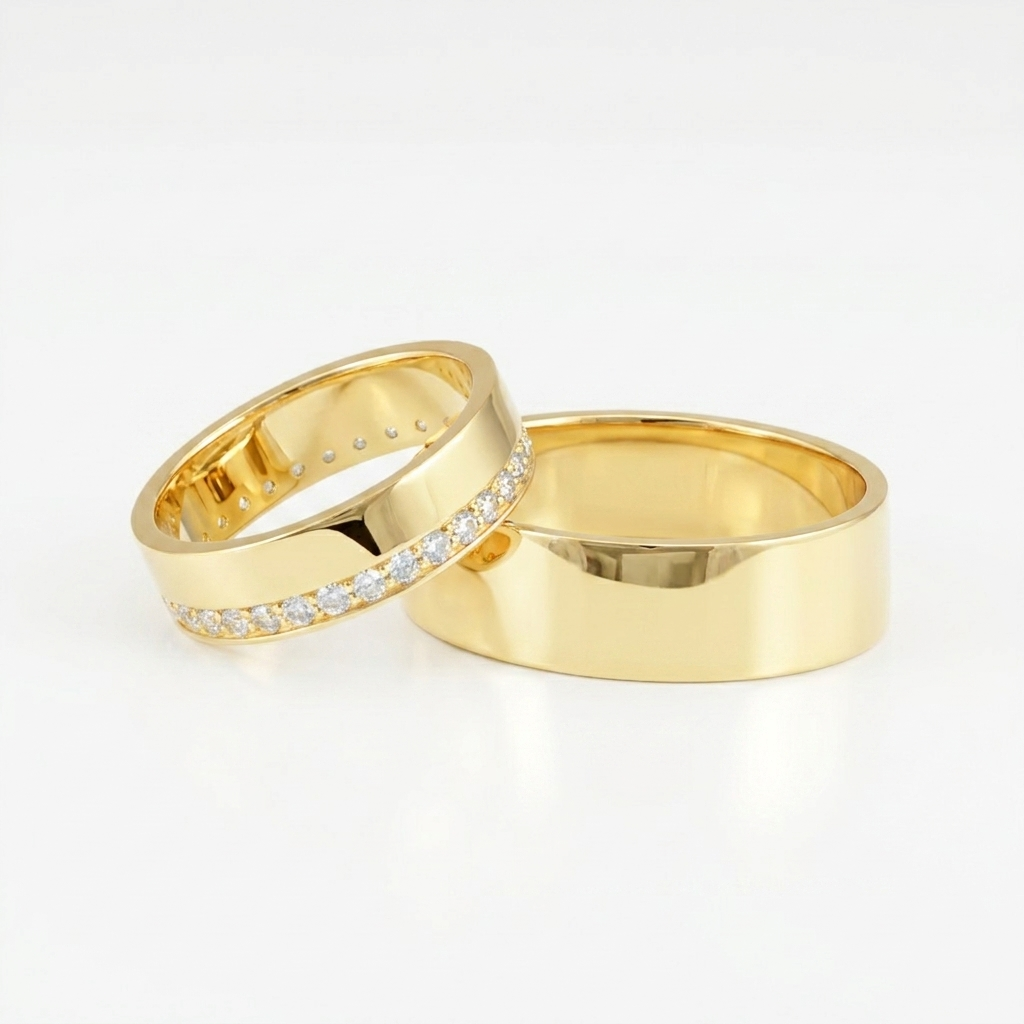
A classic smooth ring is usually easier to adapt. A model with a diamond line, complex texture, geometry or continuous pattern requires a more cautious approach. Sometimes it is safer to choose the exact size in advance than to rely on later adjustment.
That is why at KiANIT we recommend discussing the size before approving the design. This is especially important if the ring is created individually, has engraving, stones or a non-standard shape. This helps preserve the aesthetics, comfort and strength of the jewellery.
How a jeweller adjusts ring size
If the construction allows it, a jeweller can reduce or increase the ring size. When reducing the size, part of the metal is carefully removed, the ring is joined, the surface is finished and the jewellery is returned to a seamless appearance. When increasing the size, adding metal or using another professional technique may be required - the choice depends on the specific model.
After such work, it is important not only to achieve the right size, but also to preserve the shape, symmetry and appearance of the ring. The jewellery should look as if it was originally created for this exact finger.
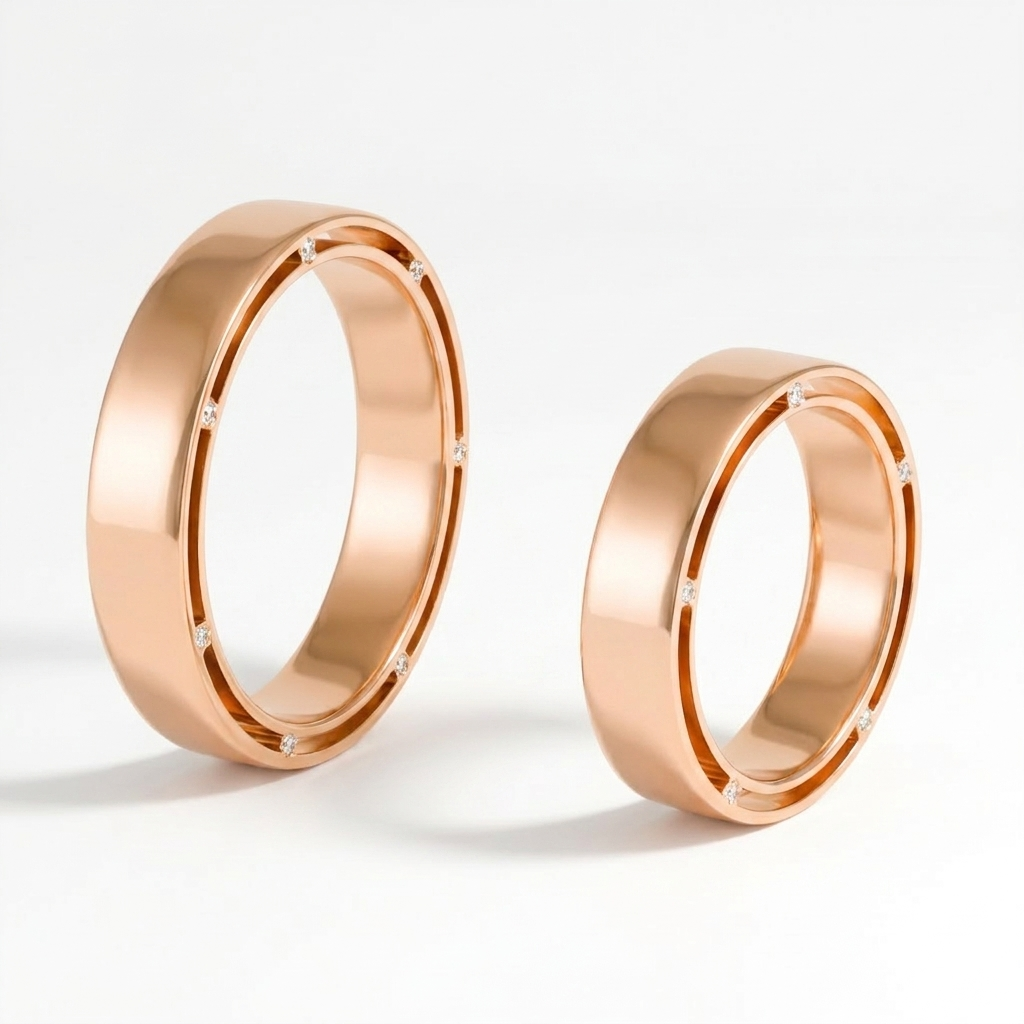
Complex rings require separate assessment. If stones, texture or engraving run around the band, resizing may affect the decorative elements. That is why the decision is always made after inspecting the jewellery, not based on a photo or general description.
When it is better not to resize, but to make the ring again
Sometimes adjustment is technically possible, but it is not the best solution. For example, if the change would significantly affect the proportions, stones, pattern or engraving. In such cases, it is more honest to consider making a new ring in the correct size.
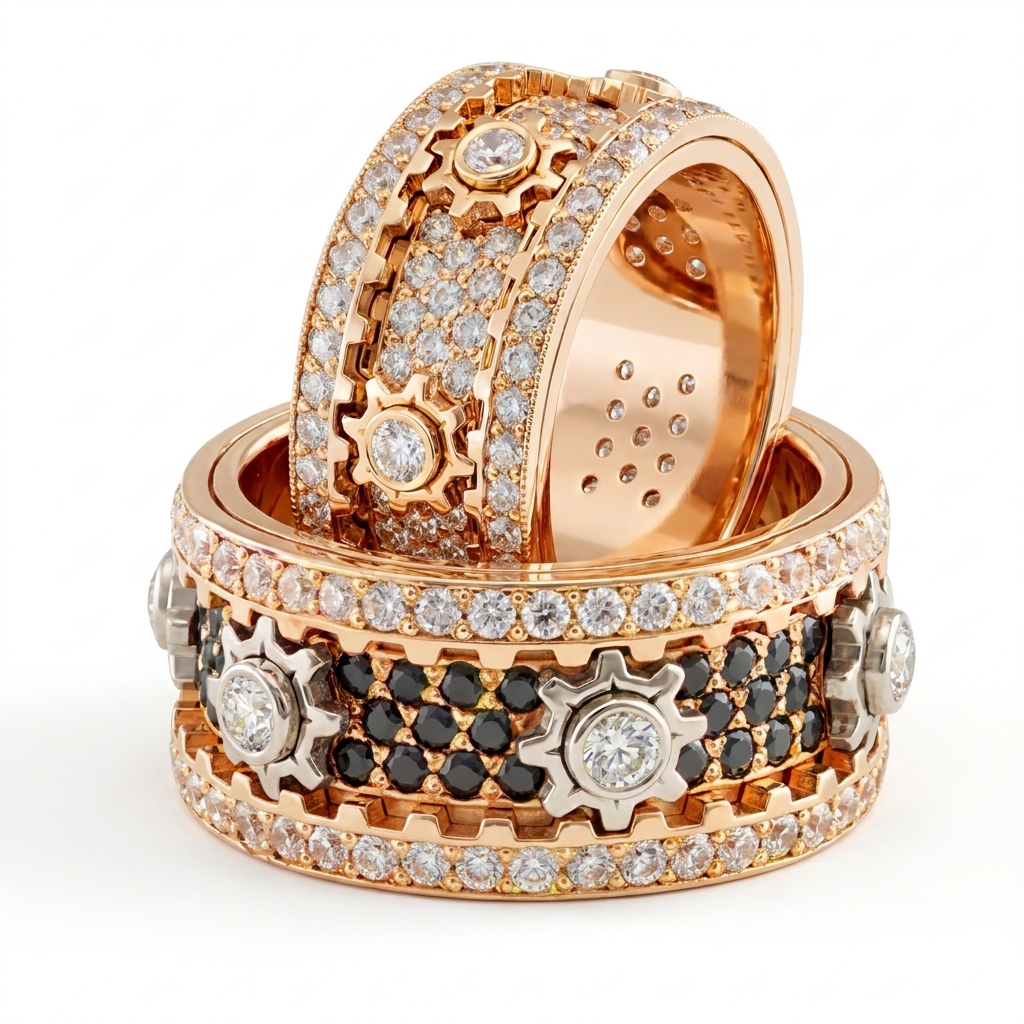
This is not a question of “easy or difficult”, but of the quality of the result. A wedding band should keep its shape, feel comfortable and look complete. If resizing may compromise the design, it is better to discuss an alternative path.
Paired wedding bands require particular attention. Even if the models look similar, the sizes, widths and fit may differ for each person. A good pair of rings is not about identicalness at any cost, but about harmony of design and individual comfort for each partner.
How to understand the size if the ring is a surprise

With an engagement ring it is often more difficult: you want to keep the proposal a secret, but also avoid making a mistake with the size. The most reliable way is to use a ring the person already wears on the correct finger as a reference. But it is important to remember that the fingers on the right and left hands may differ.
If the exact size is unknown, it is better to choose a design that can be carefully adapted if needed. A very complex band with stones all around may be less convenient for later adjustment.
At KiANIT, you can discuss the idea of an engagement ring in advance: the diamond shape, metal, setting and possible fit. We explain the nuances in simple words, so you understand where there is room for later adjustment and where the size should be determined as accurately as possible.
Common mistakes when choosing ring size
The most common mistake is choosing the size too quickly. A person tries on a ring, it goes on, and it seems that everything fits. But after a few minutes, there may be a feeling of pressure or, on the contrary, too much freedom.
The second mistake is relying only on an old ring. It may have had a different profile, a different width or been worn on another finger. Even a small difference in shape can change the feeling of the fit.
The third mistake is choosing a size “with room”. It may seem that a little looser will be more comfortable, but in reality the ring may rotate, shift or slip off. For jewellery worn every day, this is not the best compromise.
How to prepare for a fitting
Before a fitting, it is better to come in a calm state, when the hands are not very cold and not swollen. It is not worth measuring the size immediately after intense activity or when the fingers have clearly changed because of temperature.
It is helpful to think in advance about the ring you want: thin or wide, smooth or textured, classic or more expressive. These details will help choose the right sizers and evaluate a fit closer to the future model.
If you are choosing wedding bands together, it is better for both partners to try the options. Each person will have their own size, finger shape and sense of comfort. As a result, the rings may be similar in design, but individual in fit.
How to fit a ring to your finger: the key points
How to fit a ring to your finger is not a mechanical choice of a number, but attentive work with fit. It is important to consider the width of the ring, the inner profile, the shape of the finger, the knuckle, seasonal changes and the design features.
If the ring is created individually, it is better to think through the size before production. This is especially important for models with diamonds, engraving, texture or a complex shape. The more precise the fit at the start, the calmer everyday wear will be.
In the KiANIT showroom at Browary Warszawskie, Grzybowska 43a in Warsaw, you can try ring sizers, discuss the width and profile of the ring, compare sensations and choose the size. We will help calculate the jewellery individually and create a ring that sits beautifully on the hand and remains comfortable every day.