Behind the Scenes: A Day in the KiANIT Workshop
Behind the scenes: a day in the KiANIT workshop is a story not about haste, but about attention. Every ring goes through a journey from the first idea to the final shine, and in this process, not only metal, stones and tools matter, but also a sense of balance.
For the client, a piece of jewellery begins with a choice: wedding rings, an engagement ring, a custom design, engraving, or a special gold colour. For the KiANIT workshop, everything begins earlier - with understanding what the jewellery should be in real life: comfortable, precise, beautiful and personal.
Morning in the workshop: where ring making begins
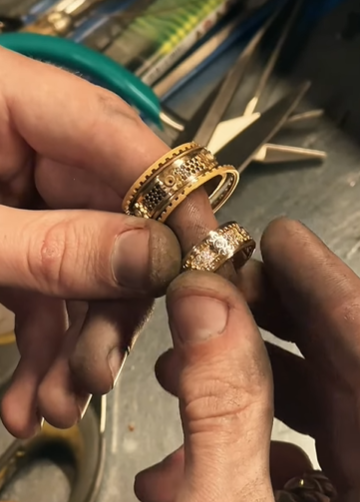
A day in a jewellery workshop does not begin with fire or polishing, but with checking the details. The specialist reviews which project is currently in progress: it may be a pair of wedding rings, an engagement ring with a diamond, or a custom piece created for a specific request.
At this stage, all the initial details matter: size, ring profile, width, metal, gold colour, future stone setting and possible engraving. For someone choosing jewellery for the first time, these words may sound technical, but the meaning is simple: the piece should look beautiful and feel comfortable every day.
At KiANIT, we do not treat a ring as an abstract product. A wedding ring should suit the hand, the couple’s style and the person’s everyday habits. An engagement ring should express the character of the moment while remaining a thoughtful piece of jewellery for years to come.
Behind the scenes: a day in the KiANIT workshop and the path from idea to form
A day in the KiANIT workshop shows that jewellery making is built on sequence. First, the idea is translated into clear parameters: what the silhouette will be, how soft the profile should feel, and which metal will best support the design.
The profile is the shape of the ring in cross-section. In other words, it affects how the ring feels on the finger: more rounded, flatter or balanced between these two options. Width also changes the impression: a slim ring looks more delicate, while a wider one feels more noticeable and architectural.
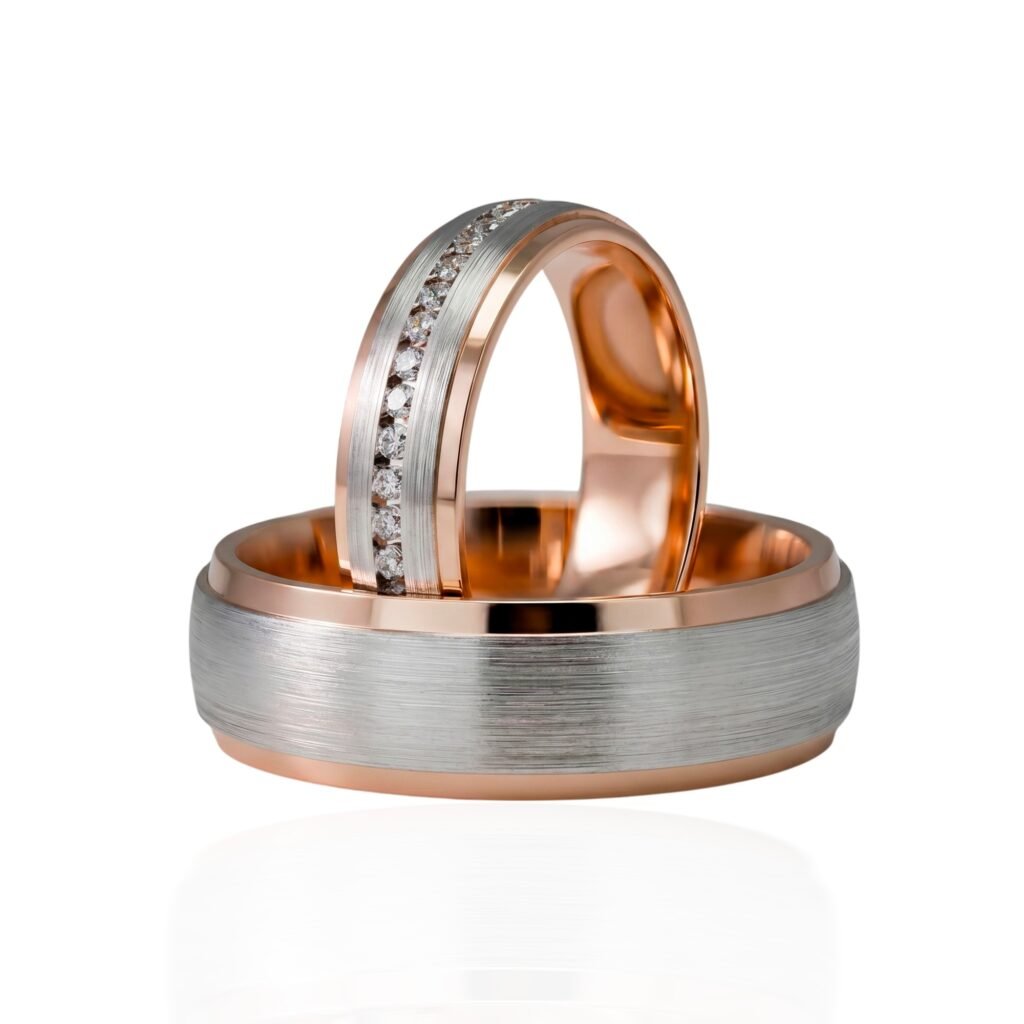
When it comes to wedding rings, it is important for the pair to look harmonious, but they do not have to be completely identical. One ring may be slightly wider, the other thinner; one may have a diamond line, while the other remains minimal. What matters most is that they share a common idea.
Metal: the foundation you do not see at first, but notice over time
Choosing the metal is one of the most important stages. Gold can be yellow, white or red, while the fineness indicates the content of pure gold in the alloy. For example, 585 and 750 are different options in terms of composition and the feel of the material, and the choice depends on the design, lifestyle and desired character of the jewellery.
For the client, metal often begins with colour: “I want white gold”, “I like warm yellow gold”, “red gold looks softer”. For the workshop, metal also means malleability, durability, behaviour during processing and the way it will reveal the ring’s shape.
In the KiANIT workshop, metal becomes not just a material, but the foundation of the future piece. It influences how the polish will look, how expressive the texture will be and how the ring will combine with diamonds if they are part of the design.
Working with form: when millimetres matter
In jewellery making, there is no “almost”. A difference in width, height or setting that seems barely noticeable at first can change the entire impression of a ring. That is why the jeweller constantly checks the proportions: how the piece looks from the side, how the line moves around the finger, whether there is any visual heaviness or excessive delicacy.
Custom rings are developed with particular care. A bespoke piece of jewellery should not only be beautiful in a photo, but also feel alive in reality. It should look natural on the hand, work with the wearer’s style and never feel accidental.
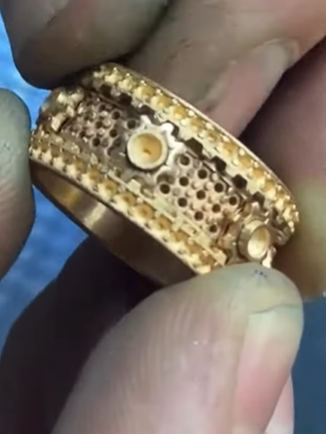
At this stage, the difference between manual attention and a superficial choice based on a picture becomes especially clear. A catalogue can show the form, but balance is born in the workshop: between aesthetics, comfort and technical precision.
Stones and setting: how a diamond becomes part of the ring
If the piece includes a diamond, the work requires particular precision. It is important not only to choose the stone according to its characteristics, but also to set it properly in the ring. A setting is the way a stone is secured in jewellery. It should be reliable, aesthetic and aligned with the design.
In an engagement ring, the diamond often becomes the main accent. But a beautiful result does not depend only on the stone itself. The height of the setting, the shape of the prongs, the proportion of the band, the colour of the metal and the way light passes through the stone all matter.
At KiANIT, we see the diamond not as a separate element, but in the context of the future ring. The same stone can look different in a minimal solitaire, in a setting with side stones, or in a design with a more expressive silhouette.
Engraving: a small detail with personal meaning
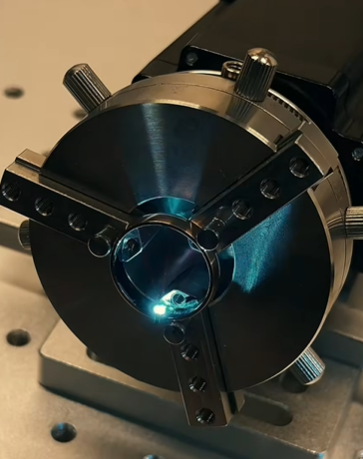
Engraving may seem like a final touch, but for many couples it is exactly what makes the ring truly theirs. It may be a date, a short phrase, initials or another personal sign. It is important that the engraving is appropriate in length, easy to read and suitable for the inner surface of the ring.
In the workshop, such a detail is treated calmly and attentively. Engraving should not overload the jewellery. Its role is to be a quiet personal meaning - not visible to everyone, but important to the people wearing the rings.
If you are choosing wedding rings for the first time, it is better to discuss engraving in advance. This makes it easier to understand how much space is available, which format will work and how to keep the piece looking refined.
Polishing: the moment when the ring begins to speak
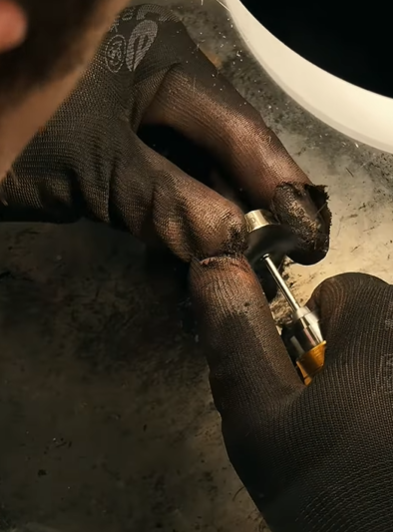
Polishing is one of the most beautiful behind-the-scenes stages. Before it, the ring already has its form, but it is the final finishing that reveals the character of the metal. The surface may become mirror-like, softly glowing or more restrained, depending on the chosen effect.
For a beginner, polishing simply means “making it shine”. For a jeweller, it is precise work with the surface. The task is to remove what is unnecessary, emphasise the form, preserve the line and keep the details clean.
At this moment, the piece seems to become closer to its future owner. It no longer looks like a blank or a technical object. It is a ring you can imagine on the hand, in movement, in an ordinary day and in an important moment.
Quality control: peace of mind before the piece reaches the client
Before a piece of jewellery leaves the workshop, it is carefully checked. The form, surface, stone setting, comfort, clarity of polishing and consistency with the project are all reviewed. This is not a formality, but an important part of the work.
Quality control is especially important for jewellery that will be worn every day. Wedding rings constantly come into contact with skin, clothing, objects, water and light. That is why they should not only look beautiful at the moment of collection, but also be thoughtfully made for real life.
At KiANIT, we value this approach: it is better to check a detail several times than to leave any doubt. For the client, this feels like confidence - the jewellery has been created with attention and without randomness.
Why it is worth seeing jewellery not only in photos
A photo helps choose a direction, but it does not always convey the real feeling of a ring. On the hand, everything changes: width, metal colour, setting height, diamond brilliance and overall balance. That is why a consultation in the showroom helps make the choice more calmly.
At the KiANIT showroom in Browary Warszawskie at Grzybowska 43a in Warsaw, you can discuss the idea, see samples, compare options and ask questions in simple language. You do not need to know all the terms in advance. It is enough to understand what kind of feeling you want from the jewellery: minimal, classic, delicate, expressive or deeply personal.
What the client usually does not see, but feels in the finished ring
Behind a finished ring stand dozens of small decisions. Which profile to choose. Which gold colour will be best. How to set the stone. How softly to round the edge. Where to place the engraving. How to achieve a clean polish.
The client may not know all the technical details, but they feel the result. A good ring does not need explanation: it sits comfortably, looks beautiful, does not feel accidental and brings a calm sense of “yes, this is it”.
This is the meaning of the KiANIT workshop’s work. Jewellery is created not to demonstrate complexity, but to achieve a precise result: so that the ring feels personal, aesthetic and right for your story.
Behind the scenes: a day in the KiANIT workshop is about attention
Behind the scenes: a day in the KiANIT workshop is not one spectacular moment, but a chain of attentive actions. An idea becomes a sketch, parameters become form, metal becomes a ring, and final details turn the piece into a personal symbol.
If you are choosing wedding rings, an engagement ring or want to create a custom piece of jewellery, start with a conversation. At KiANIT, you can discuss the design, metal, diamonds and engraving, and see how a future idea becomes a real piece of jewellery.
Book a consultation at the KiANIT showroom in Warsaw or discuss a custom project with us - we will help you move from the first image in your mind to a ring that will live beautifully with you.