How to clean gold and platinum at home: gentle care for fine jewellery
How to clean gold and platinum at home is a question that only seems simple at first. A piece of jewellery can be durable, carefully made and designed for everyday wear, yet the metal still comes into contact with skin, cosmetics, water, fabrics and everyday surfaces.
At-home care helps restore a clean shine, remove a light film and keep jewellery looking neat. The key is not to try to “clean harder”, but to act gently: without abrasives, aggressive chemicals or harsh movements. This is especially important for wedding rings, engagement rings and jewellery with stones.
Why gold and platinum lose their shine
Gold and platinum do not become “worse” through normal wear, but their surface gradually becomes covered with a thin layer of residue. Traces of hand cream, soap, natural skin oils, dust and cosmetics remain on the jewellery. Visually, this looks like dullness: the metal seems less smooth and the reflection of light becomes softer.
Residue most often appears in places that are difficult to wipe quickly: around stones, inside engraving, on textured surfaces, near decorative lines and on the inner side of a ring. If the jewellery is worn every day, dirt builds up even with careful use.
For a beginner, it is important to understand that cleaning gold and platinum at home is not deep restoration and not polishing. It is gentle maintenance between professional inspections.
How to clean gold and platinum at home safely
The calmest method is warm water, a mild product and a soft cloth. This type of care is suitable for basic cleaning of smooth gold and platinum jewellery without complex inserts and without concerns about the condition of the stone setting.
A safe order of steps:
- Prepare a small bowl of warm water.
- Add a little mild product without aggressive ingredients.
- Leave the jewellery in the water for a few minutes.
- Gently clean the surface with a soft brush or cloth.
- Rinse well with clean water.
- Dry with a soft lint-free cloth.
- Let moisture fully leave hard-to-reach areas.
It is better not to clean a ring over an open drain. Even if the jewellery seems secure in your hand, it can slip during rinsing. It is safer to use a separate bowl or close the drain in advance.
What to use to clean gold at home
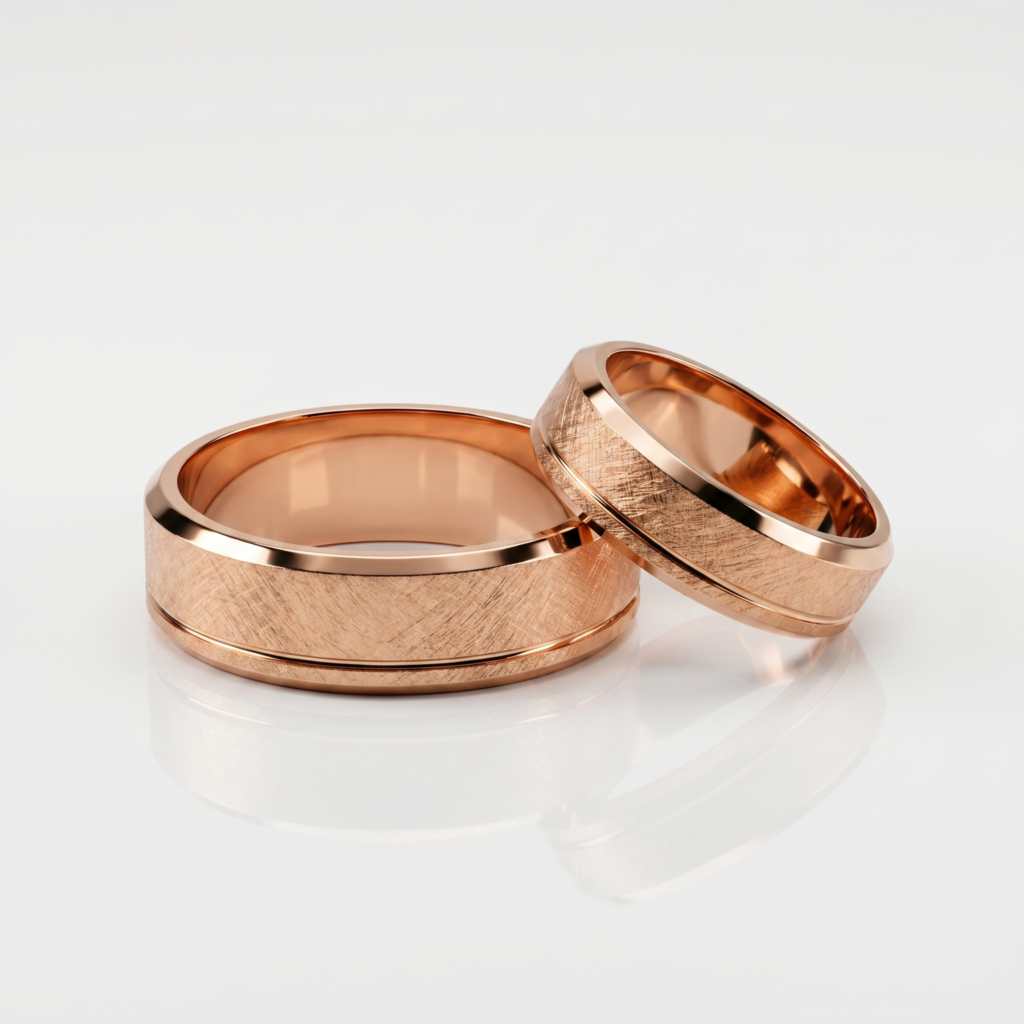
Gold jewellery can be cleaned with a mild soapy solution if it has no damage, uncertain inserts or loosened elements. For a gold wedding ring, this type of care usually helps remove traces of everyday wear: hand cream, dust, soap residue and light dirt on the inner side.

585 gold and 750 gold differ in alloy composition. In simple terms, the gold fineness shows what part of the alloy is pure gold. But in care, the fineness is not the only important factor. The whole construction matters: ring width, surface type, engraving, stones, satin finish or polishing.

If the ring is completely smooth, it is easier to keep clean. If the surface is matte, textured or has decorative details, it is better to be especially careful: active rubbing can change the way the surface looks.
What to use to clean platinum at home
Platinum is perceived as a very strong and noble metal, but that does not mean it can be cleaned harshly. A platinum ring also collects traces of cosmetics, dust and soap. That is why the basic care remains the same: warm water, a mild product, a soft brush and a soft cloth.
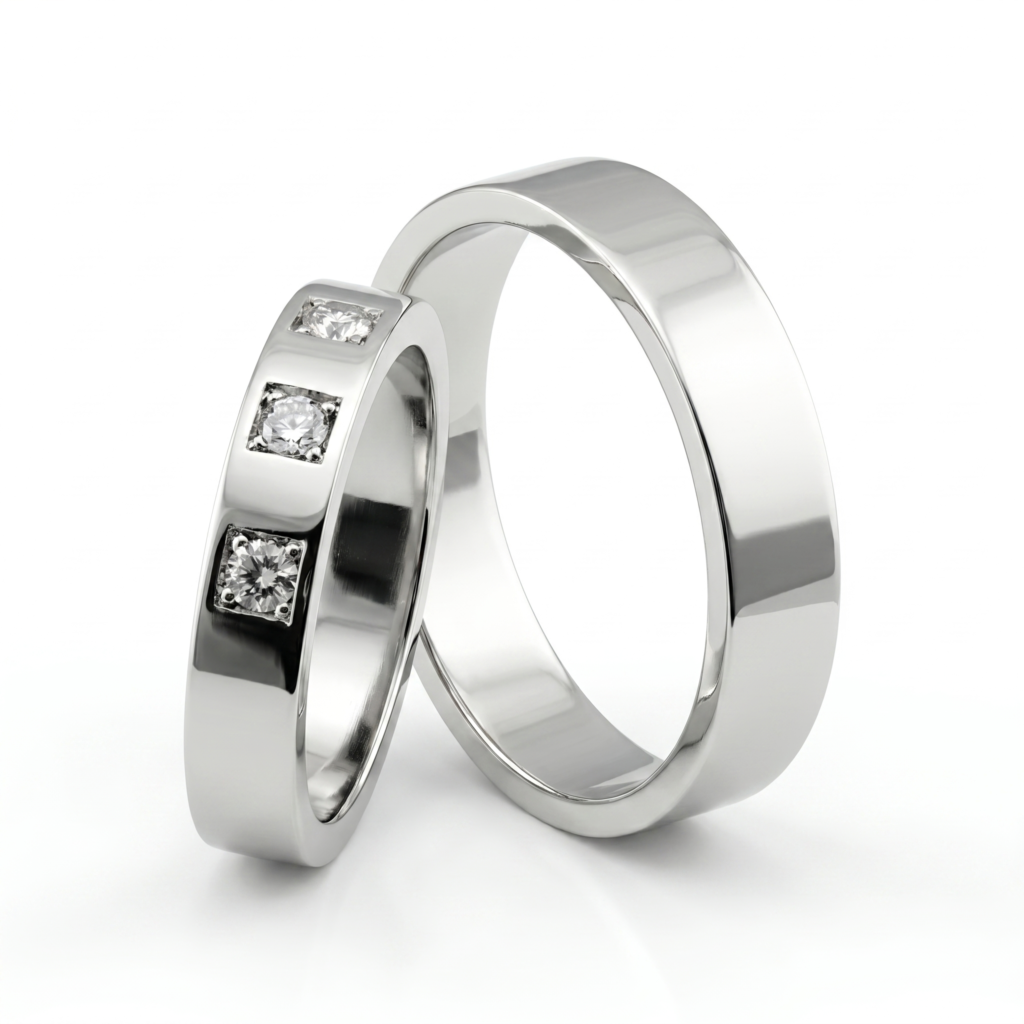
Platinum has its own character of surface ageing. Over time, the surface can become less mirror-like, especially if the jewellery is worn every day. This does not always look like damage - sometimes the metal simply gains a calmer, softer appearance. But if you want to restore a more pronounced shine, at-home cleaning may not be enough: professional jewellery polishing may be needed.
Platinum should not be rubbed with hard sponges, powders or dense abrasive fabrics. This approach can leave marks on the surface and make the jewellery look less neat.
What not to use for cleaning gold and platinum
The main mistake in at-home care is using products that are too strong. Jewellery does not need to be boiled, cleaned with powders or polished with toothpaste. Even if the metal seems durable, the surface, polish and decorative details require delicacy.
Avoid using:
- bleach and strong household chemicals;
- products containing chlorine;
- abrasive powders;
- toothpaste;
- stiff brushes and metal sponges;
- alcohol-based or acidic products without a jeweller’s recommendation;
- untested home recipes;
- ultrasonic cleaning if there are stones, a complex setting or doubts about the stone setting.
It is also important to mention rings with diamonds, sapphires, emeralds, stone-set bands and complex settings. In this type of jewellery, not only the metal is cleaned: the stone, setting, prongs and condition of the setting must all be considered. If there is any doubt, it is better to show the jewellery to a jeweller first.
How to clean gold and platinum wedding rings
Wedding rings are most often worn every day, so they collect traces of real life faster. The inner side stays in contact with the skin, while the outer side picks up marks from hands, bags, door handles, dishes and work surfaces. Even a very carefully worn ring gradually loses its initial freshness.
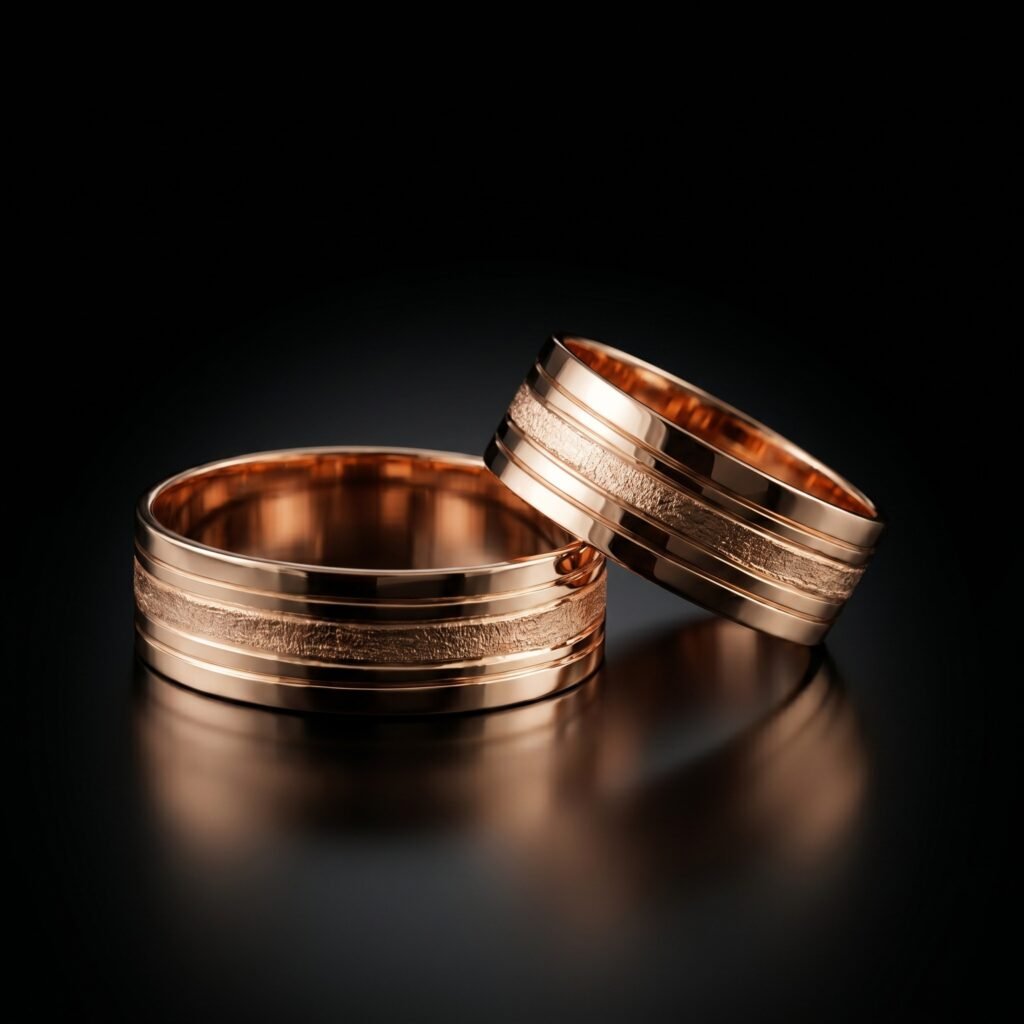
For smooth wedding rings, gentle at-home cleaning is suitable. If the ring has engraving, a combined texture or a matte surface, it is better not to try to actively “scrub out” every line. Matte and satin surfaces are especially sensitive to friction: their character is created not only by the colour of the metal, but also by the finishing method.
More about everyday care logic can be explored through the article on at-home ring care. It works well as an internal link next to the topic of cleaning gold and platinum.
How to clean jewellery with stones
If a gold or platinum ring has stones, the approach should be more careful. Dirt often collects not on the visible top part, but under the stone, near the prongs and in the small spaces of the setting. This is exactly where soap, cream and dust can reduce the shine of the jewellery.
For at-home cleaning, you can use a soft brush. Do not try to lift the stone, clean a gap with a needle or check the setting yourself with a sharp object. Prongs are delicate jewellery elements that hold the stone. They must not be bent at home.
If the stone seems movable, the ring catches on clothing or the jewellery looks different after an impact, it is better to postpone cleaning and contact a jeweller. In this case, the safety of the stone is more important than shine.
How often to clean gold and platinum at home
Frequency depends on how you wear the jewellery. A ring worn every day needs more regular care than jewellery worn for special occasions. If you often use hand cream, work at a computer, wear jewellery during walks, travel and household tasks, residue will appear faster.
A practical guide is to clean the jewellery when it visually loses freshness. There is no need to do it every day. Too frequent and active cleaning can be unnecessary, especially if you rub the metal or use unsuitable products.
A professional inspection is a separate matter. At-home cleaning removes surface dirt, but it does not check the condition of the setting, stones, engraving, ring shape or polish.
When it is better to take jewellery off
The best care for gold and platinum is not only cleaning, but also the right habits. Sometimes jewellery should be removed in advance so it is not exposed to unnecessary contact with chemicals, impacts and friction.
It is better to take rings off before:
- cleaning with household chemicals;
- training and working with weights;
- swimming in a pool or the sea;
- gardening;
- applying rich creams and oils;
- renovation work, carrying heavy items and active household tasks;
- sleeping, if the jewellery has protruding details or stones.
This does not mean the jewellery is “fragile”. It means it is valuable and designed for attentive care. The fewer sharp impacts the metal and setting receive, the longer the ring keeps its neat appearance.
How to store gold and platinum
Proper storage helps avoid unnecessary scratches and accidental impacts. Gold and platinum jewellery is best stored separately: in a box, soft pouch or individual compartment of a jewellery case. Rings should not be placed together with chains, earrings or jewellery with protruding details.
If you take off a ring at home, choose one fixed place for it. For example, a soft tray or a box near the bed. The edge of a sink, the kitchen, the bathroom or an open shelf next to cosmetics is not the best place.
For travel, it is worth using a separate compact case. Jewellery should not lie loose in a cosmetic bag next to bottles, keys and hard objects.
At-home cleaning and professional care: what is the difference
At-home cleaning helps keep jewellery clean. Professional care solves other tasks: a jeweller can assess the condition of the surface, check stone placement, look at engraving, the setting, the ring shape and understand whether polishing is needed.
At-home care does not replace jewellery diagnostics, especially if the piece is worn every day. It is similar to good shoes or a watch: daily care matters, but sometimes a professional hand is needed.
At KiANIT, you can discuss care for a specific piece of jewellery: gold, platinum, smooth, with stones, engraving or a complex texture. If a ring is created individually, care nuances can be considered in advance - choosing the metal, width, profile, surface and details so the jewellery is not only beautiful, but also understandable in everyday wear.
How KiANIT helps choose jewellery that is easy to care for
At KiANIT, we see a ring as jewellery for real life. It should look beautiful on the day of purchase, but it is just as important how it will wear after a month, a year and beyond. That is why, when choosing gold or platinum, it is worth discussing not only the shade of metal, but also the ring width, profile, surface type, engraving and future wearing habits.
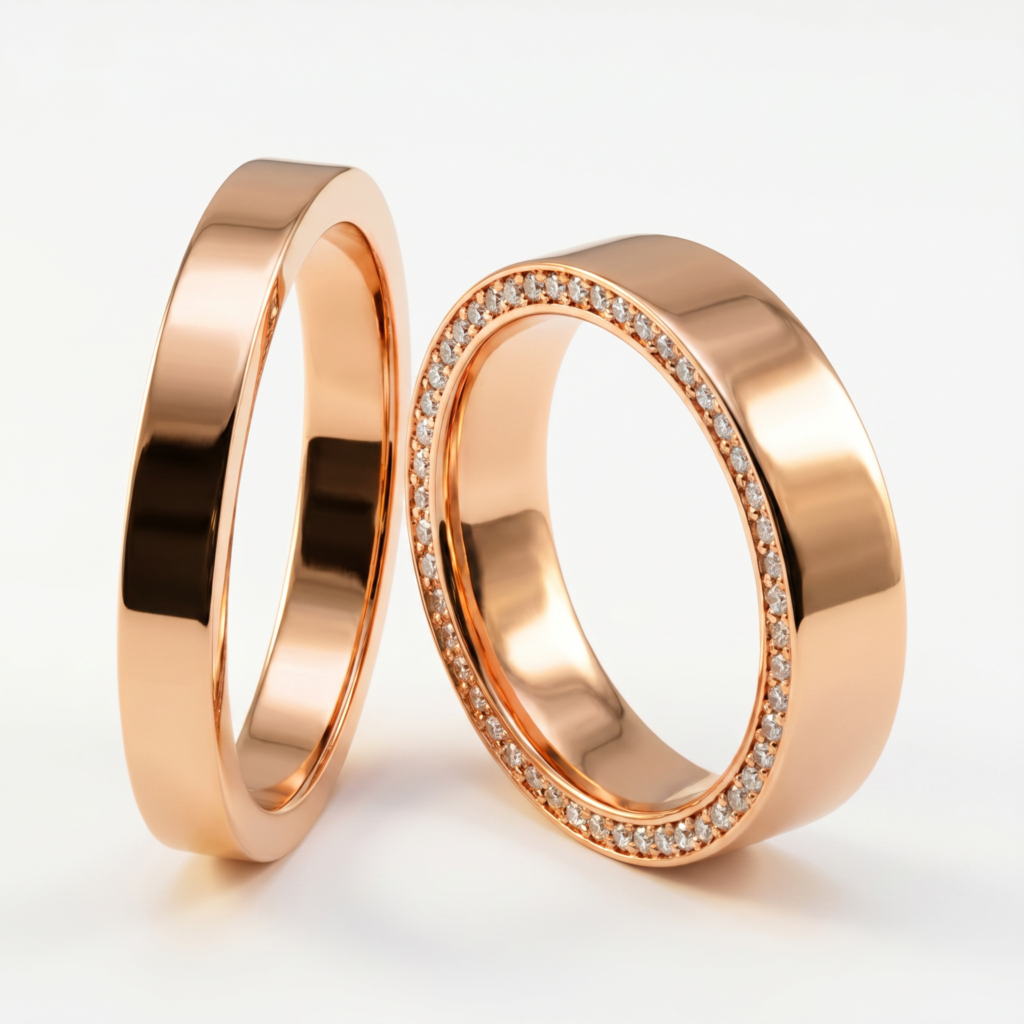
A smooth ring is easier to clean at home. A matte surface looks restrained and modern, but requires more attention to friction. A ring with stones gives more sparkle, but needs periodic setting checks. These nuances are better understood before ordering, not after the first cleaning.
At the KiANIT showroom in Browary Warszawskie at Grzybowska 43a in Warsaw, you can calmly discuss 585 and 750 gold, platinum, different ring profiles and how to care for them. You can book a consultation through the KiANIT contact section.
How to clean gold and platinum at home: the essentials
How to clean gold and platinum at home, in brief: use warm water, a mild product, a soft brush and a lint-free cloth. Do not use abrasives, strong household chemicals or harsh cleaning methods. Jewellery with stones, complex settings, engraving or matte surfaces requires an especially gentle approach.
Proper care is not an attempt to return jewellery to a showcase condition at any cost. It is a calm habit that helps gold and platinum look well cared for longer. If the jewellery starts catching, changes shape, receives an impact or simply raises doubts, it is better to show it to a jeweller. KiANIT will help choose safe care and explain how to preserve the beauty of a ring in everyday wear.