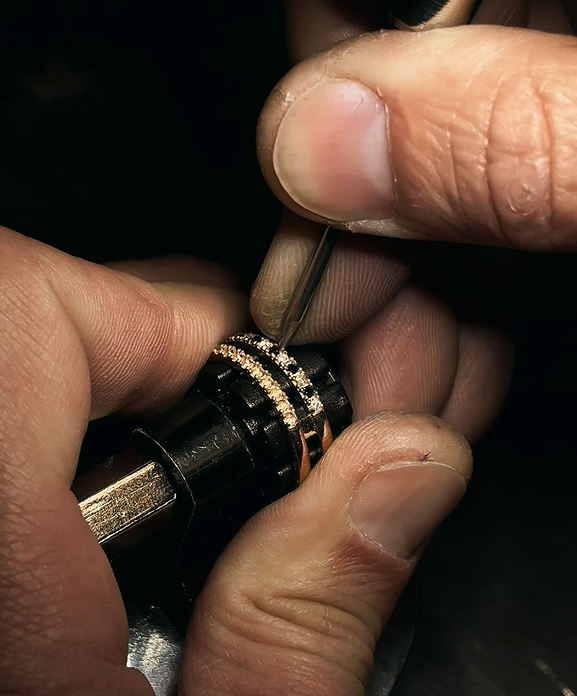
Hand-Set Diamond: How the Stone Stays in a Ring
A hand-set diamond is a piece of jewellery craftsmanship that influences not only the look of a ring, but also the confidence of the person wearing it. Even the most beautiful stone should be set in a way that allows light to pass through its facets while keeping the setting secure for everyday wear.
For someone choosing a ring for the first time, the setting may look like a small detail: a few prongs, a fine bezel, or a row of stones. In reality, this is where gemmology, precise metalwork, and the experience of the jeweller meet. At KiANIT, we explain this stage in simple language so you can understand how a diamond stays in a ring and what to look for when choosing one.
What Is a Hand-Set Diamond?
Hand setting is one of the processes - in which a jeweller places a diamond into a prepared seat and secures it with metal. The stone is not glued in place: it is held by the structure of the ring. The metal is carefully pressed against the diamond at specific points, while the jeweller checks the fit, symmetry, and security.
The main purpose of the setting is to find the right balance between beauty and durability. On one hand, the diamond should be open to light so the cut can reveal its brilliance. On the other hand, it must sit firmly and should not catch on fabric, hair, or gloves.
Handwork is especially important in engagement rings, where the centre stone becomes the main focus. This type of setting requires precision: the jeweller considers the shape of the diamond, the height of the setting, the thickness of the metal, and how the ring will be worn every day.
How a Stone Stays in a Ring Without Glue
A diamond stays in a ring thanks to the metal and a correctly calculated seat. A place is created in the setting that matches the size and shape of the stone. The jeweller then secures the diamond with setting elements: prongs, a bezel, channel walls, or small sections of metal, depending on the design.
The stone should be secured not only from above, but also within the seat itself. This means that the diamond does not “lie loosely” in the ring. It sits in a structure that supports it in the correct position. When the work is done properly, the stone does not rotate, tilt, or make a noticeable sound when lightly touched.
It is important to understand that security does not come from a bulky setting, but from precision. A setting that is too heavy can cover the stone and make the design look less refined. A setting that is too delicate, without considering the shape of the stone and the wearer’s lifestyle, may become vulnerable. That is why a hand-set diamond should always be assessed together with the ring design, the metal, and the stone size.
Main Types of Diamond Settings
Prong Setting
Prongs - are small metal “claws” that hold the diamond around its edges. This option is often chosen for engagement rings because it opens the stone and lets in more light. The more light reaches the diamond, the more vividly its cut can reveal its brilliance.
The classic options are four or six prongs. Four prongs make the stone look more open, while six can create a sense of added protection. The choice depends on the diamond shape, its size, and the desired character of the ring.
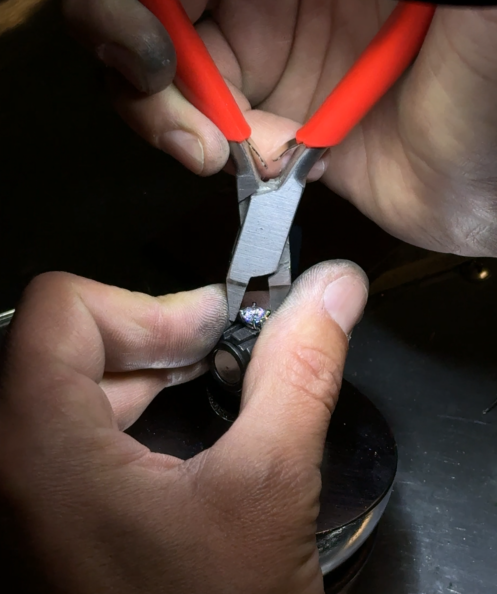
A prong setting is ideal for those who want the stone to be the main focus of the piece. At the same time, the prongs must be carefully finished: they should not scratch the skin, catch on clothing, or cover more of the diamond than necessary.
Bezel Setting
A bezel setting - secures the diamond with a fine metal contour around its perimeter. This method looks more composed and protective: the metal surrounds the stone and visually emphasises its shape.
This option often appeals to those looking for a calm, modern aesthetic. A bezel can make the ring feel smoother to the touch and reduce the likelihood of catching. At the same time, part of the light is covered by the metal, so the final look depends on the proportions of the setting and the quality of the craftsmanship.
A bezel setting works especially well in minimal rings where clean lines and a sense of unity are important.
Pavé and Diamond Rows
Pavé - is a setting with many small diamonds - placed close together. Visually, the surface looks luminous, as if it were scattered with light. In rings, pavé is often used on the band, around the centre stone, or in decorative details.
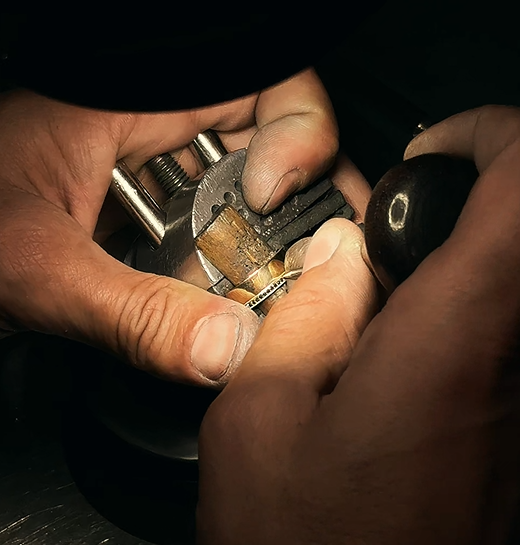
Here, the precision of handwork is especially important. Small stones should sit evenly, at the same height, and with the same rhythm. Even a slight irregularity can disturb the overall sparkle and the feeling of premium craftsmanship.
Pavé beautifully enhances the centre diamond, but it requires mindful wear. This type of ring is best checked periodically by a jeweller, especially if it is worn every day.
Channel Setting
In a channel setting - diamonds are placed between two walls of metal. The stones appear to lie within a track, while the ring edges hold them from the sides. This setting often looks smooth and architectural.
A channel setting suits those who like clean lines and want to add sparkle without raised elements. It can be comfortable for everyday wear when the construction is properly designed.
Why Handwork Matters
Hand-setting a diamond allows the jeweller to respond to the specific stone, not only to a technical scheme. Even diamonds of the same shape can differ slightly in proportions, pavilion height, table size, and the character of the cut. The jeweller must notice these features and set the stone so it looks harmonious.
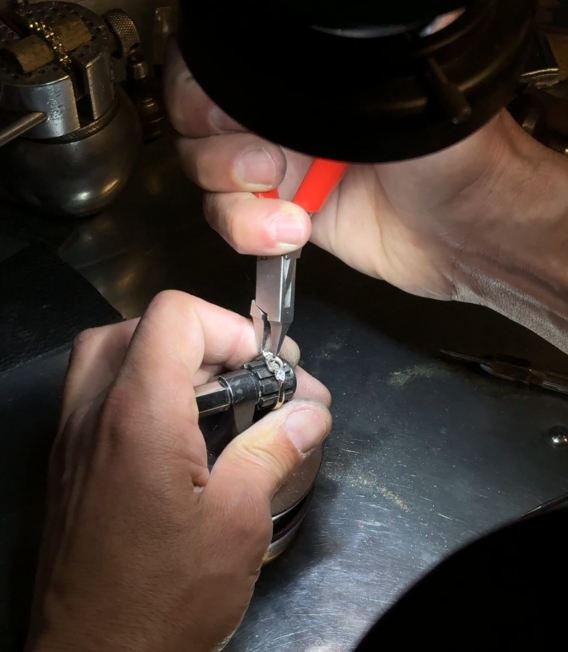
In a well-made setting, nothing feels accidental. The centre diamond sits evenly, its axis aligns with the axis of the ring, the prongs are symmetrical, and the metal is cleanly finished. This is not always obvious in the first photo, but it is easy to feel in person.
For KiANIT, aesthetics and clear explanation are both important. We help the client understand why one type of setting may be better suited to active everyday wear, while another may work better for a more expressive design with a higher centre stone.
What Affects the Security of the Setting
Several factors influence how a diamond stays in a ring:
- the shape and size of the diamond;
- the type of setting and setting height;
- the chosen metal and its fineness;
- the thickness and shape of the band;
- the wearer’s lifestyle;
- the quality of the seat and final finishing.
A round diamond is usually easier to set symmetrically because its shape is even. Fancy shapes - oval, pear, marquise, emerald cut - require special attention to tips, corners, and proportions. For example, sharp areas in some shapes need more carefully considered protection.
The metal also matters. 585 gold, 750 gold, and platinum behave differently during work and wear, so the ring construction should match the chosen material. There is no universal answer that is “best for everyone”: the jeweller evaluates the design, the stone, and the purpose of the piece.
How to Tell If the Setting Is Neatly Made
When receiving a ring, it is worth looking not only at the brilliance of the diamond, but also at the details around it. The stone should sit straight, without tilting. The prongs or bezel should look symmetrical, and the metal surface should be smooth and well finished.
There are several simple signs of careful work:
- the diamond does not move when lightly touched;
- the setting does not catch on fabric;
- the prongs do not look different in length or shape;
- the stone is centred;
- the metal does not cover too much of the diamond;
- the ring feels comfortable on the finger.
It can be difficult for a beginner to assess everything independently, especially when choosing a first engagement ring. That is why in the KiANIT showroom in Browary Warszawskie at Grzybowska 43a, you can see rings in person, compare stone settings, and ask questions about exactly how the setting is made.
Hand-Set Diamonds and Ring Design
The setting influences the character of a piece more than it may seem. A high prong setting makes the diamond more visible and visually lighter. A lower setting can look calmer and may be more comfortable for those who do not like raised elements. A bezel setting adds a graphic quality, while pavé increases the sparkle.
When choosing, it is important to think not only about the photo of the ring, but also about the future life of the piece. Will the ring be worn every day? Does the wearer often work with their hands? Is a smooth surface important, or is the goal to bring as much light as possible around the stone? The answers help choose not just a beautiful design, but the right construction.
At KiANIT, these decisions are discussed before the ring is made. We can suggest setting options, show the difference between setting types, and explain how the choice will influence the appearance of the ring.
Should the Setting Be Checked After Purchase
Yes, the setting should be checked periodically, especially if the ring is worn every day. Even a well-made piece comes into contact with surfaces, clothing, cosmetics, and everyday objects. Over time, the metal may show signs of wear, and delicate elements may require attention.
This is not a reason to worry, but a normal part of jewellery care. Just as shoes need careful storage and watches need servicing, a diamond ring is best shown to a specialist from time to time. A check-up helps notice changes early and keep the piece in good condition.
At home, you should not try to tighten prongs yourself or clean the ring with aggressive products. If it seems that the stone has shifted or the ring has started to catch, it is better to contact a jeweller.
How to Choose a Setting for an Engagement Ring
For an engagement ring, three criteria matter most: beauty, security, and comfort. Sometimes a client comes with the idea, “I want the diamond to be as open as possible,” but during the conversation it becomes clear that the ring will be worn every day and should be practical. In that case, the jeweller may suggest a more protected setting or adjust the construction details.
For a classic look and bright light performance, a prong setting is worth considering. If smoothness and a modern silhouette are important, a bezel setting may be the better choice. If you want more sparkle around the centre stone, pavé or a row of diamonds can work beautifully. If you prefer subtle brilliance along the band, a channel setting is a good option.
The best decision does not come from one parameter alone, but from a combination: the diamond, the metal, the shape of the hand, the style of the future wearer, and the way the ring will be worn.
KiANIT: Setting as Part of a Bespoke Ring
At KiANIT, we see a ring as a complete piece in which the diamond, metal, and setting should work together. We do not suggest choosing only a “beautiful stone” or only a “fashionable setting”. The construction should be logical, aesthetic, and clear to the owner.
During a consultation, you can discuss the diamond shape, setting type, gold fineness or platinum, band width, setting height, and possible engraving. The cost of such a ring is calculated individually and depends on the metal, diamond parameters, weight, and complexity of the work.
A hand-set diamond is the part of a ring that is rarely described romantically, yet it is what holds the main symbol every day. When the stone sits evenly, the light opens beautifully, and the ring is comfortable to wear, craftsmanship becomes not a visible detail, but a feeling of confidence.If you are choosing an engagement ring and want to understand how the stone will stay in a specific model, visit the KiANIT showroom in Warsaw. We will show you different types of settings, explain them in simple words, and help you choose a solution for your diamond, metal, and style.