How to care for a diamond ring so it keeps its sparkle every day
How to care for a diamond ring is an important question if you wear your engagement ring every day and want it to stay clean, bright and beautifully kept for years. A diamond itself is a very hard stone, but a ring is more than the stone: it includes the metal, setting, prongs, stone placement, fine details and daily contact with skin, cosmetics and water.
Proper care does not require complicated rituals. It is enough to understand when it is better to take the ring off, how to clean it safely at home and why a regular jeweller’s check helps preserve not only its shine, but also your peace of mind.
How to care for a diamond ring at home
At-home care begins not with cleaning, but with habits. A diamond reflects light beautifully when its surface is clean. If traces of hand cream, soap, dust or natural skin oils remain on the stone, its sparkle becomes softer and less visible.
For everyday care, you can use warm water, a mild product without aggressive ingredients and a very soft brush. It is best to clean the ring gently: leave it in warm water for a few minutes, carefully clean the area around the stone and setting, then rinse it thoroughly and dry it with a soft lint-free cloth.
It is important not to rub the jewellery with hard materials. Even though a diamond is highly resistant to scratches, the metal and polished surface of the ring need a more delicate approach.
Why a diamond loses its sparkle
Most often, a diamond ring looks less brilliant not because something has happened to the stone, but because a thin film has appeared on its surface. It may be almost invisible, yet it prevents light from passing freely through the facets and returning as bright flashes.
Sparkle can be affected by:
- hand creams, oils and cosmetics;
- soap and shower products;
- dust and everyday dirt;
- contact with cleaning products;
- frequent touching of the stone with fingers;
- traces of moisture in hard-to-reach areas of the setting.
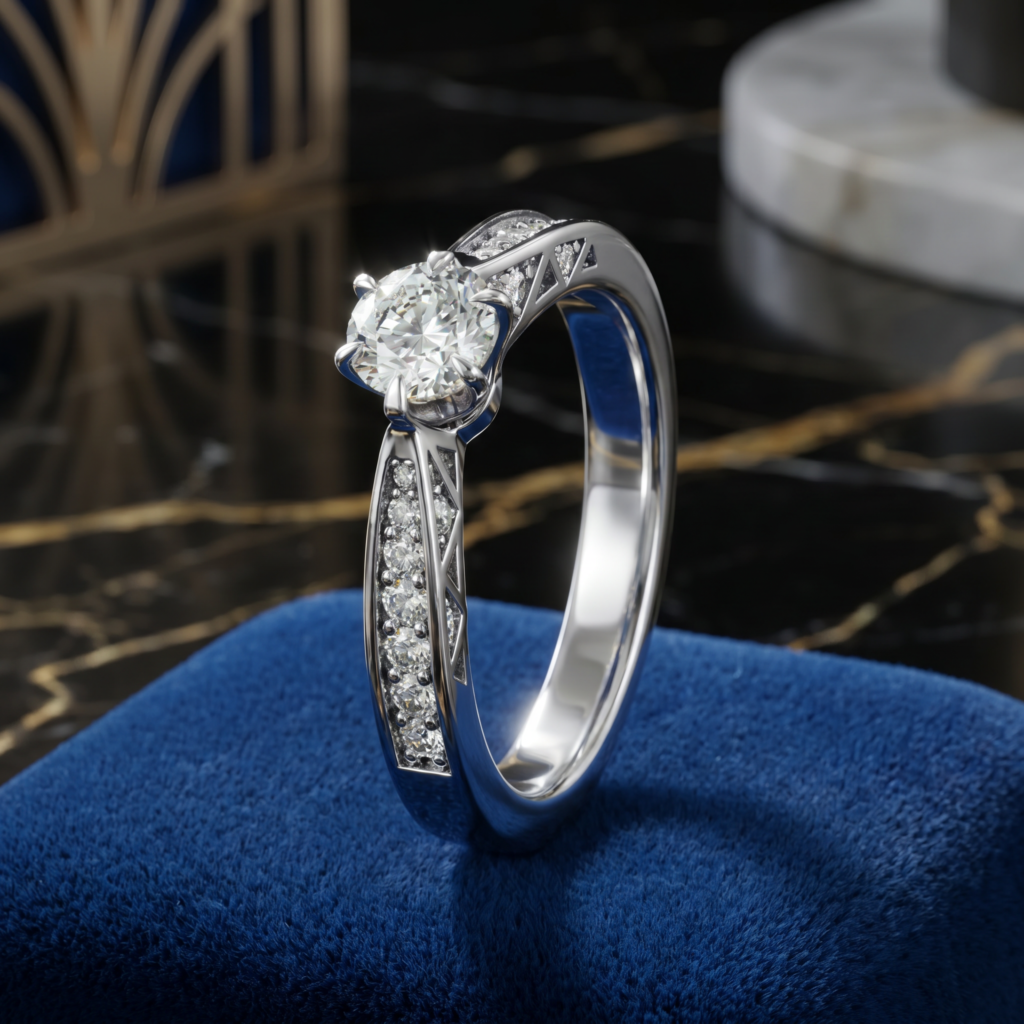
A diamond ring has zones where dirt tends to collect especially quickly: under the stone, around the prongs, in a pavé or diamond-set band, and around openwork details. This is why the jewellery may look clean from above, yet lose sparkle because of residue in the lower part of the setting.
When it is better to take off a diamond ring
An engagement ring is often seen as a piece of jewellery you want to wear all the time. This is understandable: it is connected to a personal story and reminds you of an important moment every day. Still, in some situations it is better to take the ring off in advance to protect the metal, setting and stone placement.
A diamond ring should be removed before cleaning, exercising, swimming, gardening, applying rich creams and doing anything where the jewellery may be hit, caught or exposed to chemicals. Extra care is needed around gym equipment, heavy bags, suitcases and hard surfaces that may cause a sharp impact.
A diamond is hard, but that does not mean the whole piece of jewellery is invulnerable. The setting and prongs are more delicate jewellery elements. They hold the stone in place, so their condition matters just as much as the cleanliness of the diamond itself.
How to clean a diamond ring safely
The main rule of at-home cleaning is softness. There is no need to use strong products, abrasive pastes, powders, stiff brushes or untested “home remedies”. They may damage the metal surface, leave marks on the polish or get trapped in small details.
A safe basic method looks like this:
- Prepare a small bowl of warm water.
- Add a little mild product without harsh chemicals.
- Leave the ring in the solution for a few minutes.
- Gently clean hard-to-reach areas with a soft brush.
- Rinse the jewellery well with clean water.
- Dry it with a soft cloth and let moisture fully leave the setting.
It is better not to clean the ring over an open drain. Even if the jewellery sits securely in your hand, it may slip during rinsing. It is calmer and safer to use a separate bowl or close the drain in advance.
What not to do when caring for a diamond ring
Mistakes in care are often caused not by a lack of cleaning, but by too much effort. A diamond ring does not need to be “polished to perfection” every day. Regular gentle care is more important than rare aggressive treatment.
Avoid:
- boiling the ring;
- using bleach or strong household chemicals;
- cleaning the jewellery with toothpaste;
- using powders and abrasive sponges;
- bending the prongs yourself;
- trying to remove the stone for cleaning;
- wearing the ring during tasks where the setting may be hit.
It is also worth mentioning ultrasonic cleaners at home. For some jewellery, they may be unsuitable, especially if the ring has a complex setting, several stones or any uncertainty around the stone setting. If you are not sure, it is better to show the ring to a jeweller first.
How to store a diamond ring
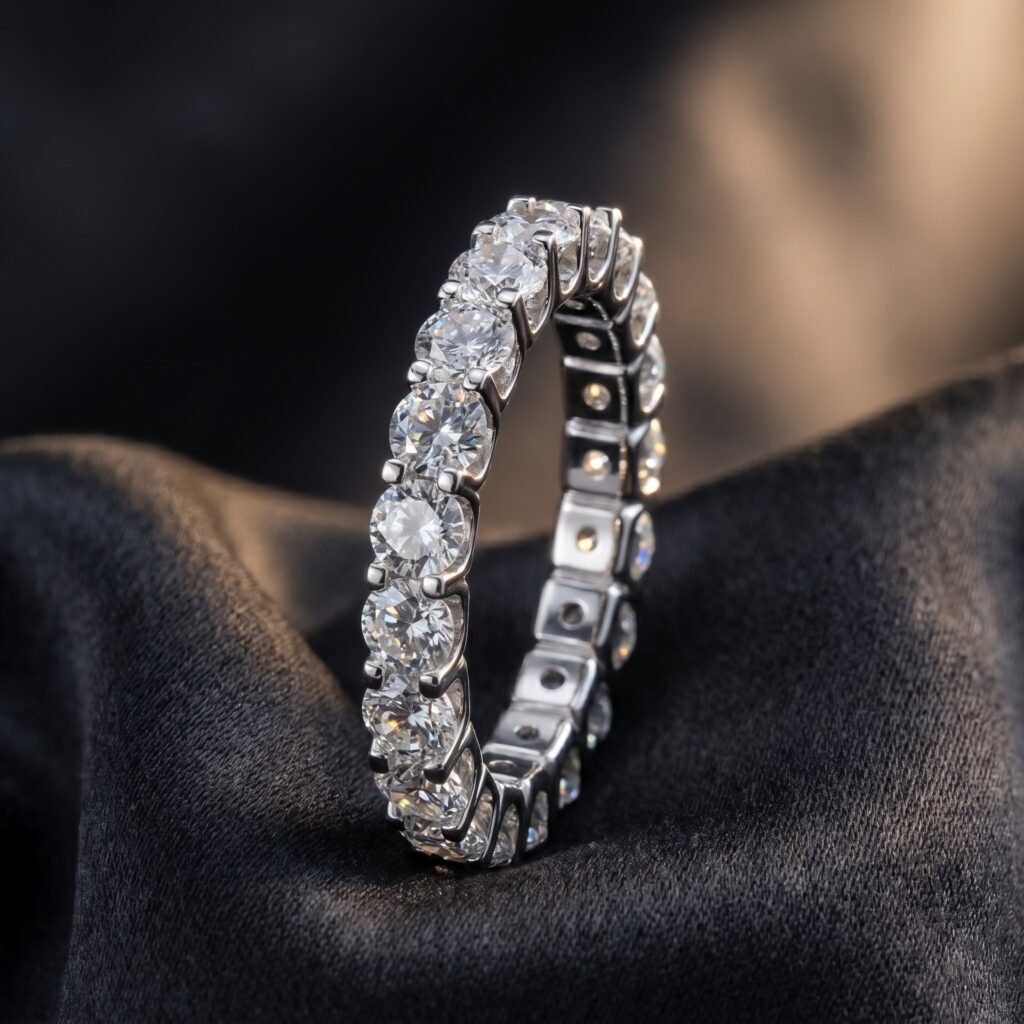
Proper storage helps avoid scratches on the metal and accidental impacts. A diamond ring is best stored separately: in a box, soft pouch or individual compartment of a jewellery case. It should not be placed together with other jewellery, especially chains, earrings and rings with protruding details.
A diamond can be very hard, but neighbouring jewellery and the metal of the ring itself may suffer from contact. Separate storage is a simple habit that helps preserve a neat appearance for longer.
If you take the ring off at home, choose one fixed place for it. This reduces the risk of leaving the jewellery in the bathroom, kitchen or near cosmetics. For everyday use, a small soft tray or ring box near the bed is convenient, but not next to the sink.
How often professional jewellery cleaning is needed
ДAt-home care helps keep the ring clean, but it does not replace a professional inspection. Jewellery cleaning helps gently remove dirt from areas that are difficult to reach at home, while a setting check makes sure the stone is held securely.
An inspection is especially important if the ring is worn every day. Over time, the jewellery comes into contact with surfaces, fabrics, bags, door handles and other objects. Even if you do not notice any strong impacts, small daily effects can gradually influence the stone placement.
At KiANIT, you can discuss care for your specific ring, check the setting and understand what type of cleaning will be safe for your design. This is especially important for jewellery with a thin band, a high-set stone, a diamond-set band or a complex setting.
Why it is important to check the setting and prongs
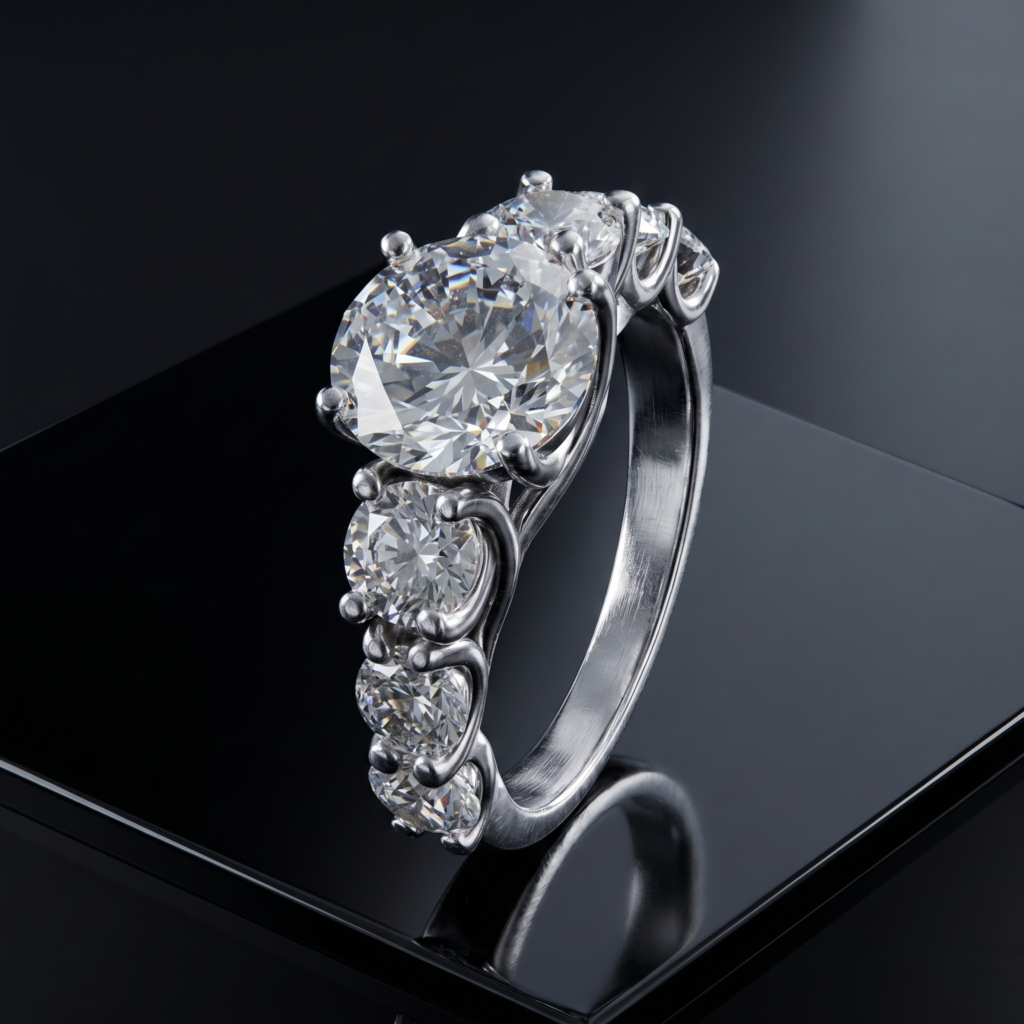
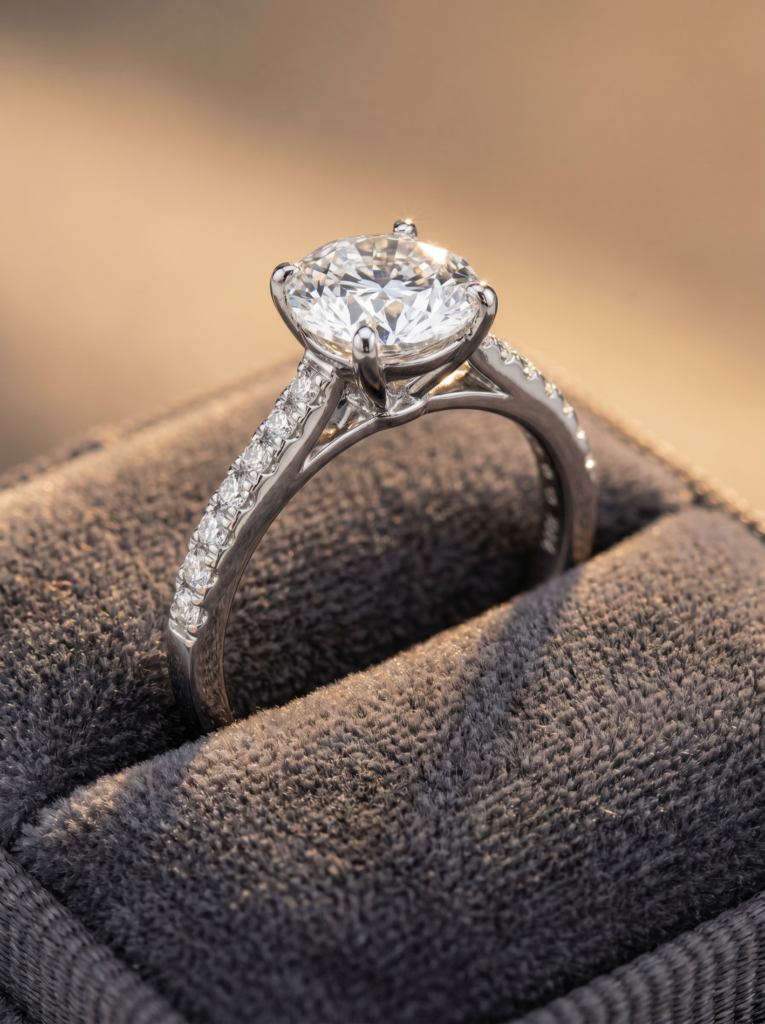
The setting is the part of the ring that holds the diamond. In a solitaire, these may be prongs around the central stone. In a ring with a diamond band, there are small seats for each diamond. In a halo design, there are even more fine elements responsible for the safety of the stones.
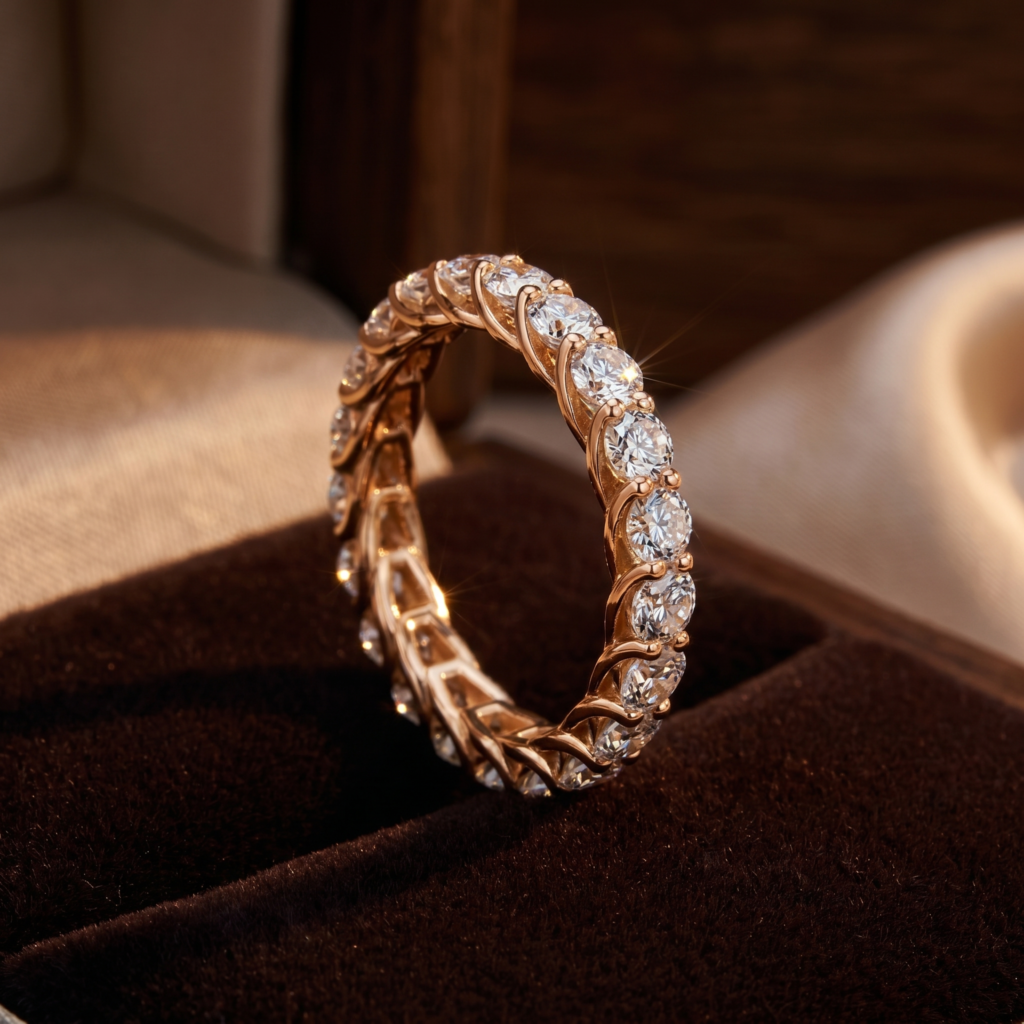
It is not always obvious to the owner that a prong has slightly loosened or caught on something. Sometimes the signal is that the ring starts catching on clothing, hair or fabric. Sometimes the stone may seem slightly movable. In this situation, it is better not to wait: show the jewellery to a specialist and avoid wearing it until it has been checked.
Regular inspection helps keep the ring in good condition and avoid more complex repair. It is a calm, practical approach to jewellery designed for a long life.
Care for rings with different types of settings
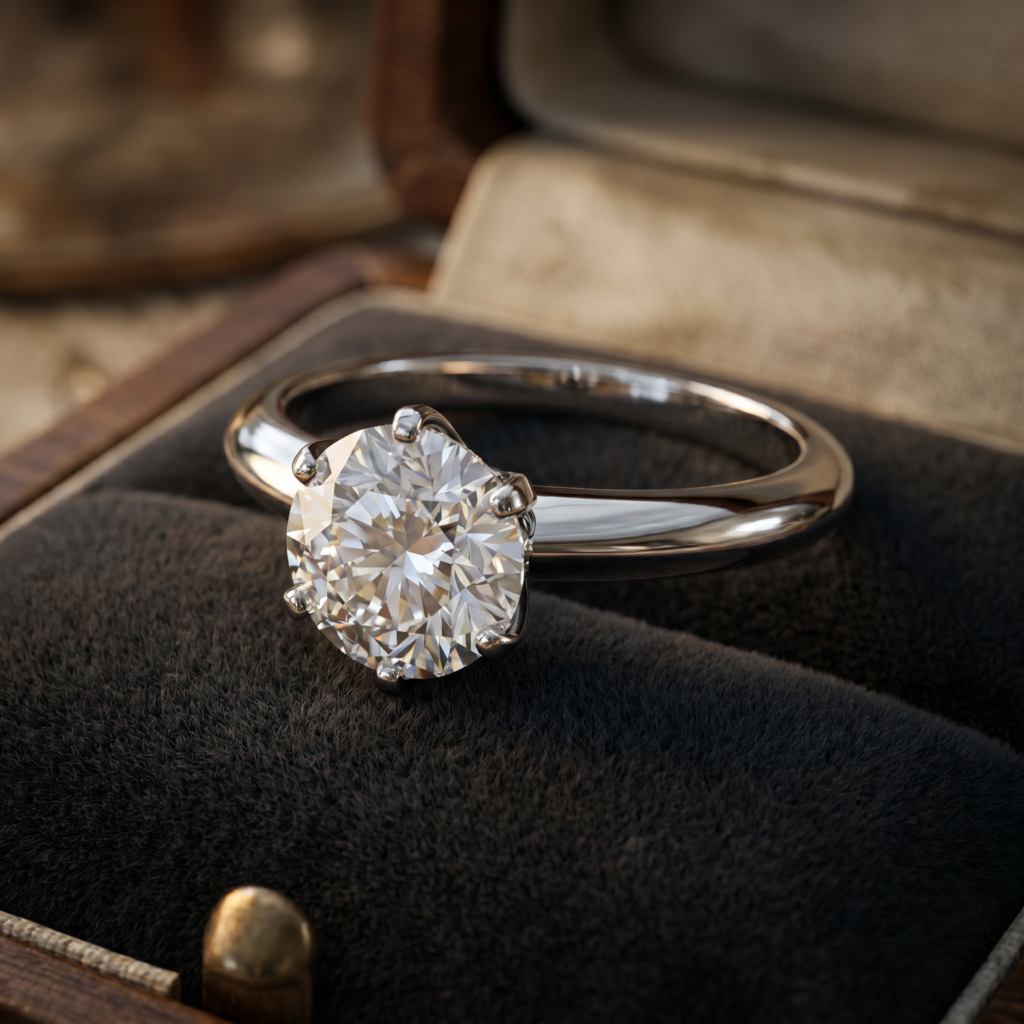
Care depends not only on the diamond, but also on the ring design. A simple solitaire is usually easier to clean at home because there are fewer small details around the central stone. But if the setting is high, it is important to wear the ring carefully in everyday life.
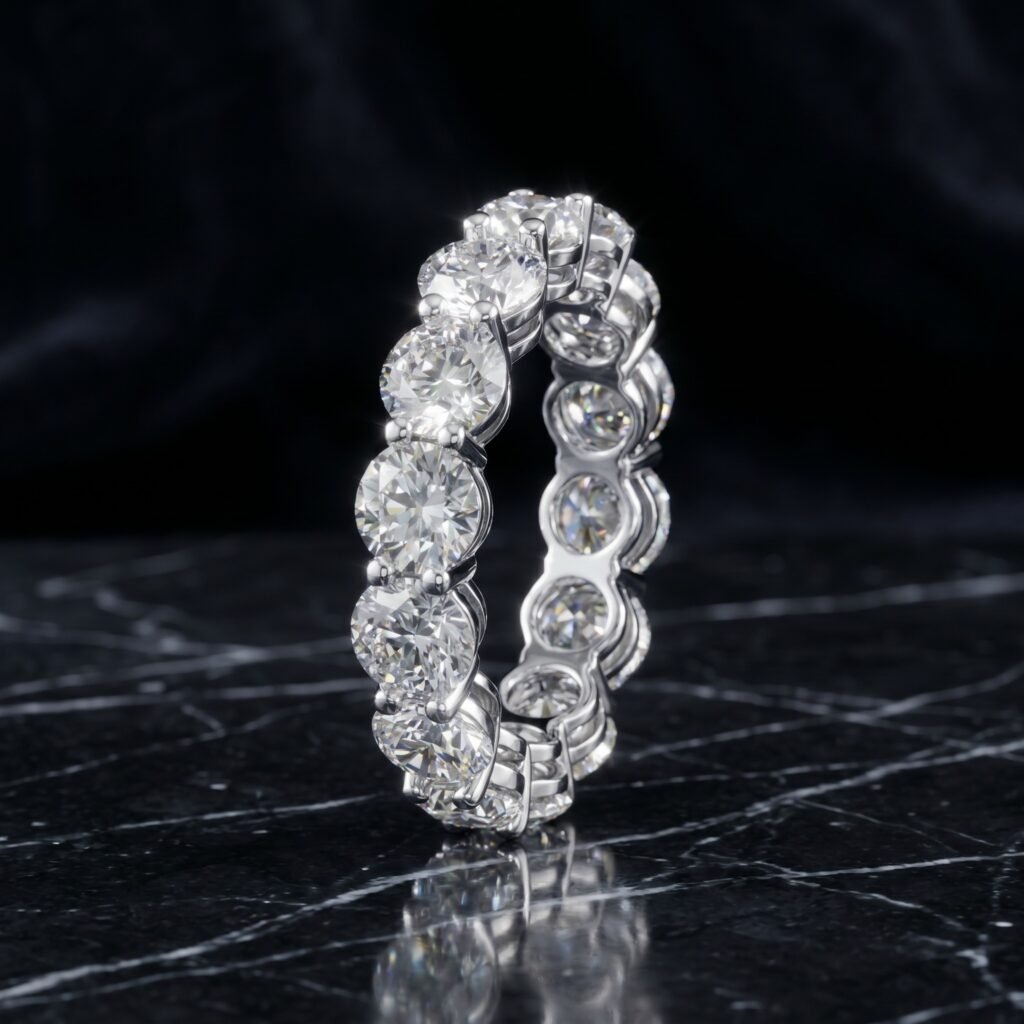
Rings with diamond-set bands require more attention: small stones create additional sparkle, but dust and cosmetic traces may collect between them. A halo around the central stone also looks impressive, yet needs more thorough cleaning because there are many small areas around the setting.
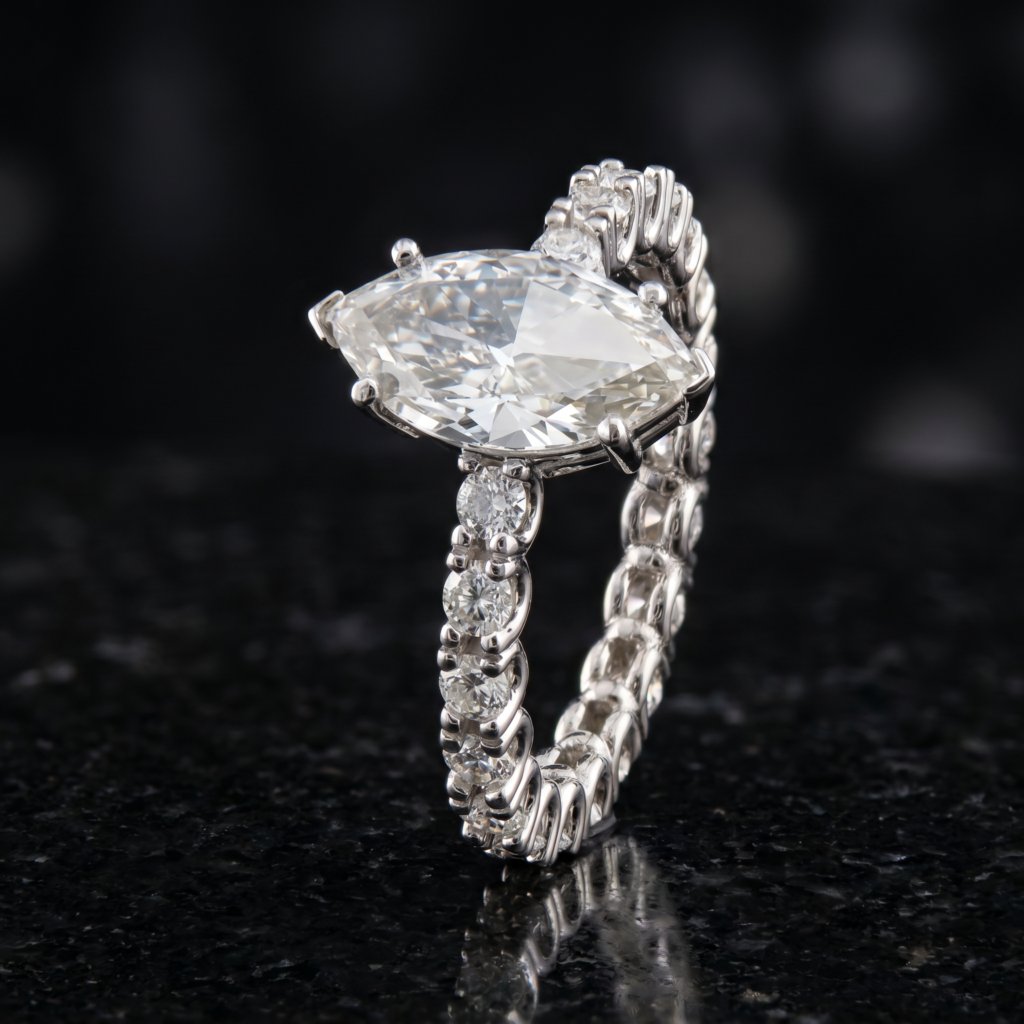
If the ring has an emerald cut, cushion, pear, oval or marquise, the stone shape should also be considered. The pointed tips of pear and marquise shapes need careful protection from the setting. Step cuts, such as emerald cut, often look especially clean and architectural, so marks and residue can be more visible on them. This is not a disadvantage, just a care feature.
How to care for a diamond ring while travelling
When travelling, a ring is more often exposed to situations where it may be damaged or lost: airports, suitcases, pools, beaches, climate changes and active walks. If you are planning sports, the sea or a busy itinerary, it is worth thinking in advance about whether you will wear the jewellery every day.
For travel, a separate case with soft support is useful. Do not place the ring directly in a cosmetic bag or handbag pocket: it may come into contact with bottles, keys and other hard objects. If you take the ring off in a hotel, keep it in one place rather than choosing a new spot each time.
It is better not to wear the ring on the beach or by the pool. Sand may scratch the metal, water and sunscreen leave residue, and fingers can slightly change size with temperature changes or contact with water. This increases the risk of losing the jewellery.
How to know when a ring needs cleaning or inspection
There are a few simple signs that the ring needs attention. If the diamond has started to sparkle less, although it used to play brightly in the light, there is probably residue on the facets or under the stone. If the ring has started catching on fabric, the prongs should be checked. If the stone seems movable, it is better not to wear the jewellery until it has been inspected.
It is also worth contacting a jeweller if the ring has been hit, dropped onto a hard surface or changed shape. Even a small bend in the band can affect the stone placement, especially if the design is fine or complex.
When caring for a diamond ring, the key is not anxiety, but attention. The earlier a small issue is noticed, the easier it is to solve.
How KiANIT helps preserve the beauty of your ring
At KiANIT, we see a diamond ring as jewellery for real life. It should be not only beautiful on the day it is given, but also comfortable, thoughtful and easy to understand in terms of care. That is why, when choosing an engagement ring, it is important to discuss not only the diamond shape and stone characteristics, but also future wear: setting height, prong protection, band width, lifestyle and daily habits.
If the ring is created individually, it is possible to think through the balance between expressiveness and practicality in advance. One person may want the most minimal solitaire, another a luminous halo, and another a modern shape with an accent stone. Each option has its own character and its own care nuances.
At the KiANIT showroom in Browary Warszawskie at Grzybowska 43A in Warsaw, you can calmly ask questions, see setting options, discuss the diamond and understand how to care for your specific piece after purchase.
How to care for a diamond ring: the essentials
How to care for a diamond ring, in brief: clean it gently, store it separately, take it off before active tasks and show it to a jeweller from time to time. A diamond reveals its sparkle best when it is cared for without aggressive products.
Proper care helps preserve not only the visible shine, but also the confidence that the stone is securely set, the metal looks neat and the jewellery is ready for everyday wear. If you are choosing an engagement ring with a diamond or already wear one every day, KiANIT will help you choose a design, explain the care details and guide you through a consultation at the showroom in Warsaw.