Wedding Rings for Same-Sex Couples: How to Choose Your Perfect Pair
How do you choose wedding rings so that each person feels comfortable and sees their individuality reflected in the piece they wear? There are no special rules you need to follow. Your personal tastes, everyday comfort and the shared idea you want the rings to represent matter much more.
The rings can be identical or differ in width, metal, finish and decorative details. They may be connected by their shape, engraving or simply by the meaning you give them. A good pair of wedding rings is one that feels right for you rather than one that follows a predefined template.
Do wedding rings have to match?
There is no need to choose two identical designs simply because they are wedding rings. Their connection can be expressed in much more subtle ways.
For example, the rings can be made from the same color of gold and share the same profile while differing in width. You can keep the same overall shape while giving one ring a matte surface and the other a polished finish. Even completely different designs can easily be connected through a matching engraving on the inside.
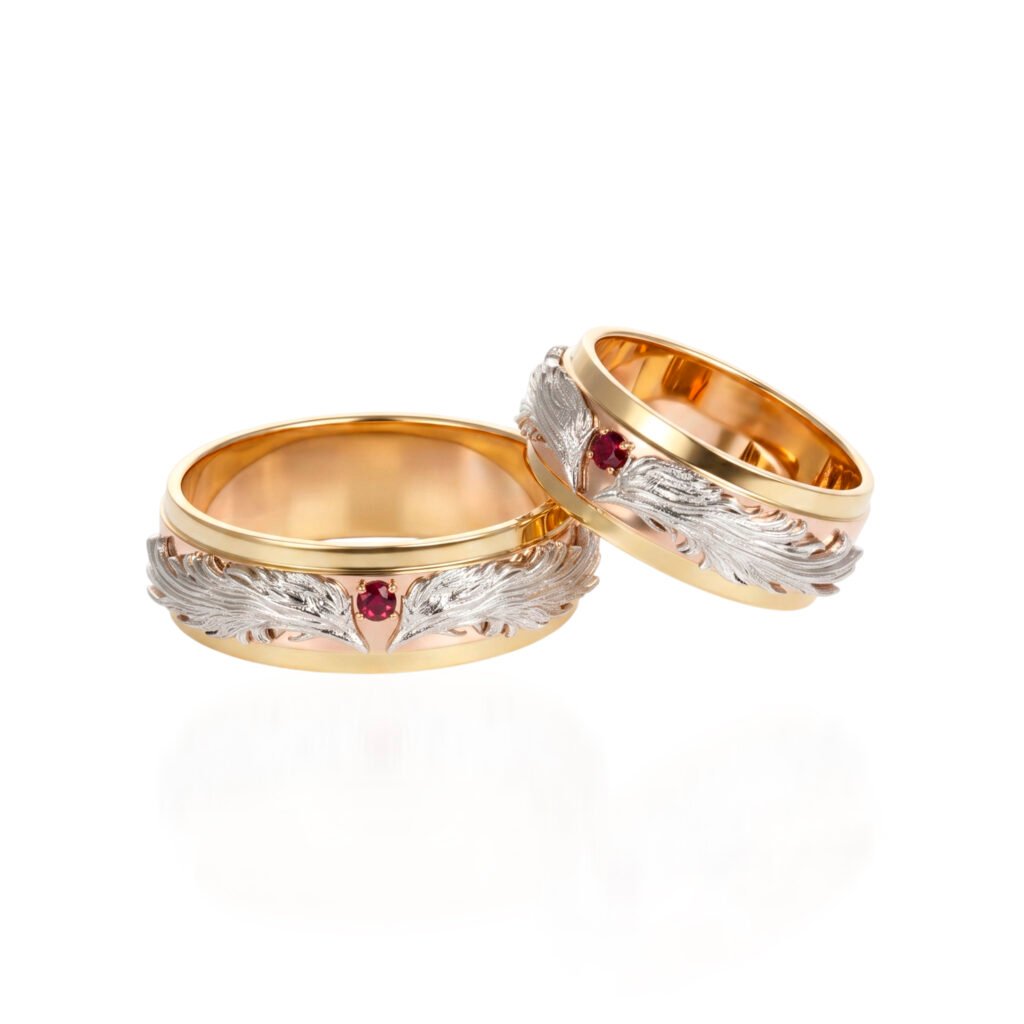
If you both prefer the same style, metal and overall character, choosing two identical rings can also be a beautiful option. There is no single correct solution. What matters is that neither person has to choose a design they do not genuinely like simply for the sake of visual similarity.
Before trying rings on, it can be helpful to discuss the overall mood rather than a specific model. You may prefer understated classics, contemporary minimalism, a combination of textures or a more expressive design featuring diamonds. Sometimes one shared detail is enough to create a harmonious pair.
How to choose the metal?
The metal determines the color, character and overall appearance of a wedding ring. Gold can be yellow, white or rose. Yellow gold has a warm, traditional appearance, white gold feels understated and contemporary, while rose gold offers a softer, warm-toned look. Platinum may appeal to those who prefer the restrained aesthetic of a light-colored metal.
The best way to find the right option is to see different metal tones against your skin. A metal can look very different on the hand than it does in a photograph, particularly depending on the width and finish of the ring.
The two rings do not have to be made from the same metal. If you prefer different colors, they can still be connected through their profile, texture, design details or a personal engraving.
Ring width and proportions
Width affects both the appearance and comfort of a wedding ring. Narrow bands tend to look lighter and more delicate, while wider rings are more noticeable and expressive.
At the same time, the same width can look completely different on different hands. For this reason, it is better to choose the width individually rather than trying to achieve perfect symmetry at all costs.
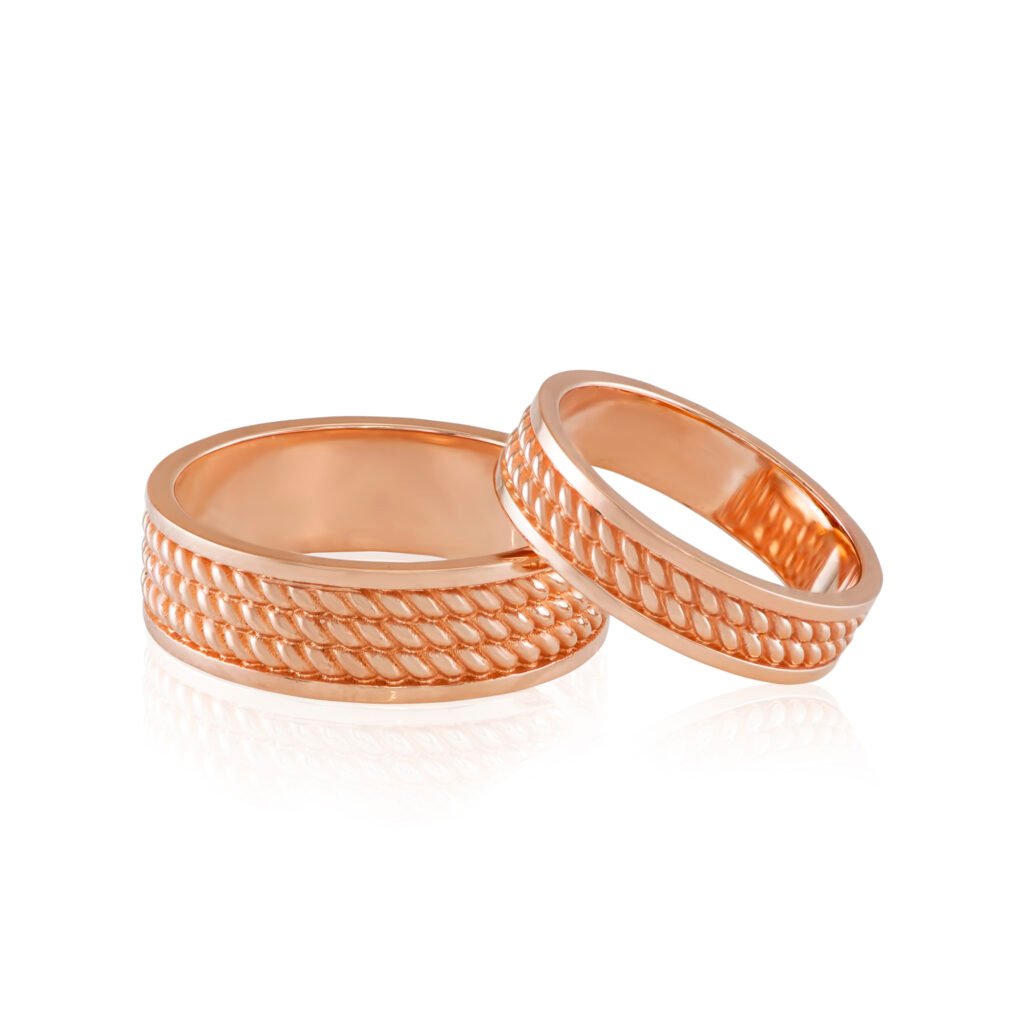
Even when the design is the same, each ring can be made in the width that suits its wearer best. This allows the rings to maintain a visual connection while looking balanced on the hand and remaining comfortable for everyday wear.
Profile and comfortable fit
The profile is the shape of the ring in cross-section. It determines whether the ring appears more rounded or flat and influences how it feels on the finger.
If someone has rarely worn rings before, the difference between profiles may initially seem minor. Once the rings are tried on, however, that difference becomes much more noticeable.
A wedding ring should feel comfortable during normal hand movements. At KiANIT, we therefore recommend comparing several profiles rather than choosing one solely from a photograph. This is especially important if you plan to wear the ring every day.
Matte or polished finish
The finish can completely change the character of a wedding ring without making its design more complicated. Polished gold reflects more light and creates a more classic appearance. A matte surface feels calmer and more understated, while combining several textures can give the ring a more distinctive look.
The surface treatment can become a shared feature of both rings or, on the contrary, emphasize the individuality of each one. For example, rings made from the same metal and with the same shape can still look harmonious together even if one is matte and the other polished.
Diamonds and decorative details
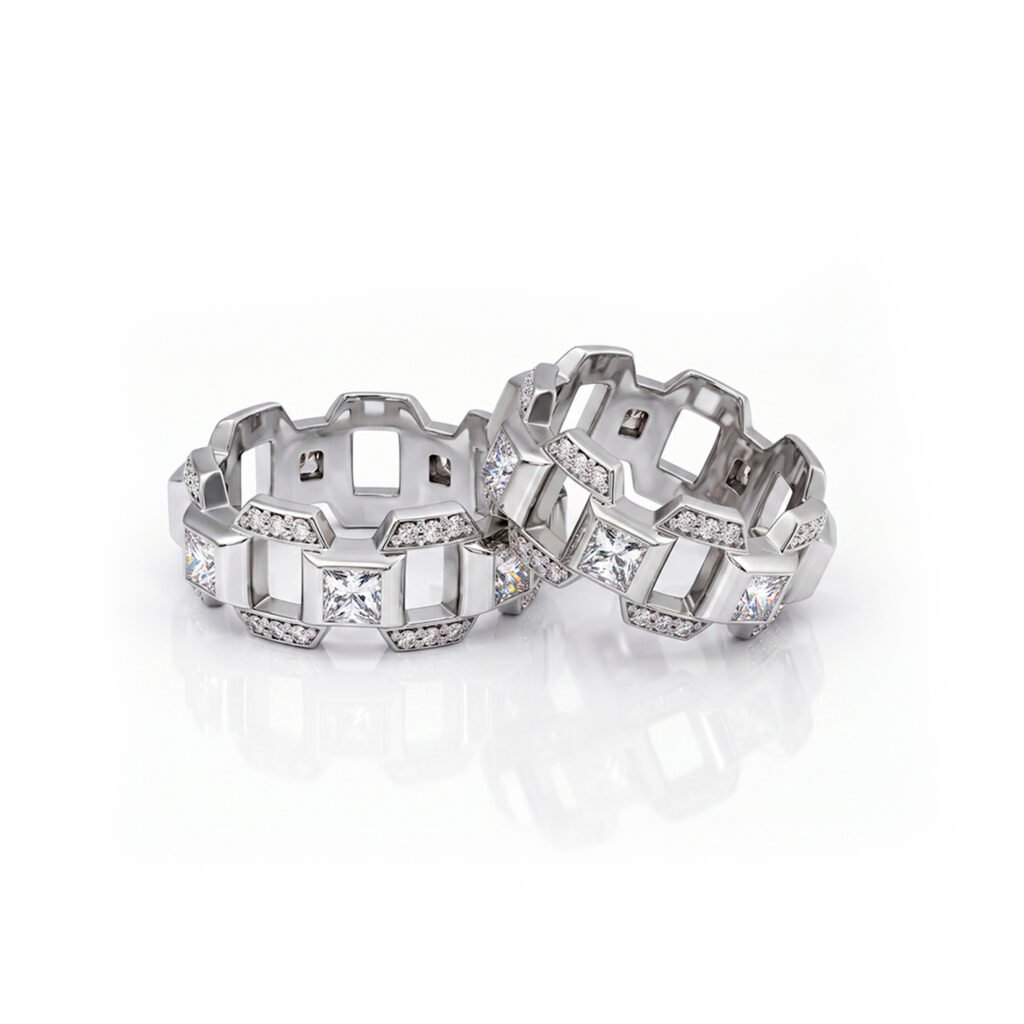
Wedding rings can be minimalist or decorated with diamonds and other design elements. Stones can be added to one ring, both rings or omitted altogether. A diamond is ultimately a design element, so the most important thing is that it appeals to the person who will be wearing the ring.

If one person prefers an exceptionally clean, minimalist design while the other would like a sparkling accent, the two rings can still remain part of one composition. The same design foundation can be preserved while adapting the details individually.
Engraving as a personal connection
Not every meaningful detail needs to be visible to others. Sometimes the most important part of a ring is hidden on the inside.
Engraving can connect even two completely different wedding rings. It may be a date, names or initials, a short phrase, a symbol or a detail whose meaning is known only to you.
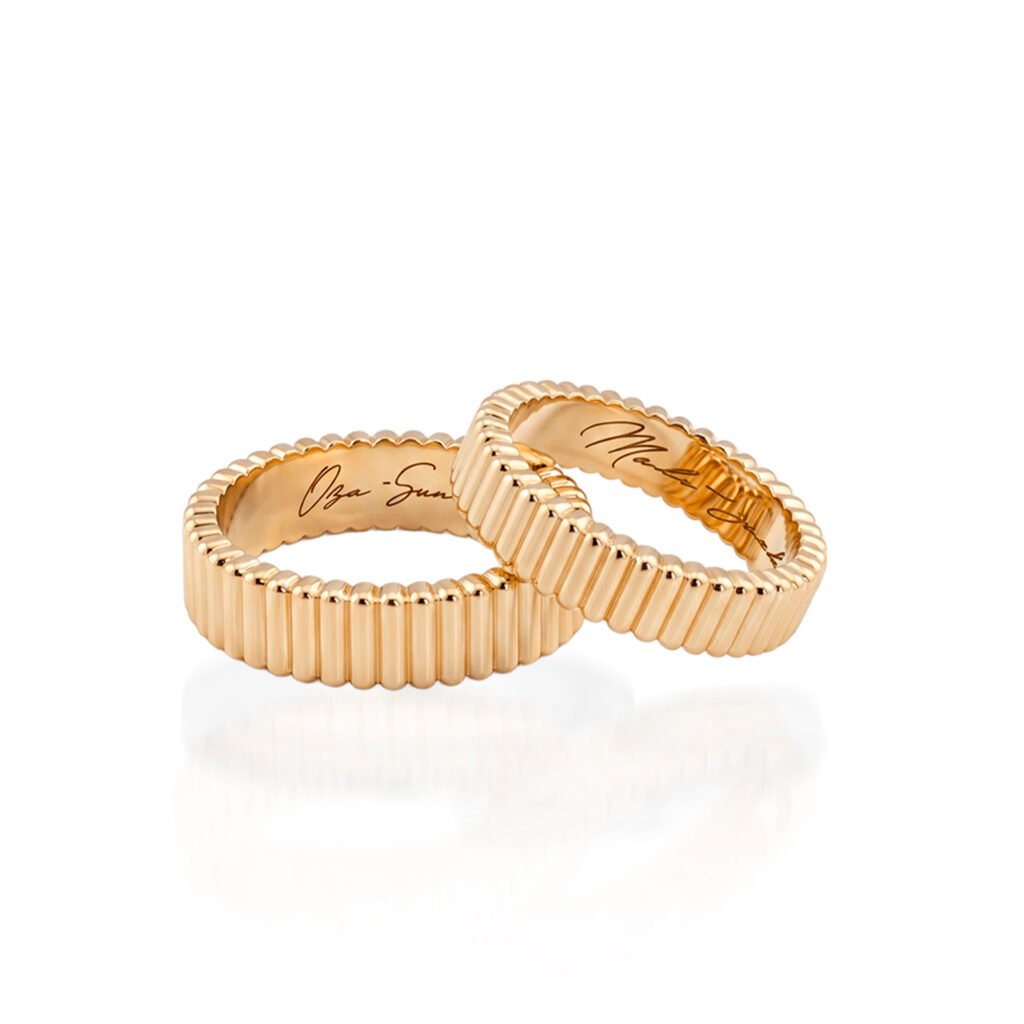
Another interesting idea is a continuation design, where an inscription or image becomes complete only when the two rings are placed together. In this way, engraving becomes more than a decorative detail - it becomes part of your shared story.
What if you have different tastes?
Different preferences are not a problem that needs to be solved. On the contrary, they can become the foundation for an interesting and highly personal design.
If one person prefers classic styles while the other is drawn to contemporary designs, instead of searching for an identical model, look for one connecting detail: the metal color, profile, a line or texture on the surface, or an engraving on the inside.
A practical way to approach the selection process is step by step:
- First, each person selects the models they genuinely like.
- Then compare the options and identify common elements.
- Try several sizes, widths and profiles.
- Choose the metal and finish for each ring.
- Decide which detail will connect the two designs.
This way, the selection begins with each person's individuality rather than with a compromise design that may ultimately not feel truly special to either of you.
Why it is important to try wedding rings on?
Photographs help you determine the general direction: classic or contemporary design, smooth or textured surfaces, light or warm-toned metals. However, the final decision is best made after trying the rings on.
On the hand, you can properly evaluate proportions and comfort. A ring that looked perfect in a photograph may turn out to be too wide. Meanwhile, a design you barely noticed at first may feel ideal in terms of shape and fit.
That is why it is important to consider not only how the jewelry looks, but also how comfortable it feels on the finger and how naturally it fits into your everyday style.
Custom design and consultation at KiANIT
If ready-made models do not suit you, it is possible to create two individual pieces connected by one shared story. For example, you can keep the same metal and profile while changing the width, finish or proportions of the design.
At the KiANIT showroom at Browary Warszawskie, Grzybowska 43A in Warsaw, you can try on different models and compare metal colors, widths, profiles and surface finishes.
We can help select the specifications of each ring individually or develop a custom pair connected by one shared idea. What matters most is that years from now, each of you sees in your ring not a predefined category, but a part of your shared story.