Ring polishing and types of finishes: gloss, matte, sand- how to choose a ring surface
Ring polishing and types of finishes: gloss, matte, sand are not just the final touch, but part of the future ring’s character. The same shape can look classic and ceremonial in a glossy finish, calmer and more modern in matte, and more textured and individual with a sand effect.
For wedding rings, the surface is especially important: this is jewellery worn every day, so it should feel right on the hand, suit the couple’s style and be comfortable to care for. At KiANIT, we help choose not only the metal, fineness and profile, but also the finish that best reveals the design.
What ring polishing means in simple words
Polishing is the treatment of the metal surface that gives a ring its final appearance: mirror shine, soft satin matte or expressive texture. At this stage, the piece stops being just a shaped blank and gains its finished look.
For a beginner, it is important to understand that this is not only about beauty. The surface affects how the ring reflects light, how visible everyday wear marks may be and what overall impression the jewellery creates. A glossy ring looks brighter, a matte ring feels more restrained, and a sand texture looks more expressive and unusual.
When wedding rings are made individually, the preferred effect can be discussed in advance. Sometimes a couple chooses the same shape but different surfaces: for example, one ring in gloss and the other in matte. This keeps the rings connected as a pair while allowing each one to suit the wearer’s personal style.
Ring polishing and types of finishes: gloss, matte, sand- key differences
Ring polishing and types of finishes: gloss, matte, sand differ mainly in their visual effect. Gloss reflects light almost like a mirror. A matte surface softly diffuses light and looks calmer. Sand creates a fine texture that makes the metal appear visually deeper and more tactile.
In simple terms, the choice can be seen like this:
- gloss- for classics, shine and a more ceremonial look;
- matte surface- for minimalism, quiet premium aesthetics and modern style;
- sand finish- for those who want texture, character and a less familiar look;
- combined finish- for rings with contrast, such as a glossy edge and matte centre.
There is no universal “best” option. There is a surface that suits your lifestyle, taste and ring design.
Gloss polishing: classic style and bright shine
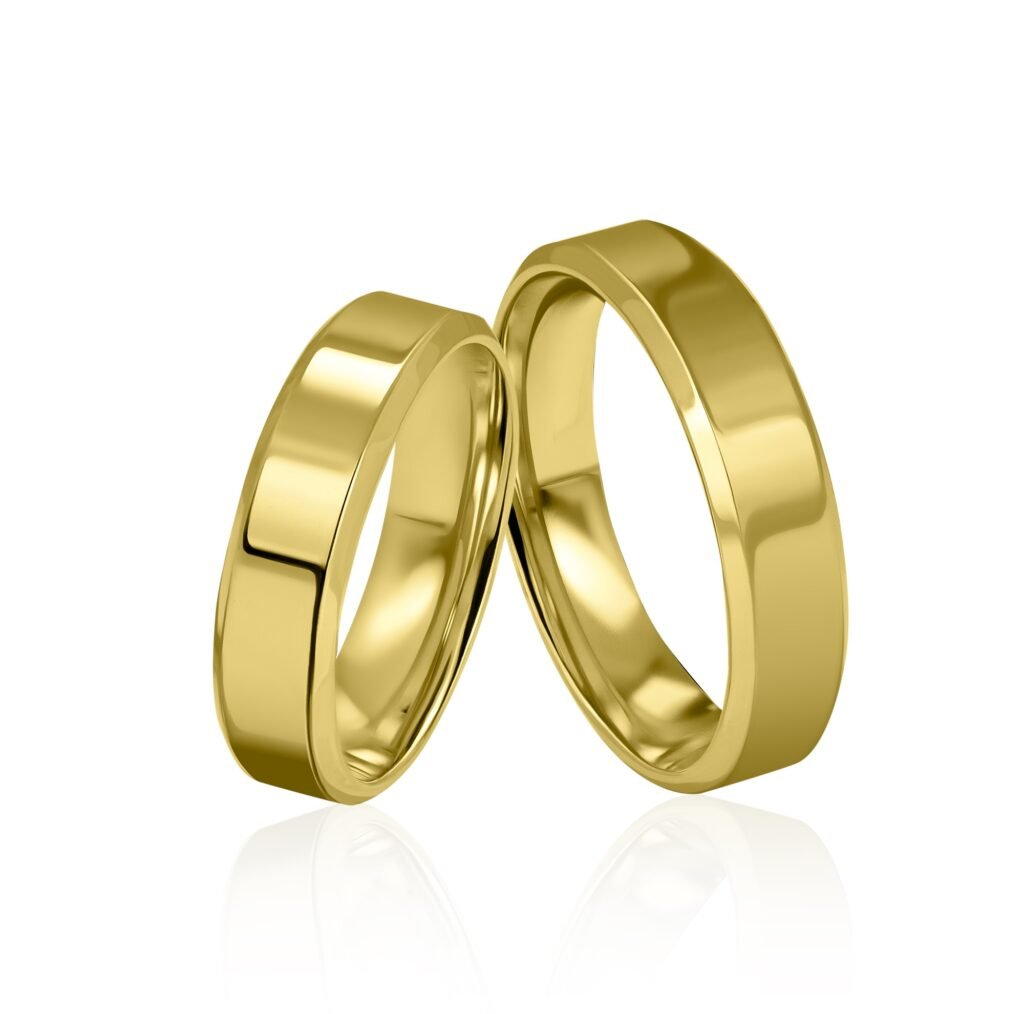
Gloss is the most recognisable type of final finish. The ring surface is carefully polished to a mirror shine, so the metal reflects light actively and looks especially elegant. This solution works well with clean forms: smooth classic wedding rings, soft profiles and minimal designs without extra decoration.
Glossy rings are often chosen by couples who appreciate classic aesthetics: the jewellery should look clear, elegant and timeless. In yellow gold, gloss emphasises the warm tone of the metal; in white gold, it gives a cleaner, cooler effect; in red gold, it makes the colour appear richer.
At the same time, gloss honestly shows the life of the ring. Fine signs of wear may become visible on a mirror surface over time. This is normal for jewellery that accompanies you every day. For many couples, these marks become part of the story, and if needed, the surface can be refreshed with professional polishing.
Matte surface: restraint and modern character
A matte finish makes the ring look visually softer. The metal does not reflect light like a mirror; instead, it diffuses it, so the piece appears calmer, deeper and more contemporary. This finish is especially loved by people who wear minimalist pieces, prefer clean lines and do not want too much shine.
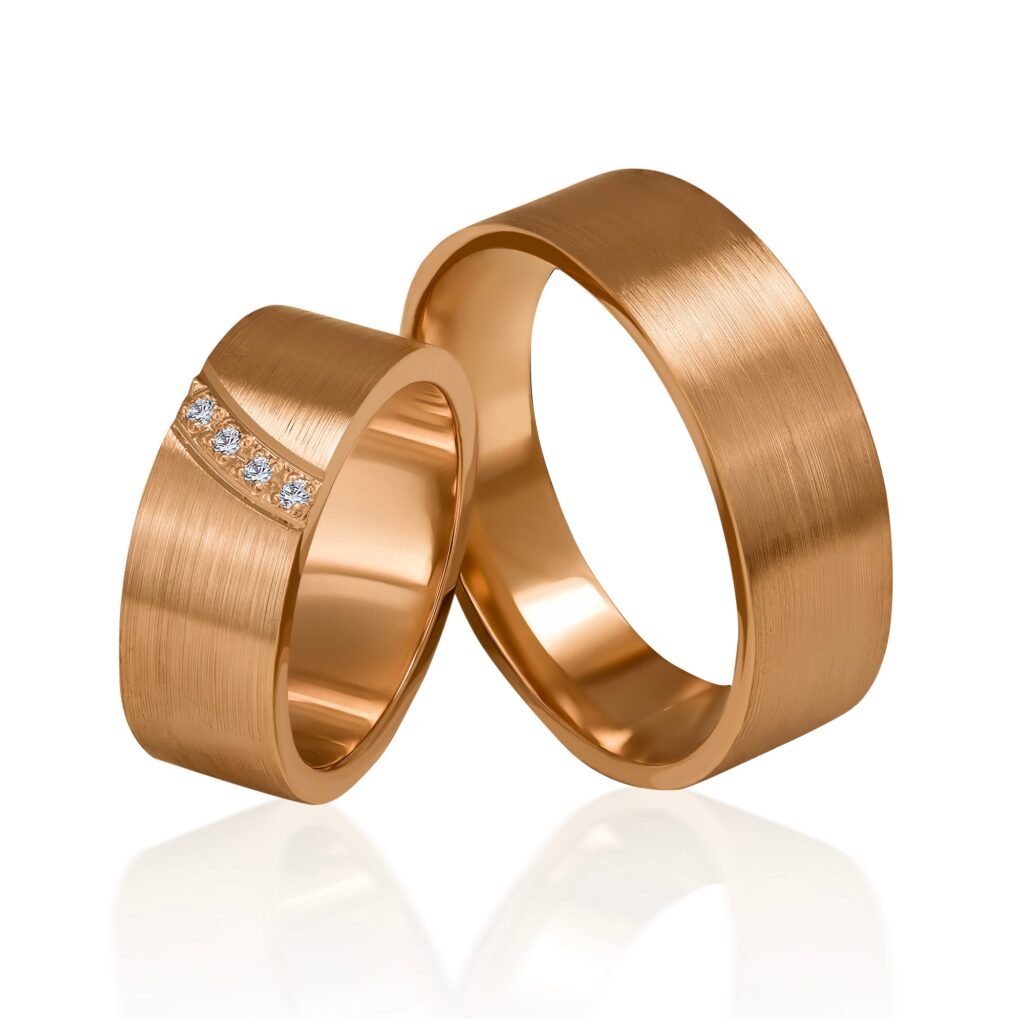
Matte wedding rings look good in wider forms, on flat or gently rounded profiles, and in geometric designs. They can look very premium precisely because of their restraint: without unnecessary display, but with a feeling of considered choice.
It is important to remember that a matte surface also changes with wear. In areas of active contact, it may gradually become smoother and slightly shinier. This is a natural process: metal interacts with hands, fabrics and objects, gradually gaining its own individual trace. If preserving the original matte effect is important, it can be discussed as part of future care for the jewellery.
Sand texture: expressiveness without extra decoration
Sand is a textured surface finish that gives the ring a fine grain effect. Visually, this surface looks deeper and more complex than a standard matte finish. It does not shine like a mirror, but it plays beautifully thanks to its micro-relief.
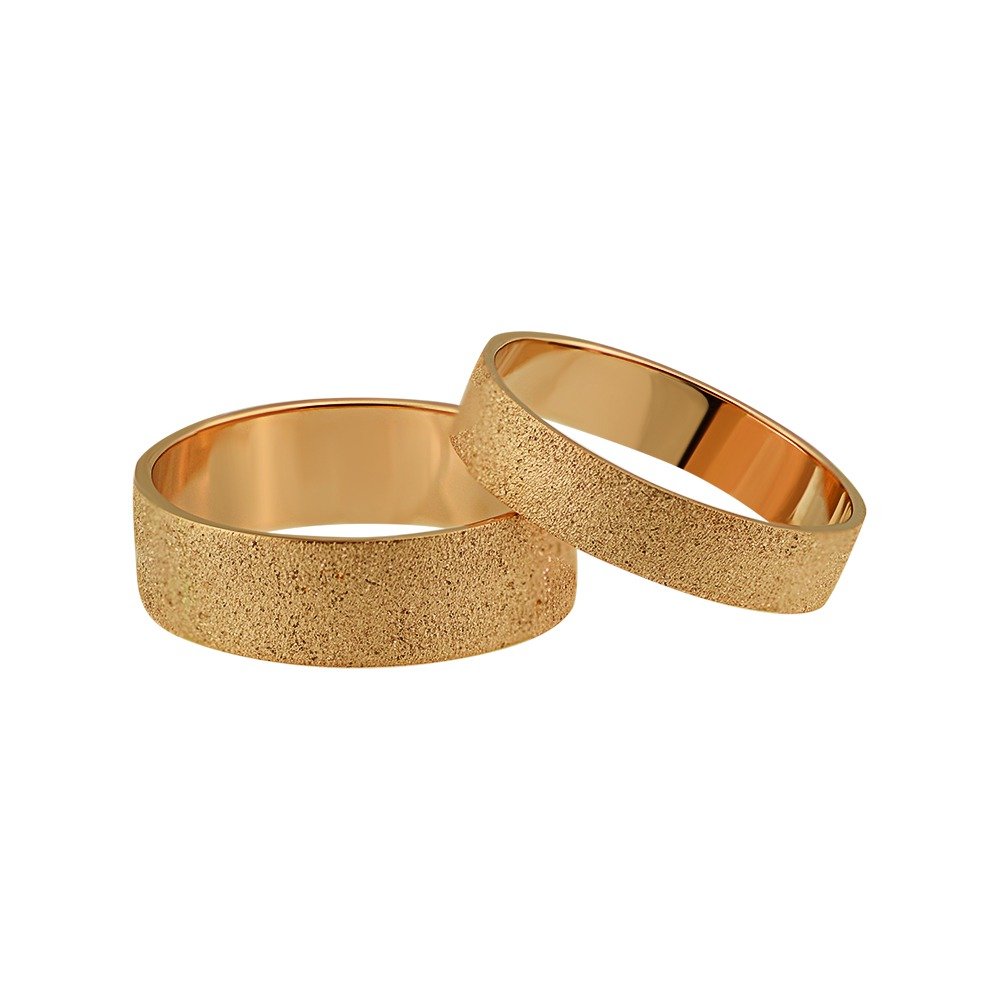
Rings with a sand effect are chosen by couples who want something less obvious. It is a good option if classic gloss feels too familiar and regular matte feels too calm. The sand texture adds character to the jewellery without overloading it with decorative details.
Sand looks especially interesting in combined designs: for example, a textured centre with smoother edges. This contrast helps emphasise the shape of the ring and make it visually more individual. It is worth seeing a sample on the hand in advance, because texture can be perceived differently depending on the ring width, gold colour and lighting.
How the surface affects the style of wedding rings
The final finish can completely change the mood of the jewellery. Even if two rings are made from the same metal and have the same shape, gloss, matte and sand will feel different.
For a classic style
Gloss polishing is the best match. It highlights the purity of the form, makes the ring elegant and gives it a familiar look in the best sense. This option is easy to combine with other jewellery, especially if the wearer already chooses smooth gold or a classic watch.
For minimalism
A matte surface looks calmer and more architectural. It suits those who like simple silhouettes, quality materials and jewellery without bright shine. In such a ring, attention shifts from brilliance to form and proportions.
For an individual design
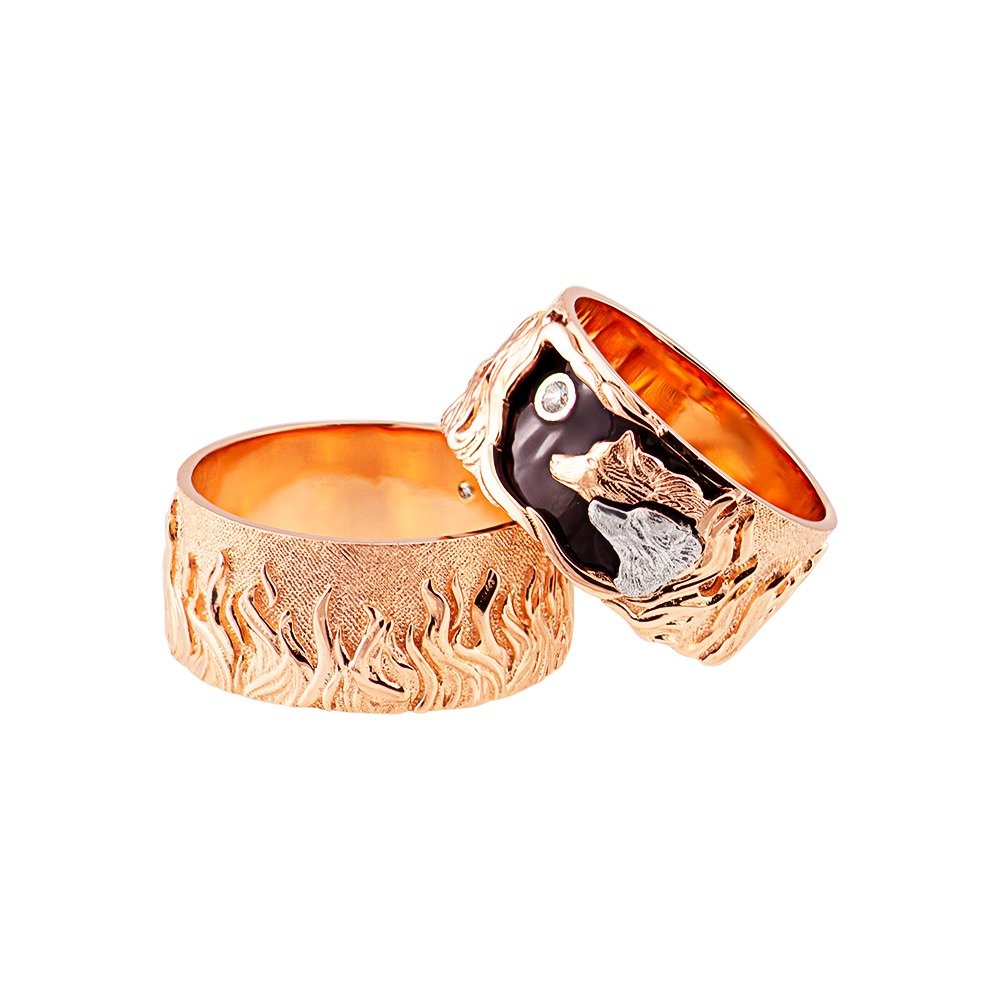
A sand texture or a combination of several surfaces helps make the ring more personal. This is an option for those who want to keep the design concise while adding a recognisable detail.
Which finish is more practical for everyday wear
A frequent question when choosing wedding rings is which surface will be more practical. Here it is important not to look for a perfect option that never changes, but to understand the features of each finish.
Gloss may show fine scratches sooner because its surface is mirror-like from the beginning. A matte finish does not reflect light as actively, so marks may appear softer, but the matte surface itself can naturally become smoother in areas of contact over time. Sand texture looks more complex because of its relief, but it should also be protected from rough mechanical impact.
In practice, much depends not only on the finish but also on lifestyle. Rings come into contact with water, cosmetics, keys, sports equipment and work surfaces. That is why everyday jewellery needs not only a beautiful appearance but also good care habits : removing the ring during active handwork, storing it separately from other jewellery and occasionally showing it to a jeweller.
Can different types of polishing be combined in one ring
Yes, combining surfaces is one of the beautiful ways to make wedding rings more expressive. For example, the central part can be matte while the edges remain glossy. Or the opposite: a smooth base with a textured sand-effect zone.
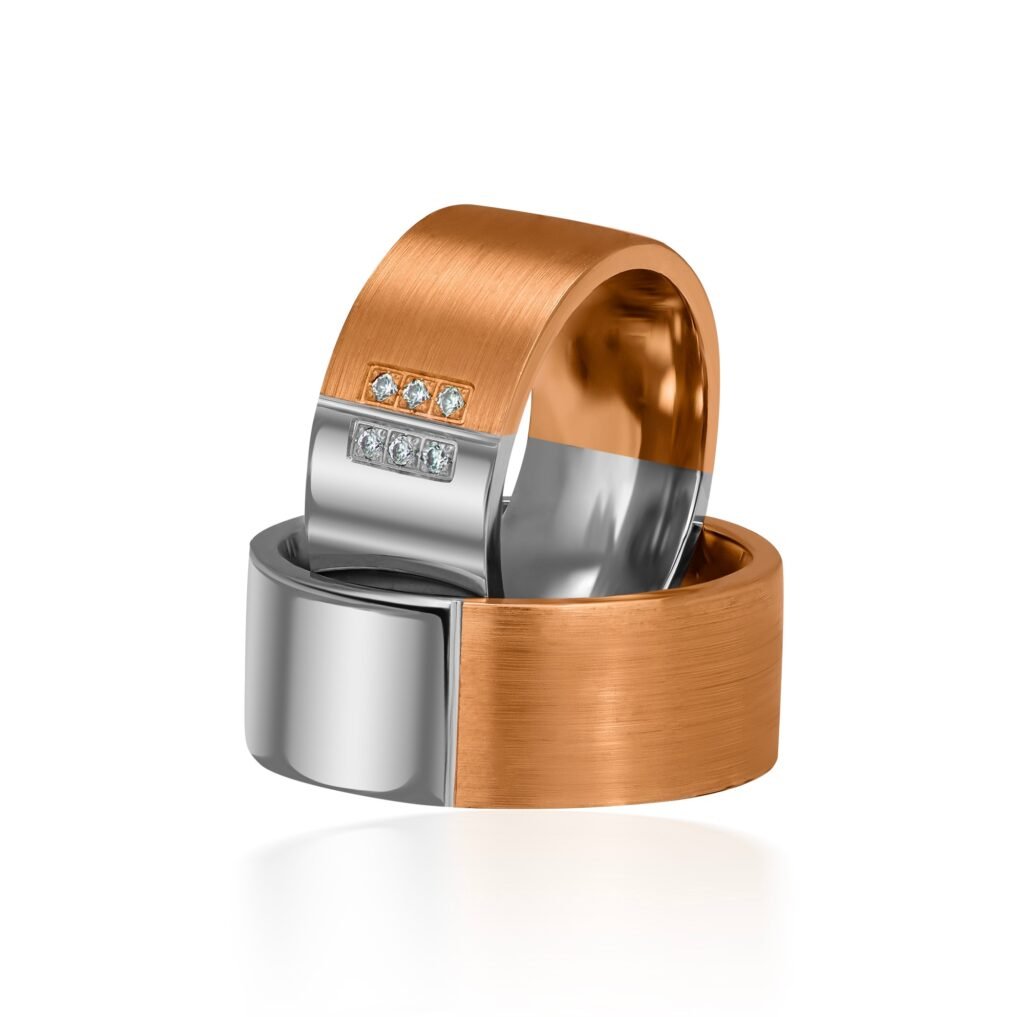
Combined polishing works especially well when you want to keep the design concise but avoid an overly simple look. The contrast between surfaces creates depth without stones, complex decoration or visual heaviness.
This option should be considered together with the ring width and profile. On a very narrow model, the contrast may be almost invisible, while on a wider ring it can open up more clearly. That is why it is useful to see samples in the showroom, compare them on the hand and understand which surface feels natural for you.
How to choose a finish for the metal and gold colour
The colour of the metal noticeably affects how the surface is perceived. Yellow gold in gloss looks warm and ceremonial, while in matte it feels softer and calmer. White gold with gloss polishing gives a clean modern shine, while with a matte surface it becomes stricter and more minimalist. Red gold in a textured finish can look especially warm and expressive.
Fineness, weight, width and profile also matter. For example, a wide ring with a sand texture will be more noticeable than a thin ring with the same effect. A rounded profile in gloss creates soft light reflections, while a flat shape in matte looks more graphic.
If you are unsure, start not with the name of the finish, but with the feeling: should the ring be more radiant, calmer or more textured? This question quickly narrows the choice.
Ring polishing and types of finishes: gloss, matte, sand- what should a couple choose
Ring polishing and types of finishes: gloss, matte, sand are best chosen after trying rings on, not only from photos. In a picture, a surface may seem one way, but on the hand it may look completely different. Skin tone, finger shape, ring width, lighting and even the jewellery worn nearby all influence perception.
For a couple, there are several good scenarios:
- choose the same surface for both rings so the set looks as cohesive as possible;
- keep one shape but choose different finishes for each person’s style;
- combine two surfaces in one design;
- choose gloss for the more classic ring and matte or sand for the more modern one.
The main thing is not to see wedding rings as a mandatory “identical set”. They can be connected by a shared idea, metal, profile or engraving, while still remaining personal.
How KiANIT helps choose the final finish
At KiANIT, choosing the surface begins with a conversation about style, habits and the feeling of the future rings. We explain the difference in simple words, show how gloss, matte and sand texture look in reality, and help connect the finish with the metal, width, profile and design.
Wedding rings can be created individually: you can choose the gold colour, fineness, shape, engraving and final finish. This approach is especially important if you want not just “beautiful rings”, but jewellery that will feel natural every day.
In the KiANIT showroom at Browary Warszawskie, Grzybowska 43a in Warsaw, you can calmly compare options, try ring sizers, discuss care and receive an individual calculation. The cost depends on the metal, fineness, weight and complexity of execution, so it is clarified during consultation.
Which ring surface is best
There is no single best surface for everyone. Gloss suits those who love classic shine and a ceremonial glow. A matte surface suits those who choose restraint, minimalism and modern character. Sand suits those who want texture, depth and a more individual expression without extra decoration.
Ring polishing and types of finishes: gloss, matte, sand are not only about appearance, but also about how you want to see your ring every day. KiANIT will help compare the options on the hand, choose the metal and create wedding rings that match your story, style and feeling as a couple.