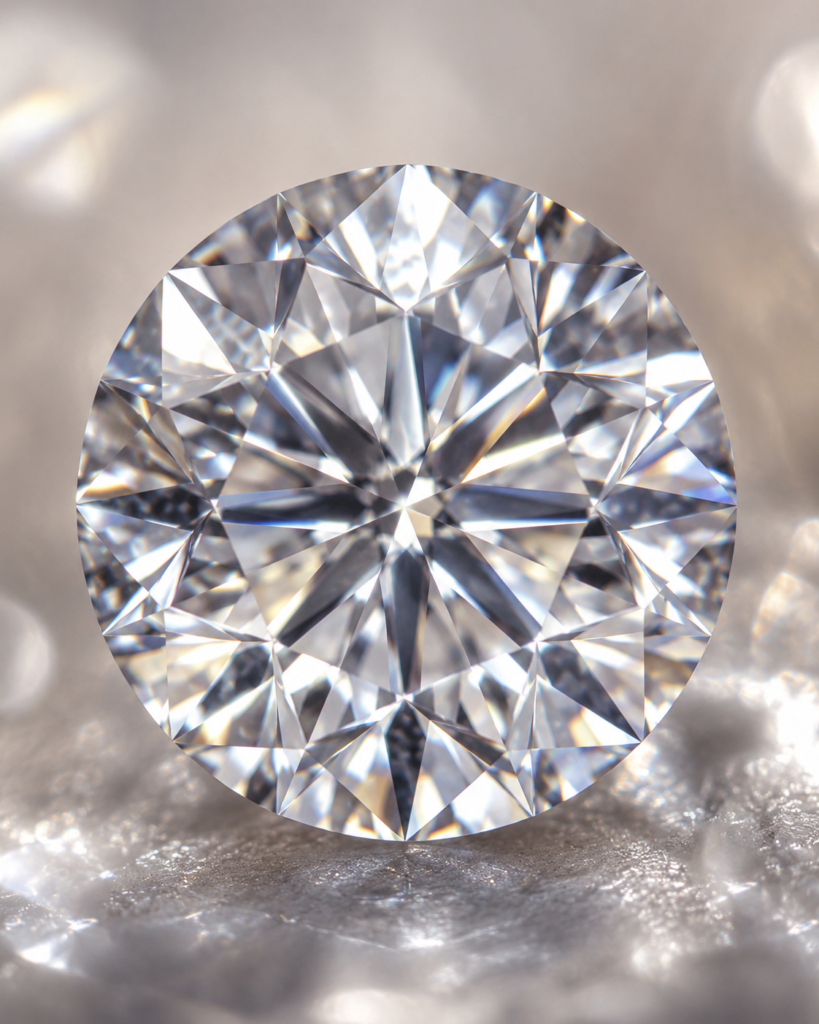
How to Check if a Diamond Is Real: A Calm Guide for a First-Time Choice
How to check if a diamond is real is one of the most important questions before buying an engagement ring. Visually, stones can look very similar: a natural diamond, a laboratory-grown diamond, moissanite or cubic zirconia may sometimes look convincing to someone without experience.
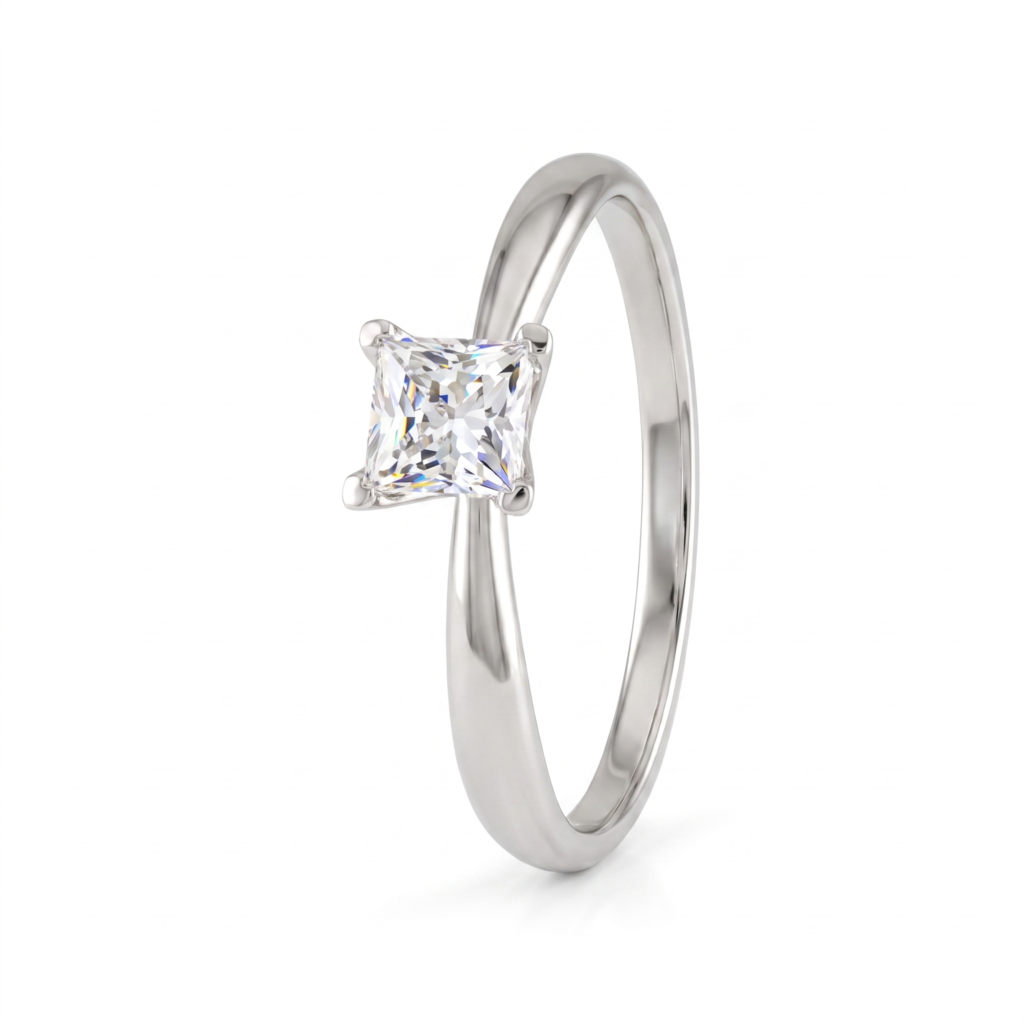
A reliable check does not start with home tests, but with documents, professional inspection and an understanding of the basic characteristics. At KiANIT, we help you look at a diamond not only as a beautiful stone, but as a confirmed choice for a future piece of jewellery.
Why a Diamond Is Difficult to Check “by Eye”
A diamond is valued not only for its sparkle. Its beauty is shaped by origin, weight, colour, clarity, cut and the way the stone works with light. For a beginner, all of this may look like one general effect: the stone shines, so it “looks like a diamond”.
But resemblance is not authenticity. Moissanite, cubic zirconia and other imitations can also reflect light beautifully. Some of them give bright flashes that can easily be mistaken for “diamond fire”, especially when the stone is viewed only under showroom lighting.
That is why the main principle is simple: a real diamond should not be judged by sparkle alone. You need to check what confirms its characteristics, who described them and whether the stone itself matches the documents.
What Gemology Is and Why It Matters
Gemology is the science of precious and jewellery stones. It studies their origin, properties, structure, appearance and the signs by which one stone can be distinguished from another.
For a buyer, gemology matters because not every beautiful transparent stone is a diamond. Some materials look similar from the outside but differ in nature, value and behaviour in jewellery. A gemological approach helps you verify rather than guess.
When it comes to a diamond for an engagement ring, gemology answers practical questions: what kind of stone it is, whether it is natural or laboratory-grown, whether it has confirmed characteristics, how closely they match the documents and how the stone looks in real life.
Who a Gemologist Is and Why You Need One When Choosing a Diamond
A gemologist is a specialist in precious stones. Their task is not simply to say whether a stone is “beautiful” or not, but to assess it professionally: by its signs, characteristics, documents and visual behaviour.

When choosing a diamond, a gemologist helps you understand what is difficult to know without experience. For example, why two stones of the same weight look different, how clarity affects appearance, why cut can matter more than a dry carat number and how a diamond differs from similar-looking stones.
For a buyer, this is especially important in several situations:
- if the diamond is being purchased for the first time;
- if the stone is already set in a ring;
- if you need to understand whether the stone matches the declared characteristics;
- if there are doubts about the certificate or description;
- if you want to choose not just “by parameters”, but by real beauty.
A gemologist does not replace your personal feeling about the jewellery, but helps make the choice calmer. You see not only sparkle, but also the facts behind that sparkle.
How to Check if a Diamond Is Real: The Main Method
The best path is to ask for a certificate from a recognised gemological laboratory. Such a document describes the stone by important parameters and helps you understand exactly what you are choosing.
The certificate usually lists the 4C characteristics: weight, colour, clarity and cut. In simple words, weight shows the mass of the stone in carats, colour shows how colourless the stone is or whether it has a tint, clarity shows whether there are internal natural features, and cut shows how well the diamond reveals light.
For the buyer, the certificate is important for two reasons. First, it helps distinguish a conscious choice from a purchase made “on trust”. Second, it gives you a language for comparison: you see not just “a beautiful stone”, but specific confirmed parameters.
At the same time, a certificate does not replace live viewing and a specialist consultation. Two diamonds with similar characteristics can look different in a ring: one may seem brighter, another softer, a third visually larger. That is why at KiANIT we recommend viewing the certificate together with the stone itself and the future setting.
Which Certificates Are Worth Checking
For diamonds, documents from respected gemological laboratories are especially important, for example GIA, HRD or IGI. Such certificates help assess the stone through a clear system and reduce the risk of a mistake when choosing.
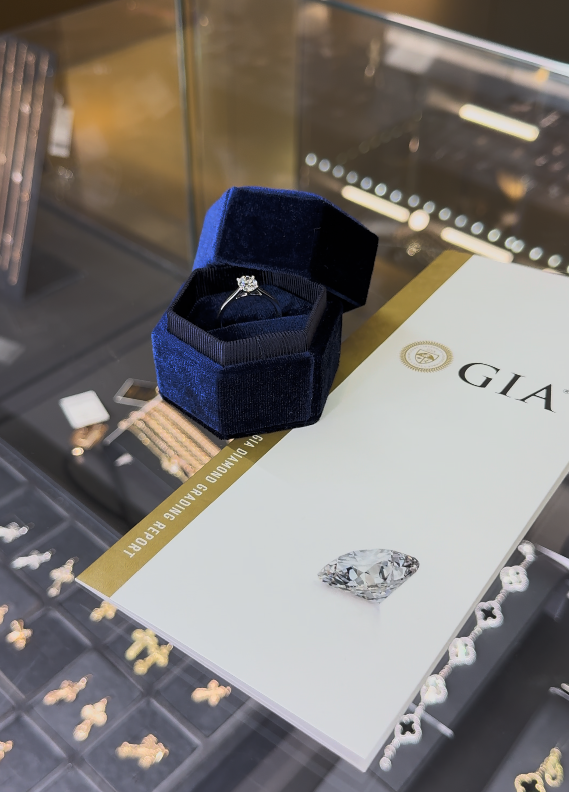
It is important not just to see “a paper”, but to check that it refers to this exact stone. A certified diamond may have data that allows the stone to be matched with the document: weight, shape, cut parameters, colour, clarity and other characteristics.
If the buyer is choosing an engagement ring for the first time, it is not necessary to understand every line of the certificate alone. It is enough to ask a specialist to explain the document in simple words: what the colour means, how noticeable the clarity features are, how cut affects sparkle and why one stone looks more convincing than another.
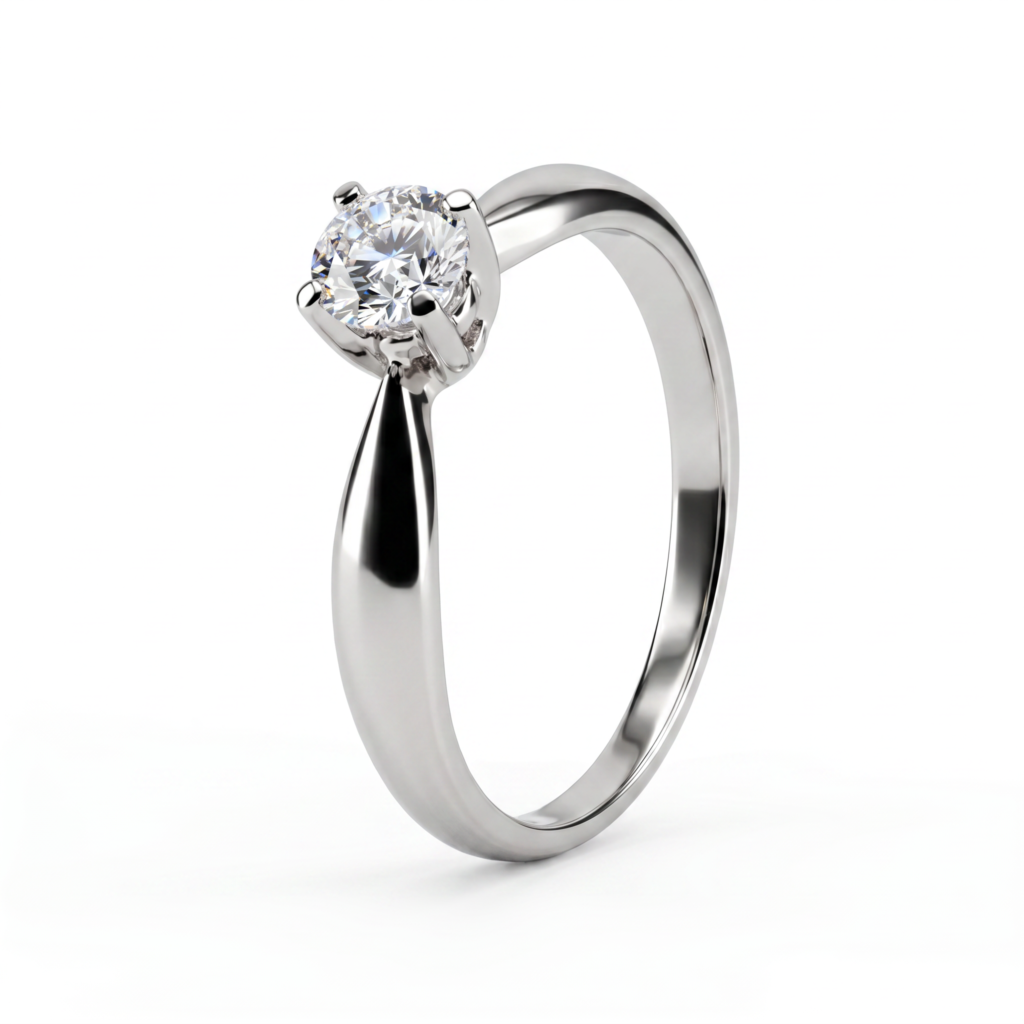
What Exactly a Gemologist Checks
A professional diamond check is different from a casual inspection. A gemologist looks at the stone systematically: not at one detail, but at the combination of signs.

During the check, the specialist may pay attention to:
- the appearance of the stone and the character of its sparkle;
- the shape and quality of the cut;
- clarity features;
- colour tone;
- whether the stone matches the declared weight and description;
- signs that help distinguish a diamond from an imitation;
- documents and their connection to the specific stone.
If the diamond is already set in a ring, the check becomes more difficult: metal can cover part of the stone. In this case, it is especially important not to try to “test” the jewellery yourself, but to show it to a specialist. This is safer for the setting and more accurate for the result.
Natural, Laboratory-Grown or Imitation: What Is the Difference?
When someone asks how to check the authenticity of a diamond, there is often another question behind it: “Am I really being offered a diamond, not a similar stone?” Here it is important to separate three categories.
A natural diamond forms in nature. Its value is connected with rarity, characteristics and confirmed origin. A laboratory-grown diamond has the same crystalline nature as diamond, but is created in laboratory conditions. An imitation is a different material that only looks like a diamond from the outside.
For the buyer, the difference is fundamental. Natural and laboratory-grown diamonds must be described honestly, and an imitation cannot be presented as a diamond. In a good choice, there is no place for vague wording: the origin of the stone should be clear before purchase.
If a jewellery description says “a stone like a diamond”, “diamond sparkle” or “diamond alternative”, it is worth clarifying what exactly is meant. A real diamond should be named directly and confirmed with documents.
Why Home Tests Do Not Give a Guarantee
Online, people often advise checking a diamond with water, breath, a newspaper, scratching glass or observing its reaction to light. These methods may seem simple, but they do not give a reliable answer.
The problem is that many imitations also pass some household checks or look convincing at home. And some tests can damage the jewellery, the setting or the stone itself, especially if a person does not understand what material they are dealing with.
For a serious purchase, a home test can only be seen as a curious hint, not as proof. If it is an engagement ring, a family piece or a custom order, it is better to rely on a certificate, gemological verification and a specialist consultation.
How Gemological Verification Differs from Judging “by Feeling”
Judging “by feeling” answers the question: do you like the stone? This matters, because an engagement ring is chosen not only with reason, but also with the heart. But this view does not tell you what exactly is in front of you.
Gemological verification answers another question: what kind of stone it is and whether it corresponds to the seller’s statement. It helps separate emotion from fact. A stone may look appealing but not be a diamond. Or the opposite: on paper, the stone may look convincing, but in a specific setting it may not give the impression you expect.
The ideal choice lies between these two approaches. First - facts: origin, certificate, characteristics, verification. Then - visual feeling: how the diamond looks on the hand, whether it suits the design, whether it looks harmonious in the future ring.
Signs That Should Make You Cautious
Sometimes doubts appear even before verification. This does not mean the stone is definitely not real, but such points are worth clarifying before purchase.
The first warning sign is the absence of a clear certificate when a serious diamond is being presented. If the stone is described in general words but no confirmed characteristics are provided, the buyer cannot calmly compare it with other options.
The second point is overly vague wording. For example, when instead of a precise description of origin and parameters, you hear only emotional promises: “very clean”, “best quality”, “shines like a real one”. In jewellery choice, emotion matters, but it should rest on facts.
The third sign is unwillingness to show the stone in normal lighting or explain its characteristics. A diamond is best viewed calmly: not only under bright showroom lighting, but also in more natural conditions. This makes it easier to understand how it will look in life.
How to Read the 4C
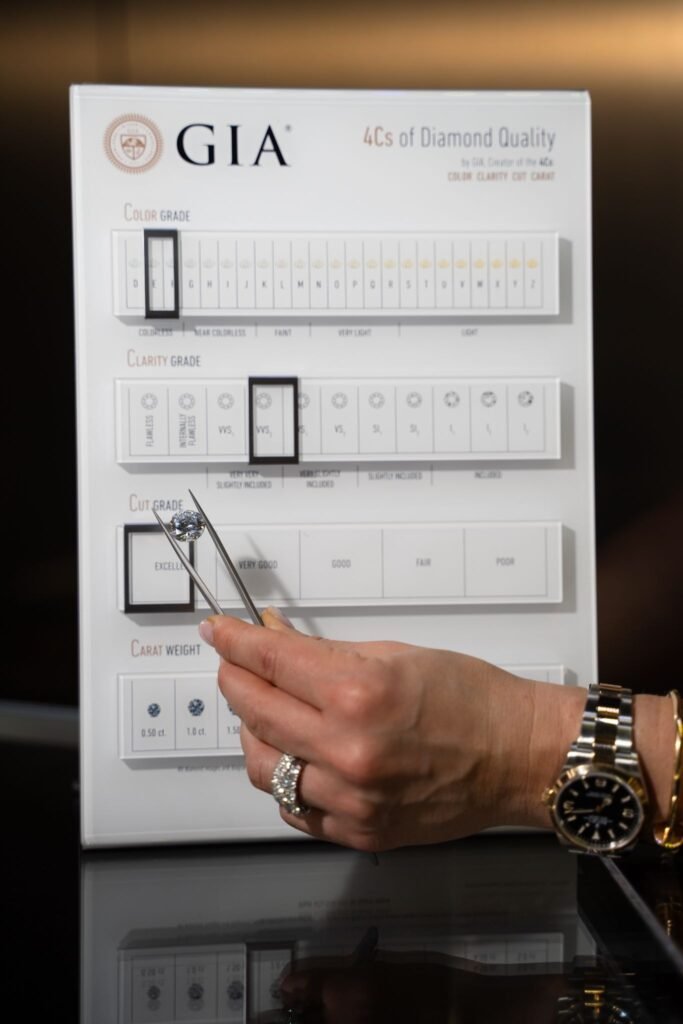
4C is the basic system for evaluating a diamond. It helps you avoid getting lost in the characteristics and understand what exactly you are paying for.
Carat is the weight of the stone, not its size from above. Two diamonds of the same weight can look different because of shape, depth and proportions. That is why, when choosing, it is important to look not only at the number, but also at the visual impression.
Colour shows how close the stone is to colourless or whether it has a slight tint. In a ring, colour perception may depend on the metal: white gold creates a cooler background, while yellow gold can make the overall image warmer.
Clarity describes internal and external features of the stone. Many features may be invisible without magnification, but they still affect the assessment. For the buyer, it is important to understand not only the “clarity grade”, but also whether the features are visible in real wear.
Cut is responsible for how the stone works with light. It helps the diamond sparkle, show fire and look alive. Even a noticeable weight does not guarantee a beautiful result if the cut does not reveal the stone.
How to Tell a Diamond from Cubic Zirconia and Moissanite
Cubic zirconia and moissanite are popular stones that can visually resemble a diamond. But they are not diamonds, and their value, properties and perception are different.
Cubic zirconia often looks bright, but over time it may be perceived differently, especially with active wear. Moissanite also gives strong light performance, sometimes with more pronounced rainbow flashes. To an untrained eye, this may look like an “even more diamond-like” effect.
The main difficulty is that the visual difference is not always obvious without experience. That is why the question “how to check if a diamond is real” should not be solved only by comparing sparkle. It is better to ask for documents, clarify the stone’s origin and, if necessary, show the jewellery to a gemologist.
Can a Diamond Be Checked in a Finished Ring?
Yes, but checking a set stone requires care. When a diamond is set in a setting, part of its surface may be covered by metal. This is especially important for rings with closed settings, complex designs or additional stones.
In a finished ring, a specialist can assess appearance, light performance, visible features and consistency with the declared data. But in some cases, additional methods or documents for the stone itself may be needed for a full diagnosis.
If you are buying an engagement ring, it is better to resolve the question of authenticity before production or before the final choice. This makes it easier to compare several diamonds, study certificates and choose a setting that beautifully reveals the stone.
Why Verification Matters in a Custom Order
In a custom ring, the diamond is not chosen separately from the design, but as the centre of the future piece. It should suit the shape, size, setting height, metal colour and overall mood of the ring.
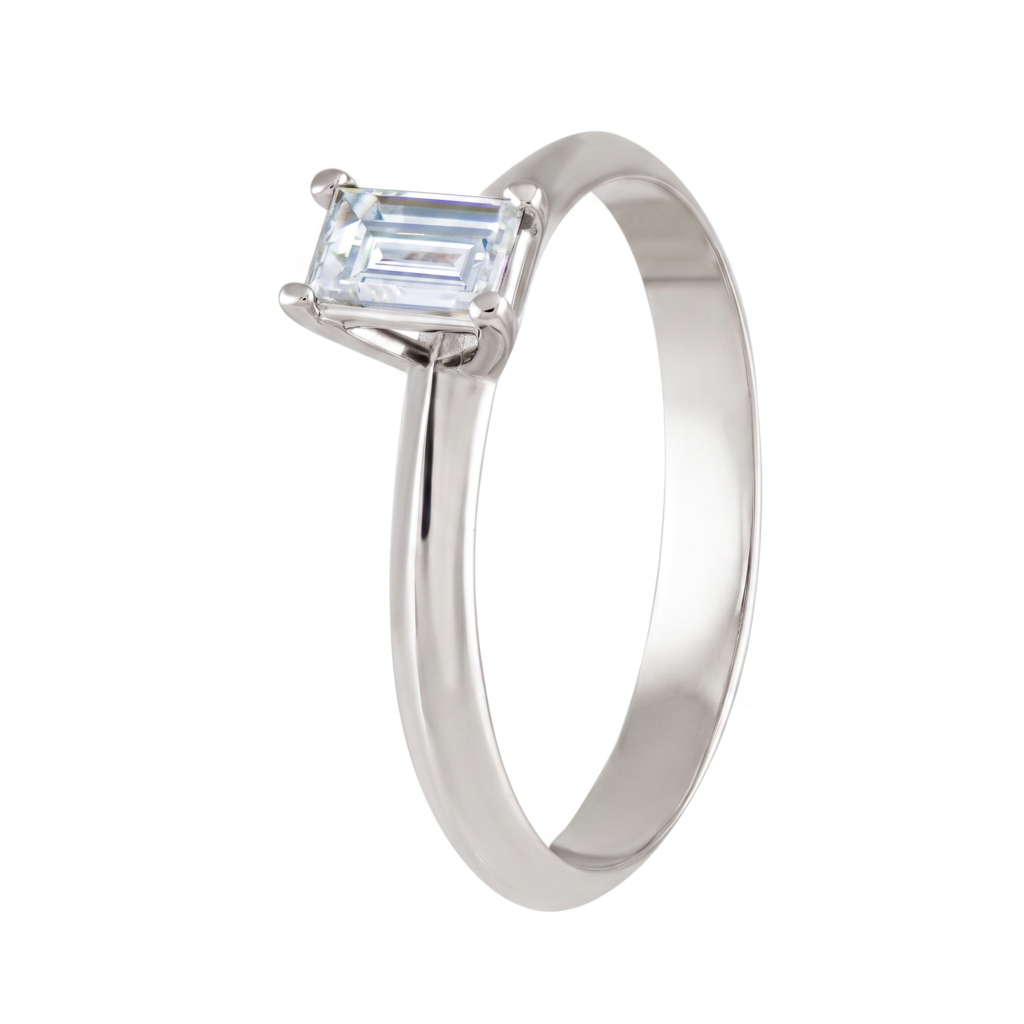
For example, a round diamond is often chosen for its classic character and bright sparkle. An oval can look softer and visually elongate the finger. An emerald cut gives calmer, architectural beauty and often requires more attention to clarity. A cushion looks more romantic, while a pear or marquise adds expressiveness.
Authenticity is only the first level of confidence. After that, it is important to understand whether this exact diamond is beautiful in this exact ring. At KiANIT, we help connect both questions: confirm the characteristics of the stone and see how it will look in the finished jewellery.
How KiANIT Helps Check and Choose a Diamond
At KiANIT, we clarify what kind of ring you want to create, what style is close to the future bride, which stone shape you like and how important visual size, sparkle or calm premium aesthetics are.
Then you can compare diamond options, look at certificates and discuss the 4C in simple words. This approach helps you avoid buying “numbers in a document” and instead choose a stone that looks convincing in real life and suits the future ring.
When needed, we explain which questions to ask about the stone’s origin, how to read a certificate and why gemological verification is more important than household methods. This helps you reach a choice without anxiety and without feeling that you need to become a diamond expert yourself.
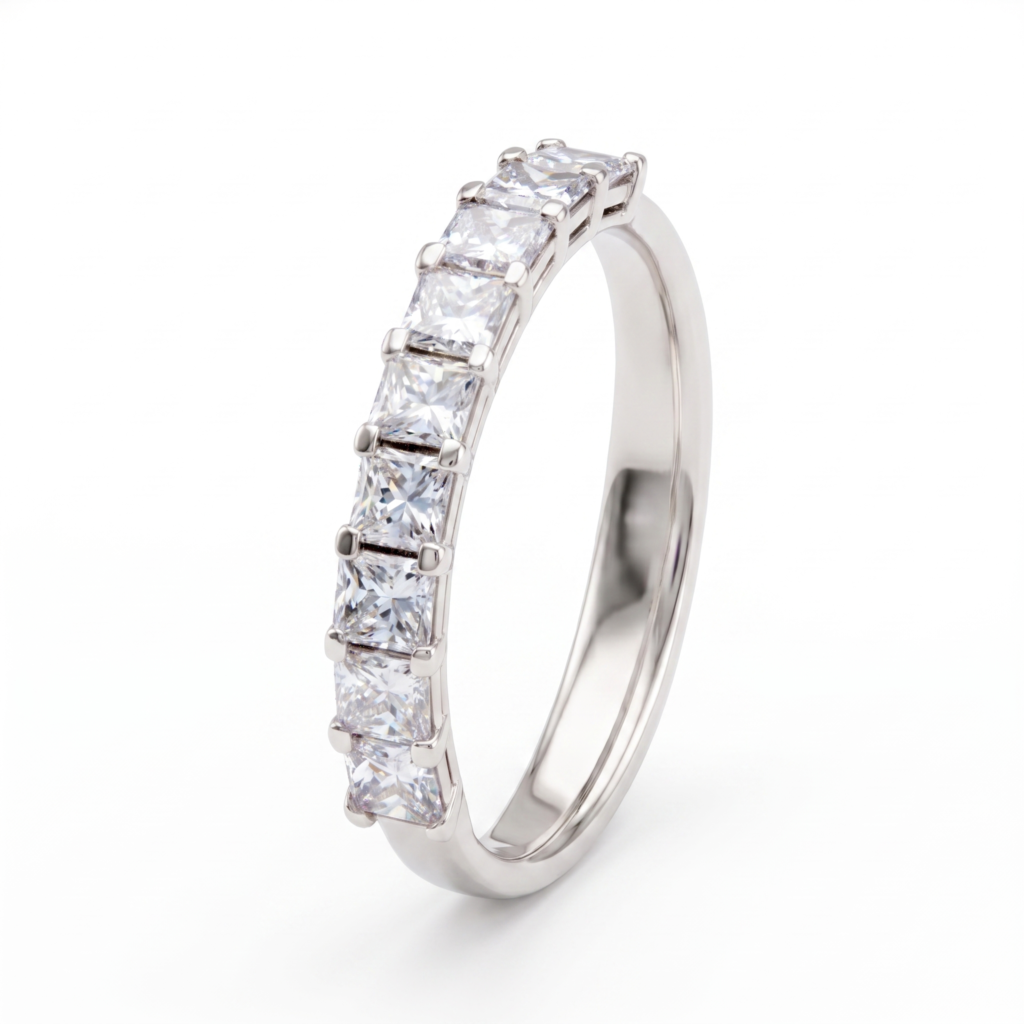
An engagement ring can be created individually: you can choose the diamond, setting, gold colour and design details. At the KiANIT showroom in Browary Warszawskie at Grzybowska 43A in Warsaw, you can view samples, ask questions and receive a consultation.
How to Check if a Diamond Is Real: A Short Conclusion
The most reliable path is not to rely on home tests, but to look at the certificate, 4C characteristics and professional assessment of the stone. Sparkle can impress, but authenticity is confirmed by documents and gemological verification.
If you are choosing a diamond for an engagement ring, it is important to check not only the origin of the stone, but also its beauty in the future piece of jewellery. KiANIT will help compare options, explain the parameters in simple language and choose a diamond that will look calm, refined and personal - exactly for your story.