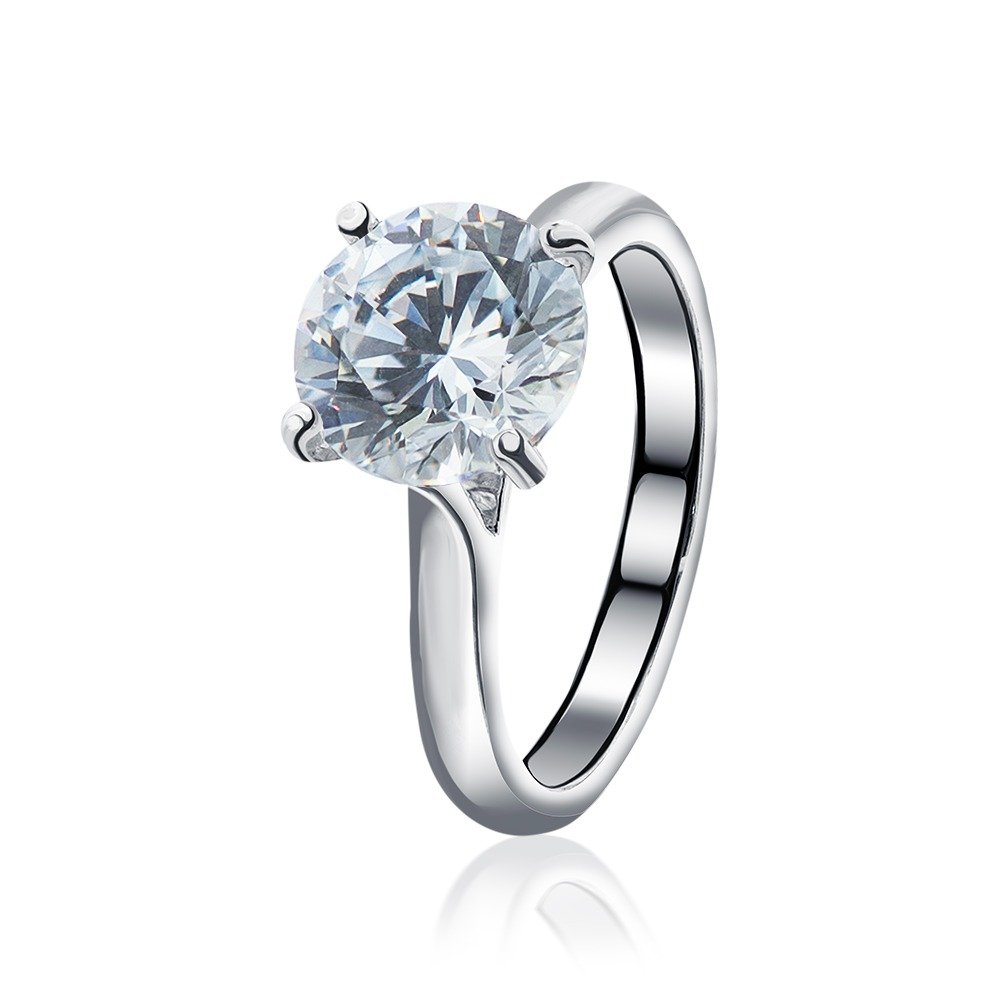
How Not to Overpay for a Diamond: An Honest Guide
How not to overpay for a diamond: an honest guide is not about finding the simplest option. It is about choosing calmly and understanding what you are paying for. A diamond can look more impressive or more understated not only because of carat weight: cut, shape, color, clarity, certificate and the way the stone looks in the finished ring all matter.
If you are choosing an engagement ring for the first time, it is easy to get lost in the numbers. Some sellers talk about weight, others about color, others about the laboratory named in the certificate. But a good choice does not start with maximum parameters. It starts with balance: the stone should look beautiful, have confirmed characteristics and suit the design of the ring.
How Not to Overpay for a Diamond: The Main Rule
The most common mistake is thinking that the “best diamond” always means the highest carat weight, the highest clarity and the coolest color. In practice, this is not always necessary. In a ring, the overall impression matters more than one separate number: brilliance, proportions, setting, shape and harmony with the hand.
Diamonds are chosen according to the 4C system : carat, color, clarity and cut. In simple terms, these are weight, color, clarity and the quality of how the diamond is cut. These parameters help compare stones, but they do not fully answer the most important question: how will the diamond actually look in real life?
A reasonable approach is not to overpay for characteristics that barely change the visual impression, and not to save on what is truly visible. At KiANIT, we explain the parameters and show how the stone looks not only in the certificate, but also next to the future setting.
Carat: Why Bigger Is Not Always Better
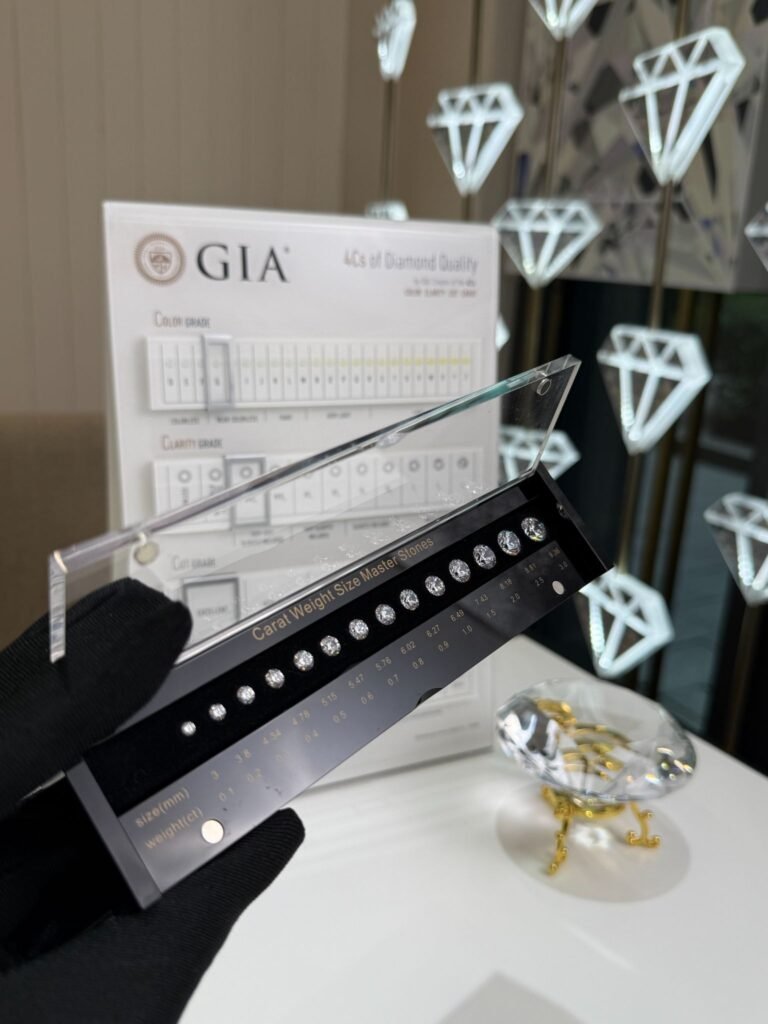
Carat is the weight of a diamond, not its size from above. Two stones of the same weight can look different: one may seem wider and more noticeable, while another may look more compact because part of the weight is hidden in the depth. That is why the question “how many carats should I choose?” is better replaced with another one: “which stone will look harmonious in this ring?”.
Sometimes a slightly smaller diamond with a good cut and a well-chosen shape looks more expressive than a heavier stone with less successful proportions. This is especially noticeable in engagement rings, where the central diamond is viewed up close, in different lighting and in motion.
The visual size is influenced by:
- the diamond shape: round, oval, pear, marquise, cushion or emerald cut;
- the quality of the cut and how the stone works with light;
- the depth of the stone and weight distribution;
- the type of setting and height of the stone;
- the width of the band and the metal color;
- the proportions of the hand and the style of the future bride.
This is why it is better to choose a diamond together with the ring design, not separately from it.
Cut: The Parameter You Should Not Save On
Cut is one of the most important factors because it determines brilliance. Even a diamond with good weight can look calmer if light does not return well through the facets. And the opposite is also true: a stone with a successful cut often appears more lively, brighter and more premium.
For a beginner, it is important to distinguish between shape and cut quality. Shape is what we see from above: round, oval, pear, square, rectangle. Cut quality means proportions, symmetry and polish - in other words, how the stone interacts with light.
If the goal is to understand how not to overpay for a diamond, you should not chase weight alone. It is better to see how the stone sparkles in person. For an engagement ring, this is especially important: the piece will live on the hand every day, not only look beautiful on a product page.
Diamond Color: When the Difference Is Visible and When It Is Not
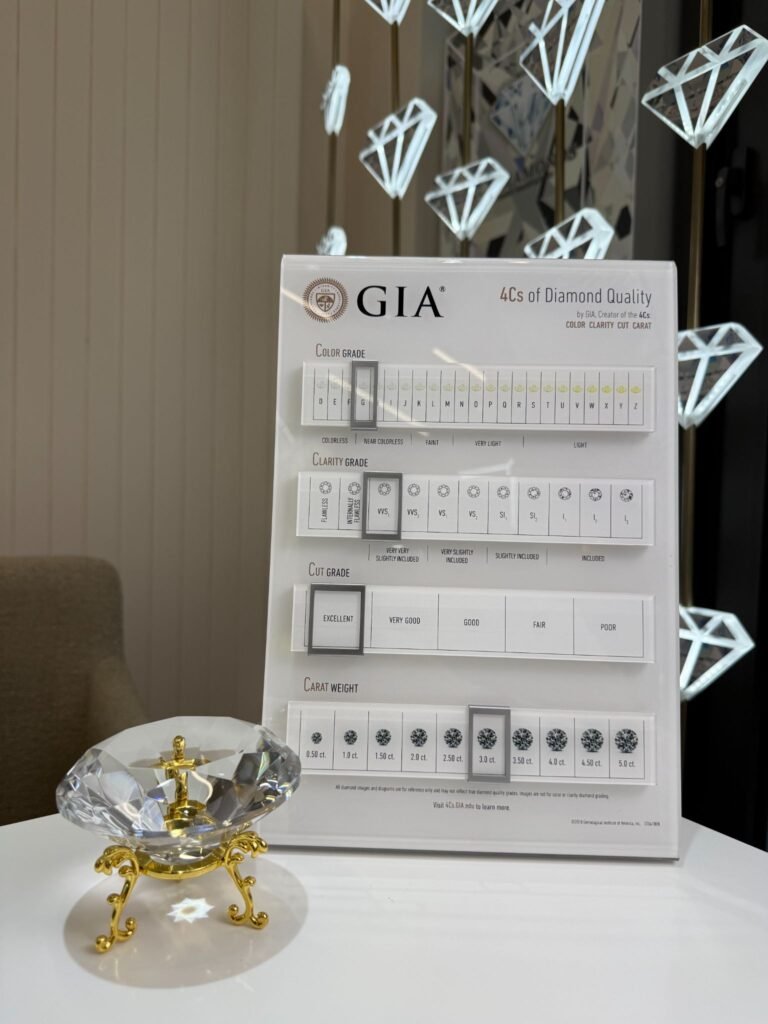
Diamond color shows how close a stone is to being colorless or whether it has a slight tint. For a beginner, this may sound worrying: it may seem that only the highest color grade is worth choosing. In reality, perception depends on the shape of the stone, the metal and the design of the ring.
For example, in white gold or platinum, a cooler shade may be more visually important. In yellow gold, a slight warmth in the stone can sometimes look more natural and softer. In some shapes, tint is more noticeable; in others, it is less visible.
This is where it is easy to overpay for a characteristic the eye will hardly distinguish in the finished piece. That is why color should be assessed not separately, but next to the metal of the future setting.
Clarity: You Do Not Always Need the Maximum
Clarity describes natural features inside a diamond. They are often called inclusions. It is important to understand that not every inclusion is visible without magnification, and not every inclusion affects the beauty of the stone in a ring.
A buyer can overpay if they choose the highest possible clarity only for the number in the certificate. It is much more reasonable to understand whether the stone looks clean to the eye. If the internal features are not visible during normal viewing and do not interfere with brilliance, a higher grade may not be necessary for your ring.
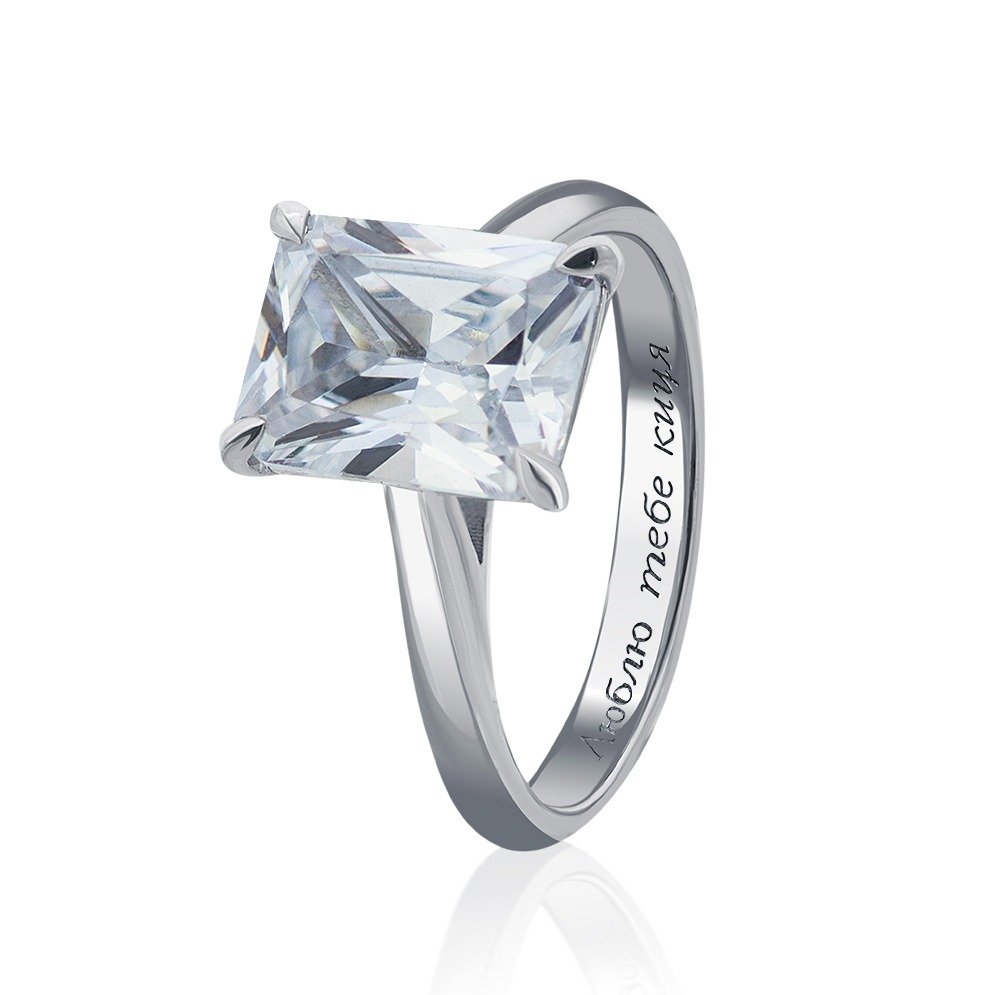
Clarity should be assessed especially carefully in shapes with a calmer play of light, such as emerald cut. This shape can show the internal pattern of the stone more clearly, so the balance of characteristics is especially important here.
Certificate: What It Really Confirms
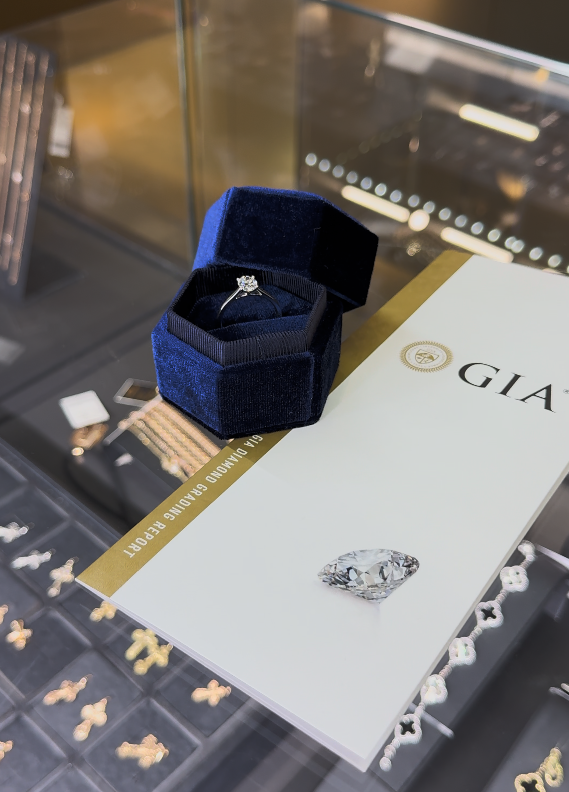
A certificate helps you understand the confirmed characteristics of a diamond: weight, color, clarity, cut and other parameters. For the buyer, it is a way to compare stones more calmly and not rely on words alone.
When choosing an engagement ring, it is worth paying attention to recognized gemological laboratories such as GIA, HRD or IGI. Such a document does not automatically make the stone perfect, but it helps you understand exactly what you are considering.
At the same time, a certificate does not replace viewing the stone in person. Two diamonds with similar parameters may look different: one may be brighter, another warmer, a third visually larger. That is why at KiANIT we recommend looking at the certificate together with the stone itself, not instead of it.
Diamond Shape: How to Get a Stronger Visual Effect
Shape strongly affects how large and expressive a stone looks. A round diamond is a classic with a bright play of light. Oval, pear and marquise shapes often look larger because of their elongated silhouette and visually lengthen the finger. Emerald cut looks calmer, more architectural and restrained. Cushion creates a softer, romantic impression.
This does not mean that one shape is better than another. Each simply serves a different purpose. If you want timeless classics, consider a round diamond. If soft elegance and visual length are important, an oval may be a good choice. If you want a more expressive ring with character, you can look at pear, marquise or cushion.
This approach helps avoid overpaying for extra carat weight when a similar visual effect can be achieved through shape, setting and proportions.
The Setting Also Influences the Feeling of Value
The same diamond can look different in different rings. A thin band makes the central stone more noticeable. A delicate halo enhances the impression of brilliance. A higher setting emphasizes the diamond, while a lower one may look calmer and more practical.
The metal color also matters. White gold and platinum create a cool, clean background. Yellow gold adds warmth and a classic character. Red gold makes the piece feel softer and more romantic.
That is why an honest diamond choice is always a choice in the context of the future ring. The stone does not exist separately: its beauty is revealed in the setting, on the hand and in the style of the person who will wear it.
When to Choose a Natural or Laboratory-Grown Diamond
Natural and laboratory-grown diamonds can look very similar to the eye, but they differ in origin and in how their value is perceived. A natural diamond is chosen for its natural origin, rarity and the classic understanding of a precious stone. A laboratory-grown diamond is chosen for the possibility of achieving a strong visual result with different selection parameters.
Here, it is important not to look for one universally “correct” option. It is better to honestly define what matters more to you: the natural story of the stone, size, characteristics, visual effect or symbolism. Then the choice becomes calmer and clearer.
In any case, the characteristics should be transparent and the origin should be clearly stated. The buyer should understand exactly which stone they are choosing.
How Not to Overpay for a Diamond: A Checklist Before Buying
Before making the final choice, it is helpful to go through a short list of questions.
Do I understand that carat is weight, not size from above?
Have I seen the stone in person, or only its characteristics?
Have I compared several diamonds side by side?
Do I understand how shape affects visual size?
Does the stone’s color suit the metal of the future ring?
Does the clarity look clean to the eye?
Does the diamond have a clear certificate?
Have we checked the stone together with the setting, not separately?
Am I overpaying for a parameter that does not change the impression?
Do I like not only the grade, but the diamond itself?
If you can answer these questions, the choice becomes much more confident.
How KiANIT Helps You Choose a Diamond Without Overpaying
At KiANIT, the choice does not begin with a ready-made answer, but with a conversation. We clarify the style of the future bride, the desired character of the ring, preferences for metal, shape and visual size. Then we explain the 4C and show how different stones look in reality.
An engagement ring can be created individually: you can choose the diamond shape, setting, gold color and design details. This approach is especially important when you want not just a beautiful number in a certificate, but a piece of jewelry with personal meaning.
At the KiANIT showroom in Browary Warszawskie at Grzybowska 43a in Warsaw, you can calmly compare options, view stones, discuss certificates and understand which diamond will look convincing in your ring.
Pay for Beauty, Meaning and a Conscious Choice
How not to overpay for a diamond: an honest guide comes down to one principle - choose not the maximum numbers, but the best balance. Weight matters, but it does not replace brilliance. A certificate matters, but it does not replace seeing the stone in person. Color and clarity matter, but they should work together with shape, metal and setting.
A good diamond is a stone that looks beautiful, has clear confirmed characteristics and suits the mood of the future ring. KiANIT will help you compare options, understand the parameters and choose a diamond you pay for consciously.